

“Your Daily Dose” is a quick two minute read packed with bite-sized wisdom from all the great teachers. But you could also choose to turn it into something more… a powerful daily practice for personal growth. Give it a try!
A message from today’s meditation:
Today’s wisdom from Renae Sauter speaks about your connection to your “self”. How do you understand your connection to your SELF? What is it that creates a deeper connection with your SELF? And what are things that make you more disconnected from your SELF?
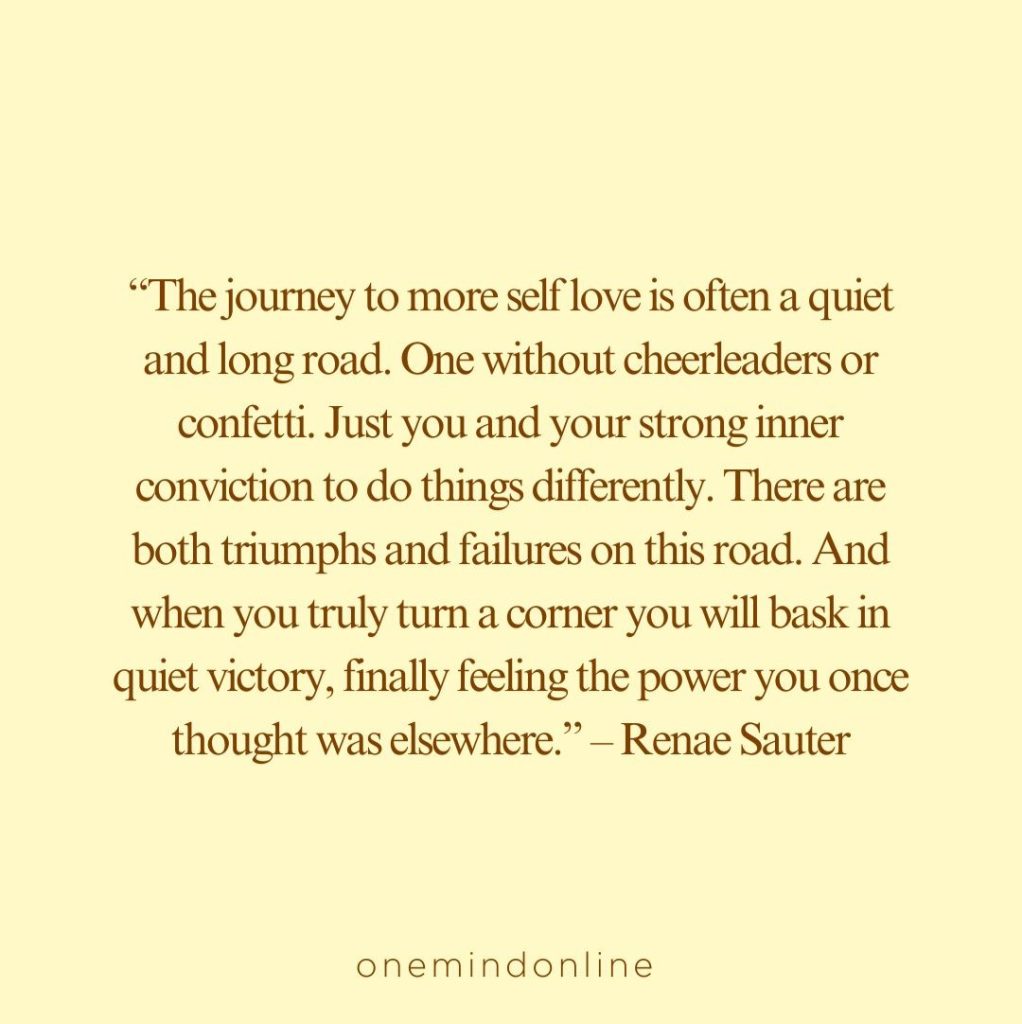
“The journey to more self love is often a quiet and long road. One without cheerleaders or confetti. Just you and your strong inner conviction to do things differently. There are both triumphs and failures on this road. And when you truly turn a corner you will bask in quiet victory, finally feeling the power you once thought was elsewhere.” – Renae Sauter
“Helping professionals, Therapists, Life Coaches, Healers can greatly assist you in changing your life for the better, but they pale in comparison to the power that’s gained from you developing a relationship with yourself. It’s you that holds the power for change.” – Renae Sauter
“This journey of life is about realizing our inherent wholeness. It has nothing to do with perfecting anything.” – Renae Sauter
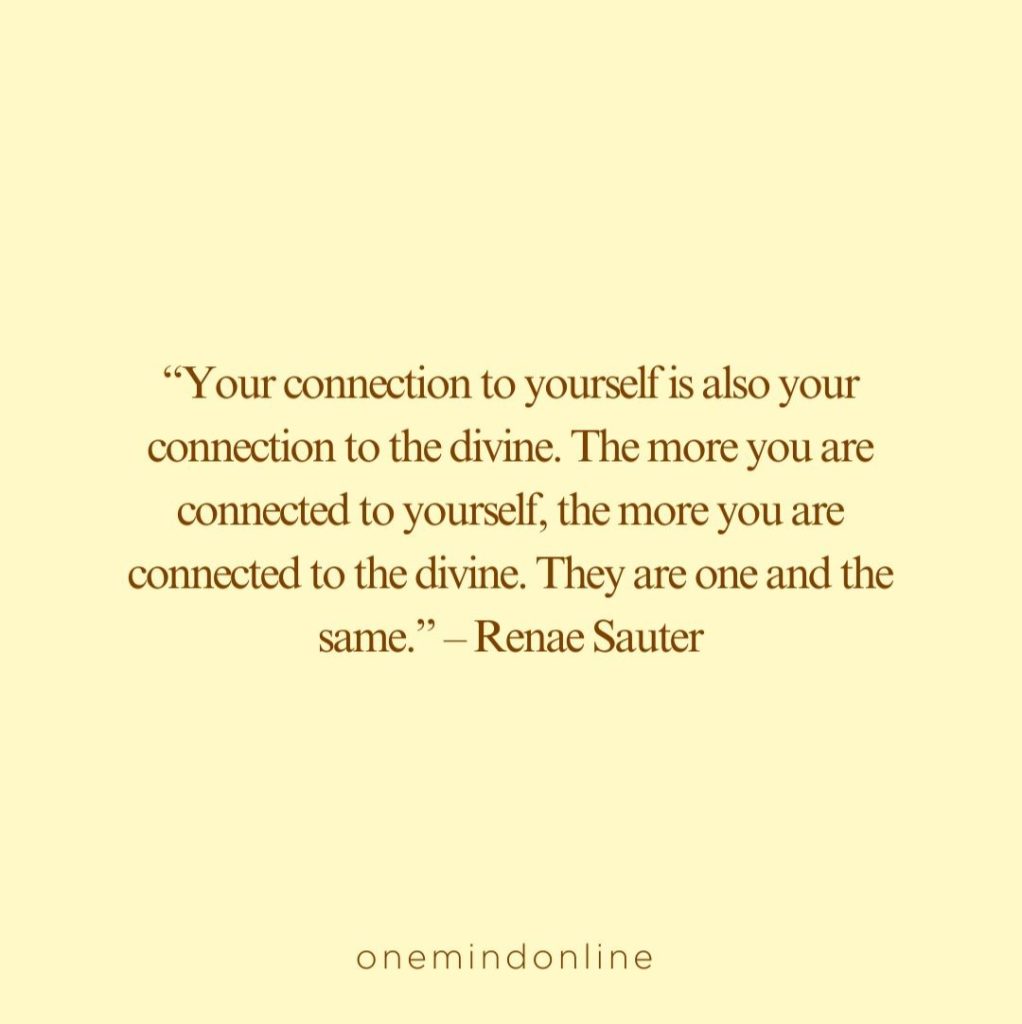
“Your connection to yourself is also your connection to the divine. The more you are connected to yourself, the more you are connected to the divine. They are one and the same.” – Renae Sauter
“Loneliness doesn’t come from missing someone, it comes from being disconnected from yourself.” – Renae Sauter
Do you get what Renae means with “inherent wholeness”? She means that wholeness is something which you already have. There is nothing that you have to first fix, first do, or first prove in order to become whole. There is no level of perfection that you have to first reach in order to become whole, in fact it’s quite the opposite. Accepting your own imperfection is a huge step towards wholeness.
When you have parts of yourself that you dislike, parts you wish didn’t exist, parts of you that you’ve been trying to reject and abandon, it causes a disconnect from your “self”. In essence, while you are trying to leave any part of yourself behind, you cannot be whole.
Becoming more connected with our SELF, or becoming more whole, requires us to understand, accept and integrate every aspect of our SELF in a healthier way than before. We must cultivate the skill of hearing our internal landscape without succumbing to the intensity, thereby empowering our authentic wisdom to lead.
Deepening your relationship with YOU:
- “I am already whole, exactly as I am in this moment.”
- “The power I seek lives within me, waiting to be recognized.”
- “I accept all parts of myself with compassion and understanding.”
- “I am worthy of my own love and kindness, without conditions.”
Today’s meditation journey is a very practical exercise that invites you to listen to every inner-narrative that speaks from within you. By listening to the inner narratives that shape our thoughts and behaviors, we gain invaluable insights into our subconscious patterns. This self-awareness empowers us to make conscious choices and break free from limiting beliefs.
– pierre –
Today’s LIVE meditation is: A sense of self.
Today’s LIVE meditation
https://youtu.be/Sbr4hiEQ66M 2025
https://youtu.be/xaiTL0xV2o0 2024
https://youtu.be/C8hf1Aiw99Q 2023
https://youtu.be/C9pR2WJjih8 2022
Practice the “Daily Dose”
Let’s put it into practice! Choose what works for you – daily, once a week or whenever inspiration strikes. Putting pen to paper wires the neural pathways that will create your new habits.
1 – Affirmation
Write down your favourite affirmation on a sticky note and place it somewhere that you’ll be able to see it the whole day.
- “I am already whole, exactly as I am in this moment.”
- “The power I seek lives within me, waiting to be recognized.”
- “I accept all parts of myself with compassion and understanding.”
- “I am worthy of my own love and kindness, without conditions.”
2 – A moment of reflection
Use today’s question as a journal prompt. If you don’t have the time to sit down and write, just take a moment to reflect on your response.
The Quiet Road of Self-Love: Reflect on Renae Sauter’s words: “The journey to more self love is often a quiet and long road. One without cheerleaders or confetti.” What does your personal journey to self-love look like? Where have you been waiting for external validation before accepting yourself? Write about a quiet victory you’ve experienced that no one else witnessed or celebrated – how does it feel to recognize your own progress, especially the small steps?
3 – Quotes to share
Send a quote to someone who needs it, or share them all on social media to spread the good vibes!




4 – Q&A for deeper learning
Read through the questions and answers and write down at least one “aha moment” that clicked for you.
1. What does “inherent wholeness” actually mean?
Inherent wholeness means that you are already complete exactly as you are—right now, without needing to change, fix, improve, or prove anything first. It’s the understanding that wholeness isn’t something you achieve through perfection; it’s something you recognize by accepting yourself fully, including your imperfections. You don’t need to earn your wholeness—you were born with it.
2. If I’m already whole, does that mean I shouldn’t work on improving myself?
Not at all. Recognizing your inherent wholeness doesn’t mean you stop growing or evolving. Instead, it changes your motivation. Rather than trying to “fix” yourself because you’re broken, you grow from a place of self-acceptance and curiosity. Personal development becomes about integrating and understanding yourself more deeply, not about reaching some ideal state of perfection to finally be “enough.”
3. How do rejected parts of myself prevent me from feeling whole?
When you reject aspects of yourself—whether it’s a personality trait, past mistake, emotion, or characteristic you dislike—you create an internal division. You’re essentially saying “I’m only acceptable if these parts don’t exist.” This fragmentation prevents wholeness because you cannot be complete while actively trying to leave parts of yourself behind. True wholeness requires accepting and integrating every aspect of who you are, while also being clear about which aspects you’d like to work on next.
4. What’s the difference between self-help from professionals and developing my own relationship with myself?
Therapists, coaches, and healers can provide valuable guidance, tools, and support for your journey. However, they facilitate change—they don’t create it. The actual power for transformation comes from you developing a direct, honest relationship with yourself. Professionals can show you the door, but only you can walk through it. The lasting change happens through your own commitment to knowing and accepting yourself.
5. How is connecting with myself the same as connecting with the divine?
This perspective suggests that the divine or spiritual essence isn’t separate from you—it’s accessed through you. The deeper you go into genuine self-connection and self-awareness, the more you encounter something greater than your ego or surface identity. Rather than looking outside yourself for spiritual connection, you discover it by going inward. Your truest self and the divine are one and the same.
6. Why does disconnection from myself cause loneliness more than being alone?
Loneliness is fundamentally about feeling unseen, unknown, and disconnected—but the most painful disconnection is from yourself. When you’re disconnected from yourself, you feel alone even in a crowded room because you’ve abandoned your own presence. Conversely, when you’re deeply connected to yourself, you can experience solitude without loneliness because you have your own company in a meaningful way.
7. How do I practically begin accepting my imperfections as part of my wholeness?
Start by listening to your inner narratives—the voices that criticize, judge, or reject parts of you. Notice them without immediately believing them. Practice self-compassion by speaking to yourself as you would a dear friend. When you notice yourself rejecting an aspect of yourself, pause and ask: “What if this part of me is also worthy of acceptance?” Embrace gratitude for what is, rather than dwelling on what you think should be. Remember that accepting imperfection doesn’t mean giving up on growth—it means growing from a foundation of self-acceptance rather than self-rejection.