

“Your Daily Dose” is a quick two minute read packed with bite-sized wisdom from all the great teachers. But you could also choose to turn it into something more… a powerful daily practice for personal growth. Give it a try!
A message from today’s meditation:
Some “Stoic” philosophy for you today.
The Stoic school of thought got its start around the 3rd century BCE in Greece with the philosopher Zeno, but it’s really when it hit Rome that it gained prominence.
Every time I encounter stoic philosophy it feels very similar to Buddhism or Taoism to me.
Stoicism is a school of philosophy that emphasizes rationality, practical wisdom, self-control, and virtue. The Stoics believed that by living in accordance with nature and reason, individuals could find happiness and lead fulfilling lives.
Stoicism teaches that one should focus on what is within their control and accept what is outside of their control. This means that one should not become overly attached to external goods or circumstances, as they are often beyond our control, but instead focus on developing inner strength and character.
The Stoics also believed in the importance of ethical behavior and the pursuit of moral excellence. They held that living a virtuous life, which involved acting with courage, wisdom, justice, and self-control, was the key to happiness and a meaningful existence.
My 3 favourite dudes in the Stoic world are Seneca, Marcus Aurelius and Epictetus.
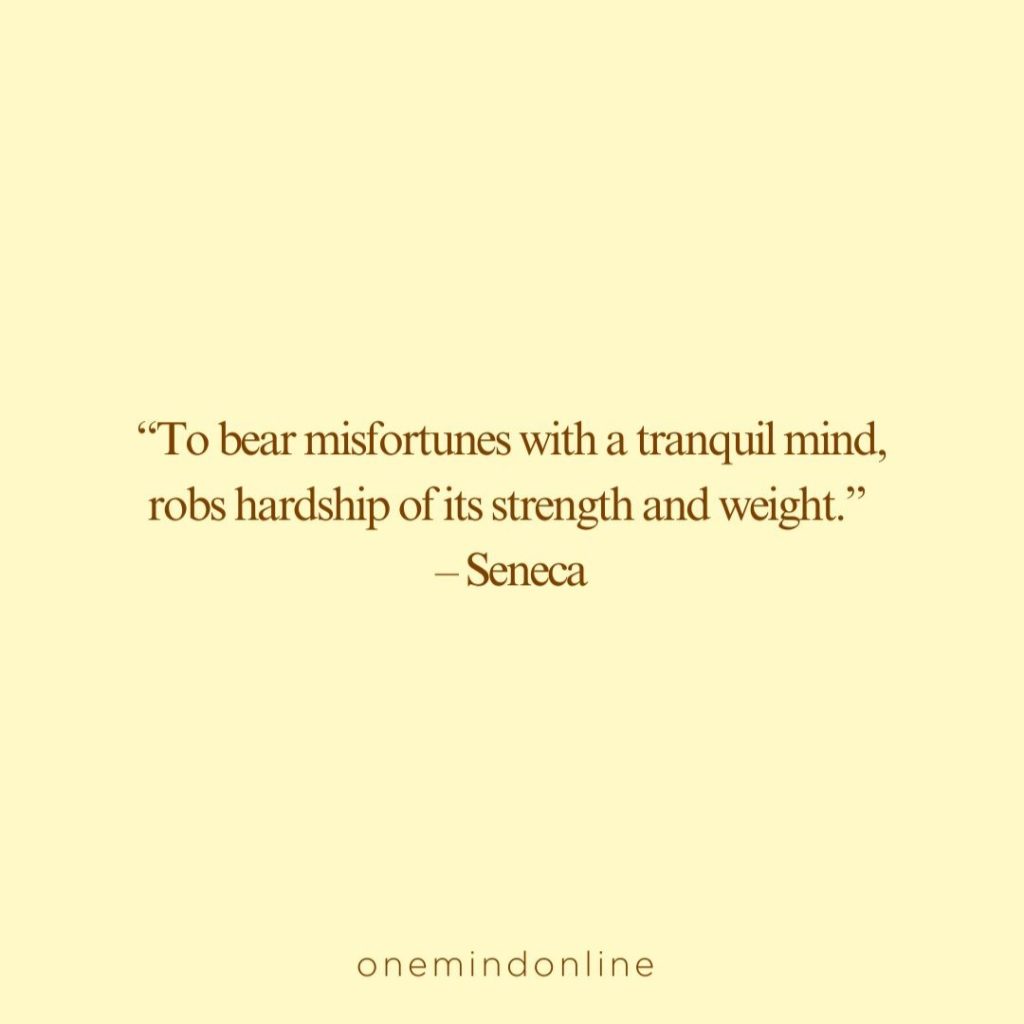
“To bear misfortunes with a tranquil mind, robs hardship of its strength and weight.” – Seneca
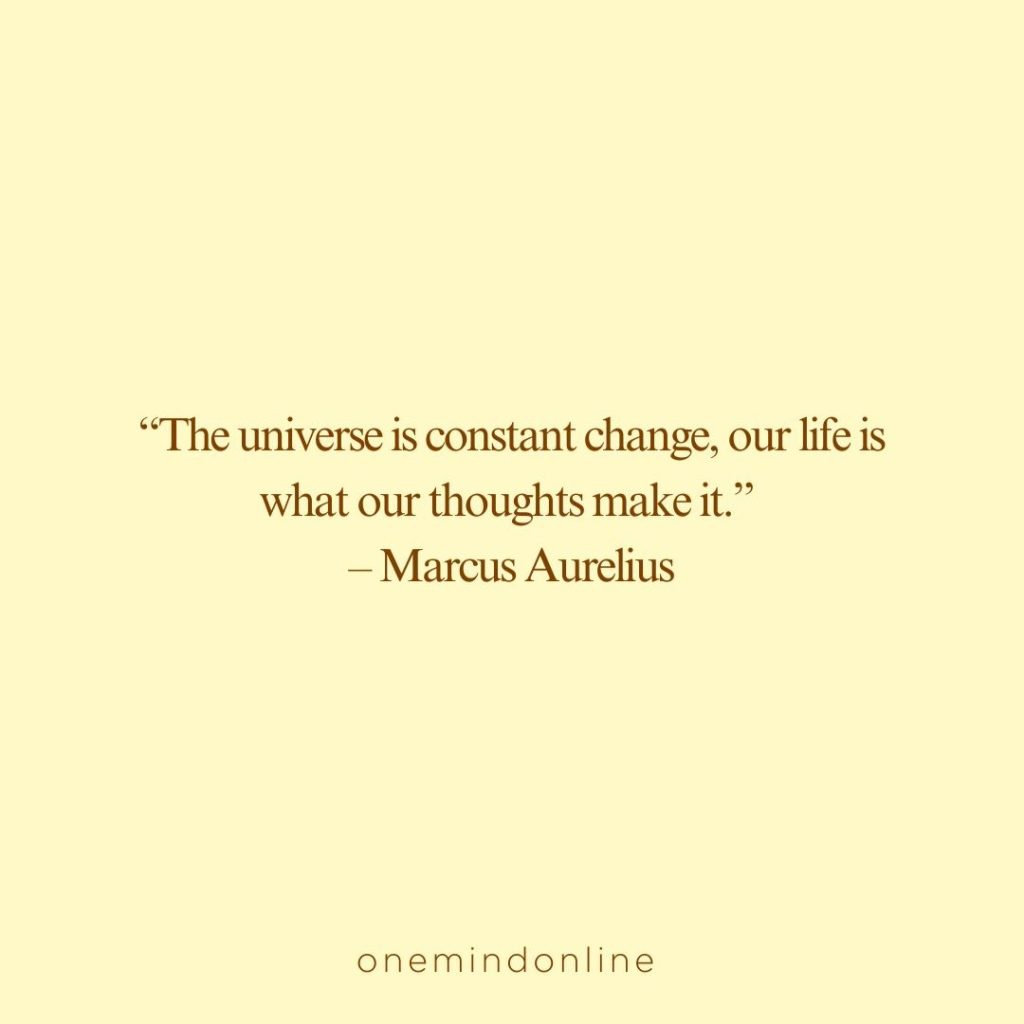
“The universe is constant change, our life is what our thoughts make it.” – Marcus Aurelius
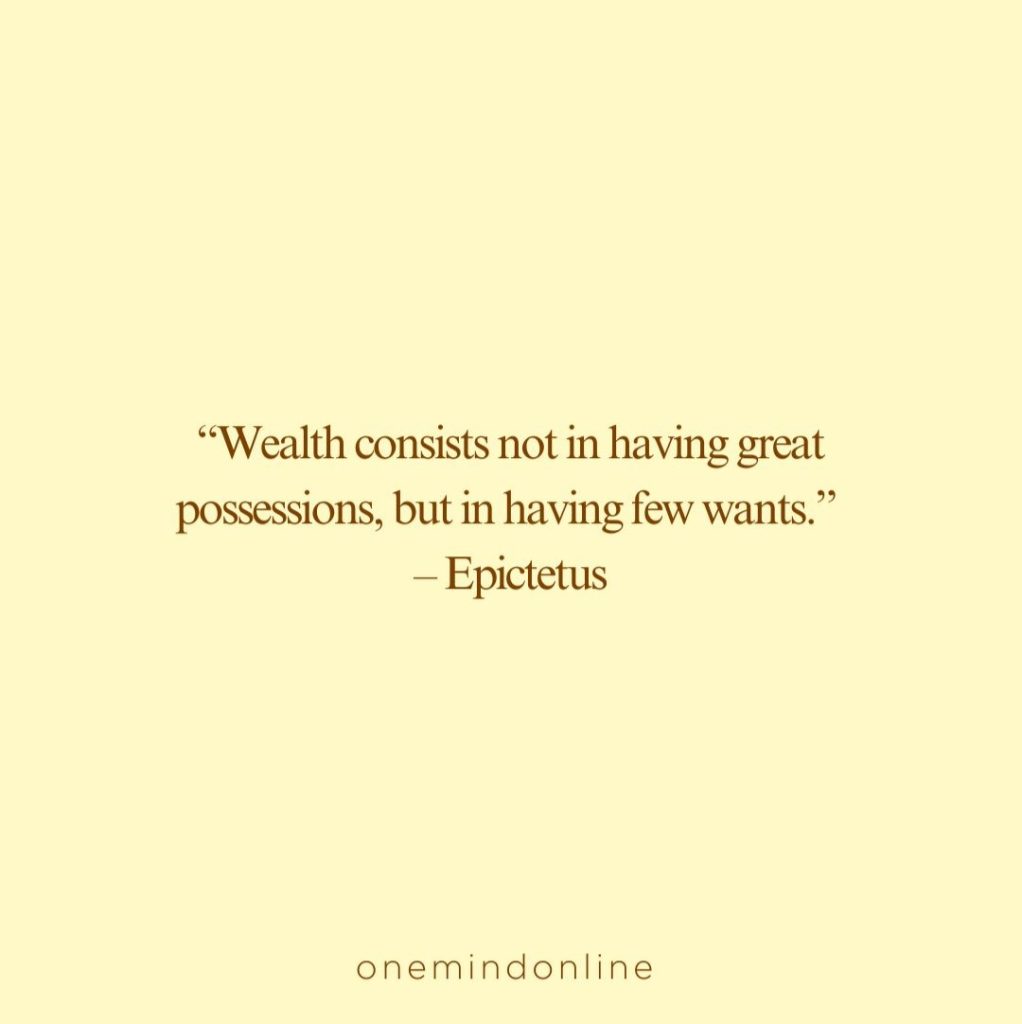
“Wealth consists not in having great possessions, but in having few wants.” – Epictetus
Or to recap them all in one thought: Things are going to keep happening because the universe is in a constant state of change, and what makes you happy is not having what you want, but wanting what you have.
How in the world do we get better at this? How do we become more OK with the fact that things are going to keep happening outside of our control, and that the only road to our sanity is to become less attached to how we think every little thing should be, and more appreciative of what we do have?
The practice is really simple, and every ancient philosophy had its own version of this process:
We have to give ourselves a bit more practice in sitting and watching things happen, while being OK with what is happening. I know this might sound really simplistic, but it’s something most modern humans are unable to do.
Today’s meditation journey is an exercise in just being the witness. Allow whatever is busy happening to be felt, and be totally OK with it. This doesn’t mean that we refrain from taking action but it does mean that we change the reason “why” we take action:
If I’m not OK with what’s happening, then by default I am in a fear response and my action is likely to be re-active – not by choice, not a decision made in free will but by my own survival patterns. Even while I think I’m in control, it’s really years of programming that compels me into a knee-jerk reaction.
But if I am not disturbed by what’s happening, then I am more likely to be dominant in my parasympathetic nervous system. Calm, open, with access to all of my creative problem solving faculties. When I am able to take a deep, slow breath it’s not an old pattern choosing my reaction, I am exercising free will in choosing what my response will be.
Being OK with whatever is happening, is not a case of never taking action, but of never taking action in fear. “I will not flail around in desperation. I will breathe, I will slow down, I will wait and I will see. And as soon as I have more clarity I will swim with strong and clear strokes in a direction of my choosing.”
Mantras for a Stoic Life:
- “I will not let external circumstances dictate my happiness.”
- “I will focus on what I can control – my thoughts, actions, and reactions.”
- “I will cultivate gratitude for the good things in my life.”
- “I will respond to life’s challenges with grace and resilience.”
- “I will find peace within myself, even in the midst of the storm.”
Remember, it’s not about becoming passive or indifferent. It’s about taking empowered action from a place of inner strength and clarity. It’s about breathing deeply in the midst of a storm and choosing your response thoughtfully.
Wishing you a great weekend!
– pierre –
Today’s LIVE meditation is: Come to your senses.
Today’s LIVE meditation
https://youtu.be/U87SZDfsP8g 2026
https://youtu.be/sDI8k-zfqkM 2025
https://youtu.be/H5K5mTatbes 2024
https://youtu.be/ZkC9jiAy7tw 2023
Practice the “Daily Dose”
Let’s put it into practice! Choose what works for you – daily, once a week or whenever inspiration strikes. Putting pen to paper wires the neural pathways that will create your new habits.
1 – Affirmation
Write down your favourite affirmation on a sticky note and place it somewhere that you’ll be able to see it the whole day.
- “I will not let external circumstances dictate my happiness.”
- “I will focus on what I can control – my thoughts, actions, and reactions.”
- “I will cultivate gratitude for the good things in my life.”
- “I will respond to life’s challenges with grace and resilience.”
- “I will find peace within myself, even in the midst of the storm.”
2 – A moment of reflection
Use today’s question as a journal prompt. If you don’t have the time to sit down and write, just take a moment to reflect on your response.
The Wealth of Few Wants: We often think of wealth as something that gives us the ability to do what we want, or have what we want. Write down a few things that you would really like to do, and a few things that you really want to have. Does the lack of these things rob you of having peace? Does not having them make you unhappy? And if you were to have all these wishes come true, do the things you want to do and have the things you want to have – would you finally be at peace? Would you then have solved happiness forever? Or would you quickly find new things and experiences to want? Epictetus teaches that wealth comes from having few wants. What are you currently wanting that, if released, might actually bring you more peace? What do you already have that you’ve been taking for granted?
3 – Quotes to share
Send a quote to someone who needs it, or share them all on social media to spread the good vibes!


4 – Q&A for deeper learning
Read through the questions and answers and write down at least one “aha moment” that clicked for you.
Q1: Isn’t accepting everything that happens just giving up and being passive?
Not at all. Stoic acceptance means acknowledging reality as it is, which actually empowers better action. When you’re not wasting energy fighting against what’s already happened or what you can’t control, you can direct that energy toward meaningful responses. It’s the difference between flailing in panic and swimming with strong, purposeful strokes.
Q2: How can I be “okay” with genuinely bad things happening?
Being okay with what’s happening doesn’t mean you like it or want it to continue. It means you’re not adding unnecessary suffering by resisting reality. You can acknowledge “this is difficult” without spiraling into “this shouldn’t be happening” or “I can’t handle this.” Acceptance creates the calm needed to address challenges effectively.
Q3: What’s the difference between reacting and responding?
Reacting is automatic—driven by fear, conditioning, and survival patterns. It happens before you’ve had time to think. Responding is intentional—you’ve taken a breath, assessed the situation, and chosen your action consciously. Reactions are governed by your past programming; responses express your free will.
Q4: How do I know if I’m operating from fear or from acceptance?
Notice your body. Fear activates your sympathetic nervous system—shallow breathing, tight muscles, racing thoughts, urgency. Acceptance engages your parasympathetic system—deeper breathing, relaxation, clarity, openness. If you feel like you must act immediately or something terrible will happen, that’s usually fear talking.
Q5: This sounds great in theory, but how do I practice it in real life?
Start small. When something minor goes wrong—you spill coffee, miss a green light, receive a mildly annoying email—practice pausing. Take three deep breaths. Notice your impulse to react. Ask yourself: “What is mine to take control of here?” This builds the muscle memory for bigger challenges.
Q6: Won’t people think I don’t care if I’m always calm and accepting?
There’s a difference between being calm and being uncaring. You can care deeply while remaining emotionally regulated. In fact, your calm presence often helps others more than anxious reactivity does. Empowered action from a centered place is far more effective than frantic action from fear.
Q7: How long does it take to develop this kind of inner strength?
It’s a lifelong practice, not a destination. You might experience moments of clarity immediately, but developing consistent witness consciousness takes time and repetition. The good news? Every single moment offers another opportunity to practice. Each challenge is a training ground. Progress isn’t linear, but it is cumulative.