

“Your Daily Dose” is a quick two minute read packed with bite-sized wisdom from all the great teachers. But you could also choose to turn it into something more… a powerful daily practice for personal growth. Give it a try!
A message from today’s meditation:
Today’s message from Rumi compels us to consider the impact of our communication style. You’ve experienced it too right? That feeling of heat rising in a conversation? The urge to amplify your voice, louder, faster, harder – as if sheer volume could make your point undeniable. We’ve all been there, turning up the dial on our voice, convinced that volume leads to validity.
“Raise your words, not your voice. It is rain that grows flowers, not thunder.” – Rumi
Why do we instinctively elevate our volume when faced with differing opinions or perceived challenges? And… how do we raise the quality of our words instead?
Have you ever looked back at a conversation and realized, “that was clearly just 2 egos going head to head?” One ego trying to convince another ego of a point of view is always unproductive, because each ego is invested in getting a win. Neither is willing to back down and seem like a loser.
We raise our voice when we get caught in the trap of believing that we need to “win” at any cost, that we need to take control of the other person’s reaction. We mistakenly equate being loud with being heard.
We’ve all experienced the frustration of a conversation devolving into a clash of egos. This struggle for dominance leaves no room for genuine connection or growth. But what if we shifted our communication style? What if, instead of battling egos, we chose to speak from the depths of our hearts – from one soul to another soul?
Imagine the transformative power of conversations that bypass egoic needs and connect with the essence of another being. This requires a conscious shift, a willingness to act from a place of vulnerability and authenticity. By choosing our words with intention, we elevate their power and influence.
“Words are a pretext. It is the inner bond that draws one person to another, not words.” – Rumi
While the specific vocabulary we employ may hold significance, it is the underlying sincerity, the genuine connection we forge, that truly resonates.
Think about moments when you felt truly understood. Was it the sheer force of someone’s voice that moved you, or the thoughtful articulation of their message, delivered with empathy and clarity? When we speak from a place of wholeness, rooted in our deepest values and intentions, we carry an energy that far surpasses the impact of raised vocal cords.
“As you live deeper in the heart, the mirror gets clearer and clearer.” – Rumi
Rumi reminds us that this journey towards elevated communication begins within.The more we delve into our own inner landscape, understanding our motivations, biases, and emotional triggers, the clearer our internal “mirror” becomes. This self-awareness empowers us to choose our “vibration” – the emotional energy we project – with greater intention. We learn to communicate not from a place of reaction, but from a space of conscious creation.
Cultivating this mindful approach to communication is an ongoing practice. It requires pausing, reflecting, and choosing our words with the same care a gardener tends to delicate blooms. It means prioritizing understanding over being understood, and connection over conquering.
Guiding mantras for raising the quality of your words.
- “Before I speak, I will take a breath and connect with my center.”
- “My words are seeds; I will choose them carefully, with the intention to cultivate understanding.”
- “I will choose to listen deeply, seeking to understand the heart behind the words.”
- “Even in disagreement, I can speak with respect and compassion.”
By consciously raising our words, not our voices, we embark on a path of powerful communication, fostering deeper connections and fostering personal growth. Let’s choose to be the rain that nourishes hearts, not the thunder that deafens them.
– pierre –
Today’s LIVE meditation is: Choose your vibration.
Today’s LIVE meditation
https://youtu.be/wC8ixwzgSE8 2026
https://youtu.be/qr4cftL6uYs 2025
https://youtu.be/vTlfYDkYz0U 2023
Practice the “Daily Dose”
Let’s put it into practice! Choose what works for you – daily, once a week or whenever inspiration strikes. Putting pen to paper wires the neural pathways that will create your new habits.
1 – Affirmation
Write down your favourite affirmation on a sticky note and place it somewhere that you’ll be able to see it the whole day.
- “Before I speak, I will take a breath and connect with my center.”
- “My words are seeds; I will choose them carefully, with the intention to cultivate understanding.”
- “I will choose to listen deeply, seeking to understand the heart behind the words.”
- “Even in disagreement, I can speak with respect and compassion.”
2 – A moment of reflection
Use today’s question as a journal prompt. If you don’t have the time to sit down and write, just take a moment to reflect on your response.
Reflect on a recent conversation where you felt the urge to raise your voice. What triggered that impulse? Looking back, what could you have done differently to “raise your words” instead? What specific language or approach might have led to a more productive exchange?
3 – Quotes to share
Send a quote to someone who needs it, or share them all on social media to spread the good vibes!


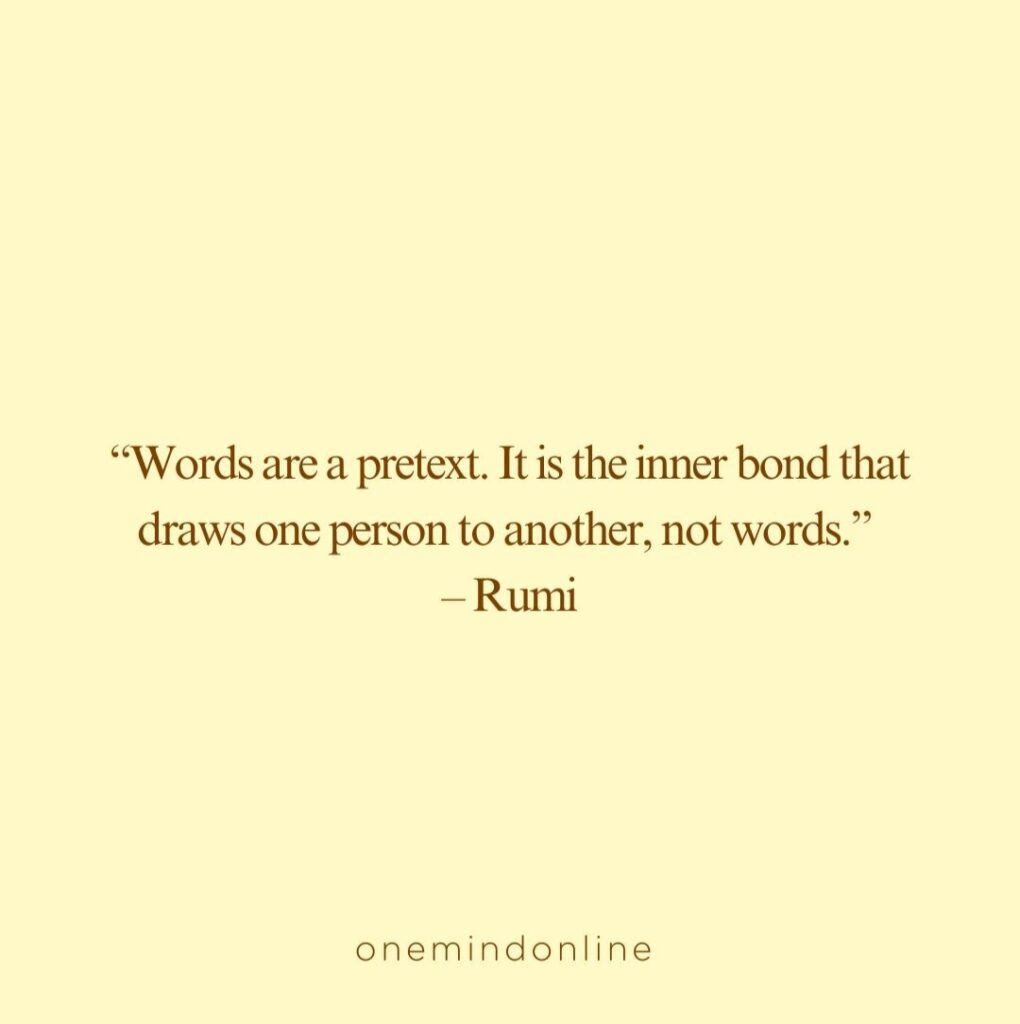

4 – Q&A for deeper learning
Read through the questions and answers and write down at least one “aha moment” that clicked for you.
Q1: What does “raise your words, not your voice” actually mean in practice?
It means shifting your energy from volume and force to intention and quality. In practice, it looks like pausing before you respond, choosing language that reflects what you genuinely feel rather than what you want to win, and prioritising clarity and warmth over intensity.
Q2: Why do we instinctively raise our voices in disagreements?
When we feel challenged, unheard, or threatened, the ego steps in to protect itself. Raising our voice is often a conditioned response — an attempt to assert control or dominance when we feel we’re losing ground. It’s less about communication and more about the fear of being seen as wrong or weak.
Q3: How does ego-driven communication block real connection?
When two egos clash, neither party is truly listening — both are waiting to rebut. The conversation becomes a contest with no room for curiosity, empathy, or growth. Genuine connection requires at least one person to step outside the ego dynamic and choose presence over performance.
Q4: What does Rumi mean when he says “words are a pretext”?
He’s suggesting that what we say matters far less than why and how we say it. The real communication happens beneath the words — in the energy, sincerity, and intention we bring. Two people can use identical words, but one feels cold and defensive while the other feels warm and open. The difference is the inner state behind the language.
Q5: How do I start speaking with more intention if I’m someone who reacts quickly?
Start with the breath. A single conscious pause before responding is enough to interrupt the reactive cycle. Over time, you can develop the habit of asking yourself: “Where is this response coming from — my fear, or my values?” The goal isn’t to suppress your reactions but to create a small gap between stimulus and response.
Q6: Can mindful communication still be assertive? Or does it mean being passive?
Absolutely — mindful communication can be deeply assertive. There is a profound difference between being forceful and being clear. You can hold a firm boundary, disagree strongly, or deliver difficult feedback with complete composure and respect. In fact, calm clarity is almost always more powerful than aggression.
Q7: How does self-awareness improve the quality of our communication?
The clearer our understanding of our own emotional triggers, biases, and needs, the less likely we are to project them unconsciously onto others. Self-awareness creates choice — instead of reacting from old patterns, we can respond from a place of intention. As Rumi suggests, the deeper we go within, the more clearly we see — and the more wisely we speak.