

“Your Daily Dose” is a quick two minute read packed with bite-sized wisdom from all the great teachers. But you could also choose to turn it into something more… a powerful daily practice for personal growth. Give it a try!
A message from today’s meditation:
Have you ever read Winnie the Pooh and realized that Pooh Bear is quite Zen compared to most of the characters around him?
“While Eeyore frets…
… and Piglet hesitates
… and Rabbit calculates
… and Owl pontificates
… Pooh just is…”
– The Tao of Pooh
Our teacher this week is very simply, a yellow bear in a red shirt.
Winnie the Pooh was first published in 1926, written by A.A. Milne, and half a century later Benjamin Hoff recognized how well the lessons from the “Hundred Acre Wood” map to the teachings of Lao Tzu. Inspired, he released “The Tao of Pooh” in 1982.
THE TAO OF POOH
…in which it is revealed that one of the world’s great Taoist masters isn’t Chinese…or a venerable philoso-pher…but is in fact none other than a simple bear.
The Tao of Pooh offers precious life lessons that truly resonate with our new reality. The central character of the book is Winnie the Pooh. Winnie personifies the Taoist belief of effortless doing or merely being. Other characters, like Piglet, Owl, Tigger, and Eeyore represent the human predisposition to overcomplicate things in life.
In the Tao of Pooh, the idea of accepting the flow of life is captured:
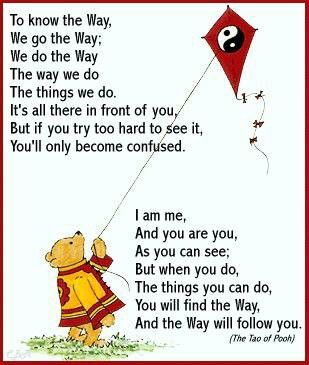
“To know the way,
we go the way,
we do the way.
The way we do,
the things we do,
it’s all right there in front of you.
But if you try too hard to see it,
you’ll only become confused.
I am me and you are you
as you can see.
But when you do,
just the things that you CAN do,
you will find the way.
And the way will follow you.”– The Tao of Pooh
The theme of our meditation for the start of this week is this – focus simply on what you CAN do, and always do just your best!
Keep your attention on what there is to do that is right in front of you, and trust that as you step on the path – even if you cannot see it – more of the path will be revealed to you.
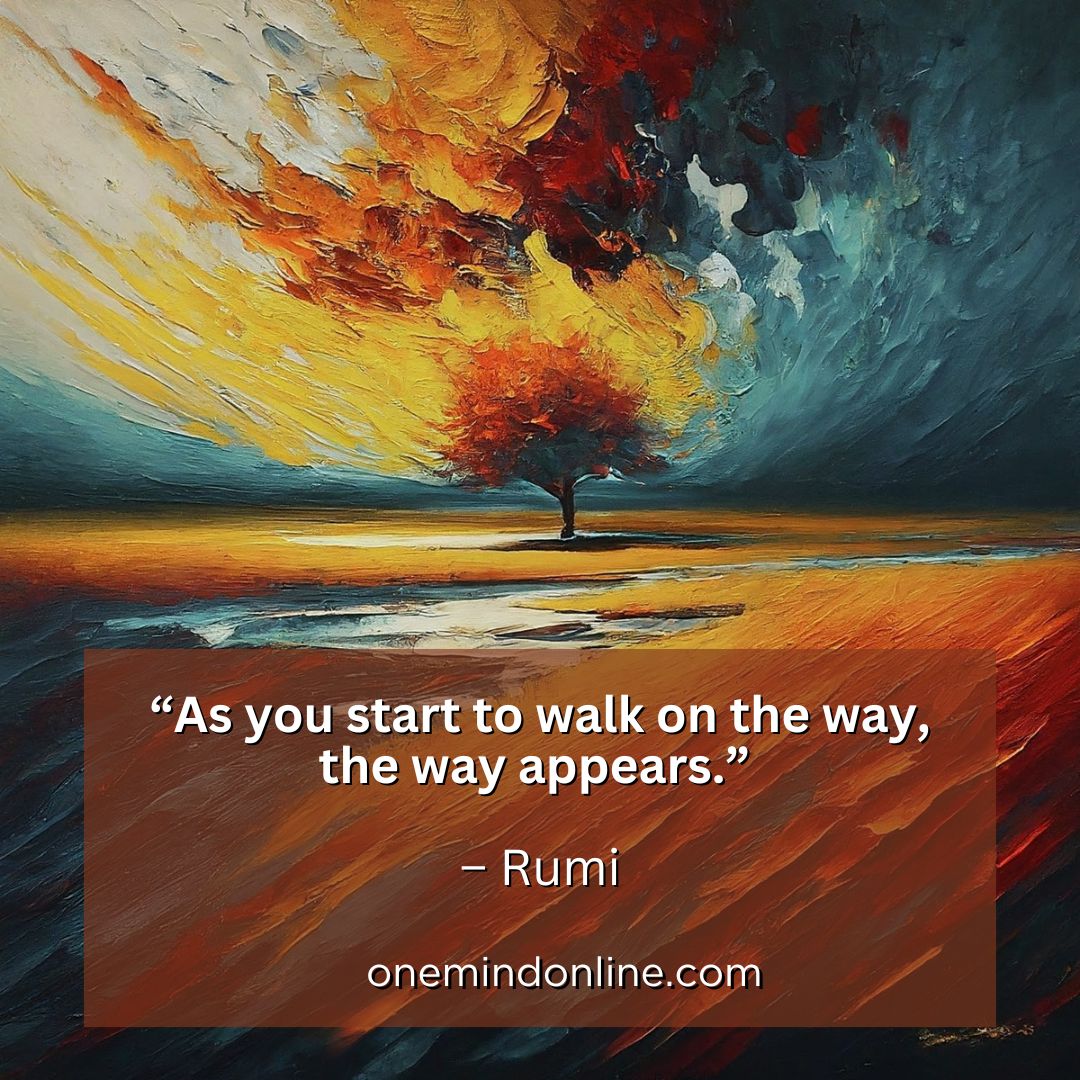
“As you start to walk on the way, the way appears.” – Rumi
Even Rumi agrees with Pooh.
I guess that means it’s true!
A few thoughts to help you find your way:
- Embrace simplicity: In a world of complexity, find joy in the simple moments of life. Like Pooh Bear, cultivate a sense of ease and contentment in the present moment.
- Trust the process: Have faith that the path will unfold before you as you embark on your journey. Allow yourself to be guided by the flow of life.
- Practice being mindful: Stay grounded in the present moment and approach each task with awareness and intention. By cultivating mindfulness, you can find clarity and peace amidst the chaos.
This week, may we be as Zen as that yellow bear. Embrace the power of effortless being and find peace in the present moment.
Have a beautiful week, beautiful people!
– pierre –
Today’s LIVE meditation is: Jumpstart the week!
(credit: https://www.benjaminhoffauthor.com/ )
Today’s LIVE meditation
https://youtu.be/6qN9-aJwdPc 2026
https://youtu.be/OKUIMcX9A54 2025
https://youtu.be/7GiR87V5Zfg 2024
https://youtu.be/cx6YoS1amsg 2023
https://youtu.be/Kb0R22YYlwM 2021
Practice the “Daily Dose”
Let’s put it into practice! Choose what works for you – daily, once a week or whenever inspiration strikes. Putting pen to paper wires the neural pathways that will create your new habits.
1 – Affirmation
Not quite affirmations today, but some grounding thoughts for your week ahead. Write down your favourite one on a sticky note and place it somewhere that you’ll be able to see it the whole day.
- Embrace simplicity: In a world of complexity, find joy in the simple moments of life. Like Pooh Bear, cultivate a sense of ease and contentment in the present moment.
- Trust the process: Have faith that the path will unfold before you as you embark on your journey. Allow yourself to be guided by the flow of life.
- Practice being mindful: Stay grounded in the present moment and approach each task with awareness and intention. By cultivating mindfulness, you can find clarity and peace amidst the chaos.
2 – A moment of reflection
Use today’s question as a journal prompt. If you don’t have the time to sit down and write, just take a moment to reflect on your response.
The excerpt from “The Tao of Pooh” emphasizes that “if you try too hard to see it, you’ll only become confused,” and that “when you do, the things that you CAN do, you will find the way.” Think about a goal or challenge you are currently facing. How might you shift your focus from trying to force a particular outcome to simply taking the next actionable step in front of you?
3 – Quotes to share
Send a quote to someone who needs it, or share them all on social media to spread the good vibes!

4 – Q&A for deeper learning
Read through the questions and answers and write down at least one “aha moment” that clicked for you.
Q1. What is The Tao of Pooh, and why does it matter for personal growth?
Published in 1982 by Benjamin Hoff, The Tao of Pooh uses the characters of A.A. Milne’s Winnie the Pooh to explain the ancient Chinese philosophy of Taoism. It matters for personal growth because it reframes wisdom as something natural and accessible — not reserved for philosophers or scholars — and shows that the deepest truths about living well are already embedded in simplicity, presence, and ease.
Q2. What does it mean to “just be,” like Pooh?
To “just be” means to inhabit the present moment without the constant overlay of worry, planning, or self-judgement. Pooh doesn’t rehearse the future or grieve the past — he responds to what is in front of him with openness and ease. In Taoist terms, this is called wu wei, or effortless action: moving through life naturally, without forcing outcomes or overcomplicating the simple.
Q3. How is Taoism connected to mindfulness and modern personal development?
Taoism, mindfulness, and much of modern personal development share the same core insight: that presence is more powerful than performance. Taoist philosophy teaches harmony with the natural flow of life; mindfulness teaches non-reactive awareness of the present moment; and the best of personal development encourages self-acceptance over self-improvement for its own sake. They all point toward the same thing — less striving, more being.
Q4. Why do we find it so hard to simply be, rather than constantly do?
Modern culture equates worth with productivity. We are conditioned from an early age to measure ourselves by output, achievement, and busyness. Stillness can feel threatening because it removes the doing that we’ve learned to hide behind. The inner Rabbit, Eeyore, and Owl in us are survival strategies — ways of managing anxiety about the future. Recognising them is the first step toward choosing a different way.
Q5. What does the Rumi quote add to the teaching from The Tao of Pooh?
Rumi’s line — “As you start to walk on the way, the way appears” — reinforces the same truth from a completely different tradition. It confirms that the insight isn’t cultural or incidental; it’s universal. You cannot think your way into clarity. You have to move, act, begin — and the path reveals itself in the walking. Both Pooh and Rumi are saying: stop waiting to feel ready, and start.
Q6. How do I apply the “do what you CAN do” principle when life feels overwhelming?
When everything feels like too much, return to the smallest possible unit of action. What is the one thing you can do right now — not tomorrow, not perfectly, right now? Doing what you can, from where you are, with what you have, is not a consolation prize. It is the entire practice. Overwhelm is often the result of trying to hold the whole path in your hands at once. You only ever need the next step.
Q7. Is embracing simplicity the same as giving up on ambition or growth?
Not at all. Embracing simplicity is about releasing unnecessary complexity — the fretting, the over-planning, the need to control every outcome. It doesn’t mean abandoning goals or growth. Pooh is not passive; he moves through his world with full engagement. The difference is that his effort is clean, unforced, and present. Ambition rooted in ease tends to be more sustainable, more creative, and more joyful than ambition driven by fear or compulsion.