Below is a 2 minute read to change your day, or… plunge into these topics for a deeper understanding.
A message from today’s meditation:
Our teacher for this week has been Sharon Salzberg, and her own description of herself is, “I call myself a meditation teacher rather than a spiritual teacher.”
Meditation really IS Sharon’s specialty, and for today’s message I have a sizable collection of her thoughts on meditation, and I’ve divided it into three themes for you:
How to meditate
“You don’t have to believe anything, or adopt a dogma in order to learn how to meditate.” – Sharon Salzberg
“There are many different ways to practice meditation; it’s good to experiment until you find one that seems to suit you.” – Sharon Salzberg
“Meditation may be done in silence & stillness, by using voice & sound, or by engaging the body in movement. All forms emphasize the training of attention.” – Sharon Salzberg
What meditation is not
“Some people have a mistaken idea that all thoughts disappear through meditation and we enter a state of blankness. There certainly are times of great tranquility when concentration is strong and we have few, if any, thoughts. But other times, we can be flooded with memories, plans or random thinking. It’s important not to blame yourself.” – Sharon Salzberg
“Meditation is not the construction of something foreign, it is not an effort to attain and then hold-on to a particular experience. We may have a secret desire that through meditation we will accumulate a stockpile of magical experiences, or at least a mystical trophy or two, and then we will be able to proudly display them for others to see.” – Sharon Salzberg
The results of meditation
“Meditation is a tool for helping us accept the profound fact that everything changes all the time.” – Sharon Salzberg
“I’ve always said that lovingkindness and compassion (which are specific forms of meditation) are inevitably woven throughout meditation practice even if the words are never used or implied, no matter what technique or method we are using.” – Sharon Salzberg
“As we practice meditation we are bringing forth ease, presence, compassion, wisdom & trust.” – Sharon Salzberg
“People turn to meditation because they want to make good decisions, break bad habits & bounce back better from disappointments.” – Sharon Salzberg
“Meditation is a microcosm, a model, a mirror. The skills we practice when we sit are transferable to the rest of our lives.” – Sharon Salzberg
“Dedicating some time to meditation is a meaningful expression of caring for yourself that can help you move through the mire of feeling unworthy of recovery. As your mind grows quieter and more spacious, you can begin to see self-defeating thought patterns for what they are, and open up to other, more positive options.” – Sharon Salzberg
“Mindfulness, also called wise attention, helps us see what we’re adding to our experiences, not only during meditation sessions but also elsewhere.” – Sharon Salzberg
“Each of us has a genuine capacity for love, forgiveness, wisdom and compassion. Meditation awakens these qualities so that we can discover for ourselves the unique happiness that is our birthright.” – Sharon Salzberg
“Meditation clarifies our minds and opens our hearts, and brings us to unusual depth and stability of happiness, whatever life brings.” – Sharon Salzberg
“You can see your thoughts and emotions arise & create space for them even if they are uncomfortable.” – Sharon Salzberg
Ultimately, the most important attribute of meditation might be that whoever you are, wherever you were born in the world, whatever colour or gender you are, whatever might have happened to you in your life – we all have equal access to benefits of meditation.
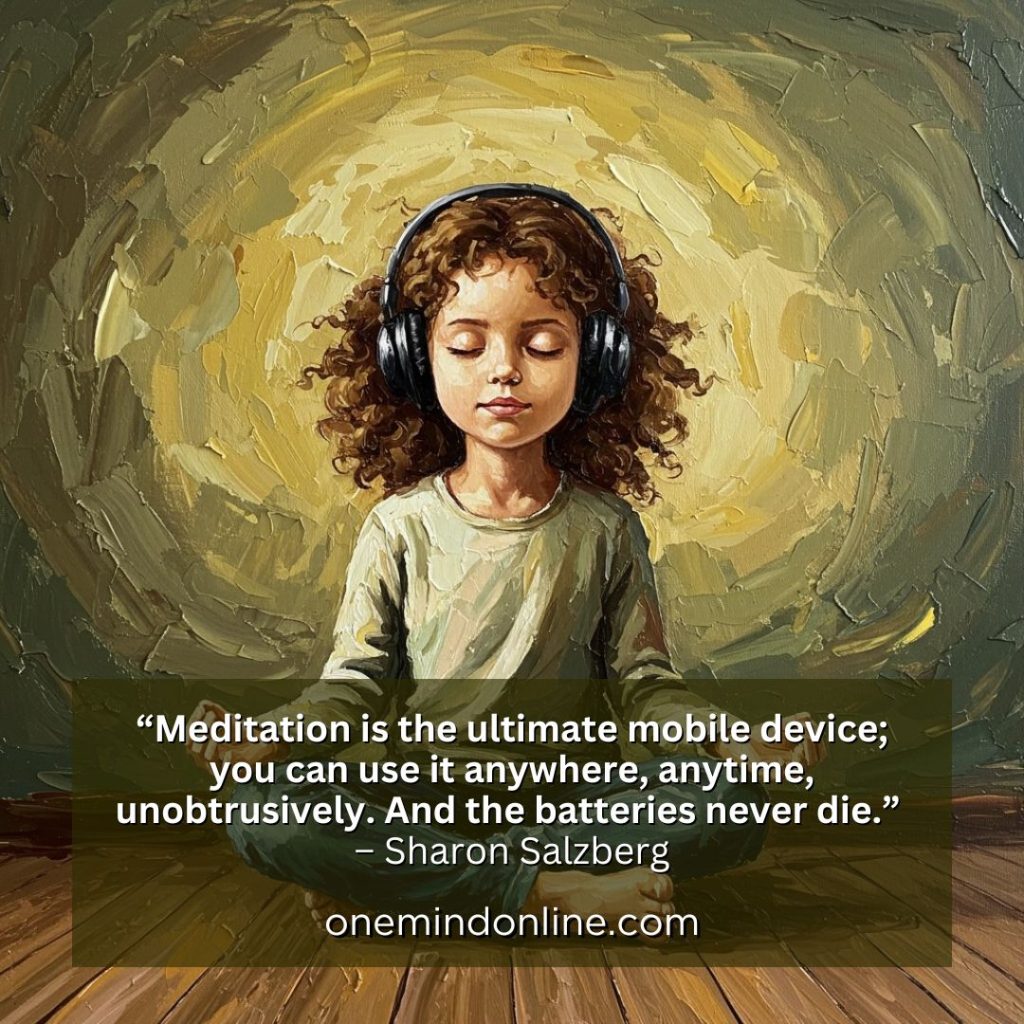
“Meditation is the ultimate mobile device; you can use it anywhere, anytime, unobtrusively. And the batteries never die.” – Sharon Salzberg
As you embark on your meditation journey, consider these guiding principles:
- Acceptance: Everything changes, and that’s okay.
- Compassion: Extend kindness and understanding to yourself and others.
- Awareness: Observe your thoughts and feelings without judgment.
- Patience: Meditation is a continuous practice, not a one-time fix.
- Self-care: Dedicating time to meditation is a form of self-love.
- Growth: Each session is an opportunity to learn and evolve.
Join us for today’s silent meditation. It always amazes me how peaceful it can be to simply come together in silence…
– pierre –
Today’s LIVE meditation is: Finding silence.
A moment of reflection
(If you have the time, use this question as a journal prompt, because whenever you put pen to paper you’re wiring the neural pathways that create your new habits. But if you don’t have the time, just take a moment to reflect on your response.)
The Mirror of Self-Blame: Salzberg emphasizes that when our minds are “flooded with memories, plans or random thinking” during meditation, “it’s important not to blame yourself.” Explore your relationship with self-blame in your daily life. When do you find yourself being most critical of your thoughts, emotions, or actions? Write about specific patterns you notice. How does this self-criticism serve you, and how does it limit you? If you were to extend the same compassion to yourself that you might offer a dear friend facing similar struggles, what would that inner dialogue sound like? What would change in your life if you truly accepted that being human means experiencing the full spectrum of thoughts and feelings?
Today’s LIVE meditation
https://youtu.be/DAfMoiDYdW0 2025
https://youtu.be/BlU5C_fuy9Q 2024
https://youtu.be/uQMBaPzDqyI 2023
Q&A for deeper learning
1. I’m not spiritual or religious. Can I still benefit from meditation?
Absolutely. As Sharon Salzberg emphasizes, “You don’t have to believe anything, or adopt a dogma in order to learn how to meditate.” Meditation is fundamentally a training of attention—like going to the gym for your mind. Whether you’re seeking better focus, stress relief, emotional regulation, or simply wanting to “make good decisions, break bad habits & bounce back better from disappointments,” meditation offers practical, secular benefits that don’t require any spiritual framework.
2. My mind never stops racing during meditation. Am I doing it wrong?
You’re doing it perfectly right. One of the biggest misconceptions is that meditation should result in a blank, thought-free mind. Salzberg addresses this directly: “Some people have a mistaken idea that all thoughts disappear through meditation and we enter a state of blankness.” The reality is that sometimes you’ll experience tranquility, but “other times, we can be flooded with memories, plans or random thinking.” The key is learning to observe these thoughts without judgment and without blaming yourself for having them.
3. How do I know if meditation is actually working for me?
Rather than looking for mystical experiences or dramatic transformations, notice subtle shifts in daily life. Meditation works as “a microcosm, a model, a mirror”—the skills you practice sitting quietly transfer to how you handle stress, relationships, and challenges. You might find yourself pausing before reacting, feeling more compassionate toward yourself and others, or experiencing what Salzberg calls “unusual depth and stability of happiness, whatever life brings.” The benefits often show up in your capacity to “see your thoughts and emotions arise & create space for them even if they are uncomfortable.”
4. I barely have time for myself as it is. How can I fit meditation into my schedule?
This concern reveals exactly why you need meditation most. As Salzberg notes, meditation is “the ultimate mobile device; you can use it anywhere, anytime, unobtrusively.” You don’t need a special room, expensive equipment, or hour-long sessions. Three minutes of mindful breathing while your coffee brews, a moment of awareness during your commute, or conscious attention to your breath before sleep all count. The practice is about training attention in whatever time you have, not about finding perfect conditions.
5. I keep judging myself during meditation. How do I stop this cycle?
Self-judgment during meditation is actually valuable information, not a problem to solve. When you notice self-criticism arising, you’re experiencing exactly what meditation is designed to help with—seeing your mental patterns clearly. “Mindfulness, also called wise attention, helps us see what we’re adding to our experiences.” Instead of fighting the judgment, try observing it with curiosity: “Isn’t that interesting—there’s that critical voice again.” This gentle awareness gradually loosens the grip of self-blame and cultivates the compassion that’s naturally woven throughout meditation practice.
6. Can meditation really help with serious emotional pain or trauma?
While meditation isn’t a substitute for professional therapy when dealing with trauma, it can be a supportive practice for healing. Salzberg notes that “dedicating some time to meditation is a meaningful expression of caring for yourself that can help you move through the mire of feeling unworthy of recovery.” Meditation helps you develop the capacity to “see self-defeating thought patterns for what they are, and open up to other, more positive options.” However, if you’re dealing with significant trauma, it’s important to work with qualified mental health professionals who can guide you safely through both meditation and other healing modalities.
7. What if I don’t feel like I’m naturally good at meditation?
The beautiful truth is that meditation isn’t about being “good” at it—it’s about showing up with whatever you bring. “Each of us has a genuine capacity for love, forgiveness, wisdom and compassion,” regardless of how scattered or unsettled we might feel. Salzberg reminds us that whoever you are, “whatever colour or gender you are, whatever might have happened to you in your life—we all have equal access to benefits of meditation.” Your struggles with the practice aren’t obstacles to overcome; they’re the very material you’re working with to develop greater self-compassion and awareness.