
“Your Daily Dose” is a quick two minute read packed with bite-sized wisdom from all the great teachers. But you could also choose to turn it into something more… a powerful daily practice for personal growth. Give it a try!
A message from today’s meditation:
Are you missing out on the beauty of today by wishing for tomorrow’s happiness? We all get caught up in the whirlwind of life, constantly chasing the next thing, the next milestone.
It sometimes amazes me the extent to which we can be absent from our own lives, because we’re always wishing to be somewhere else.
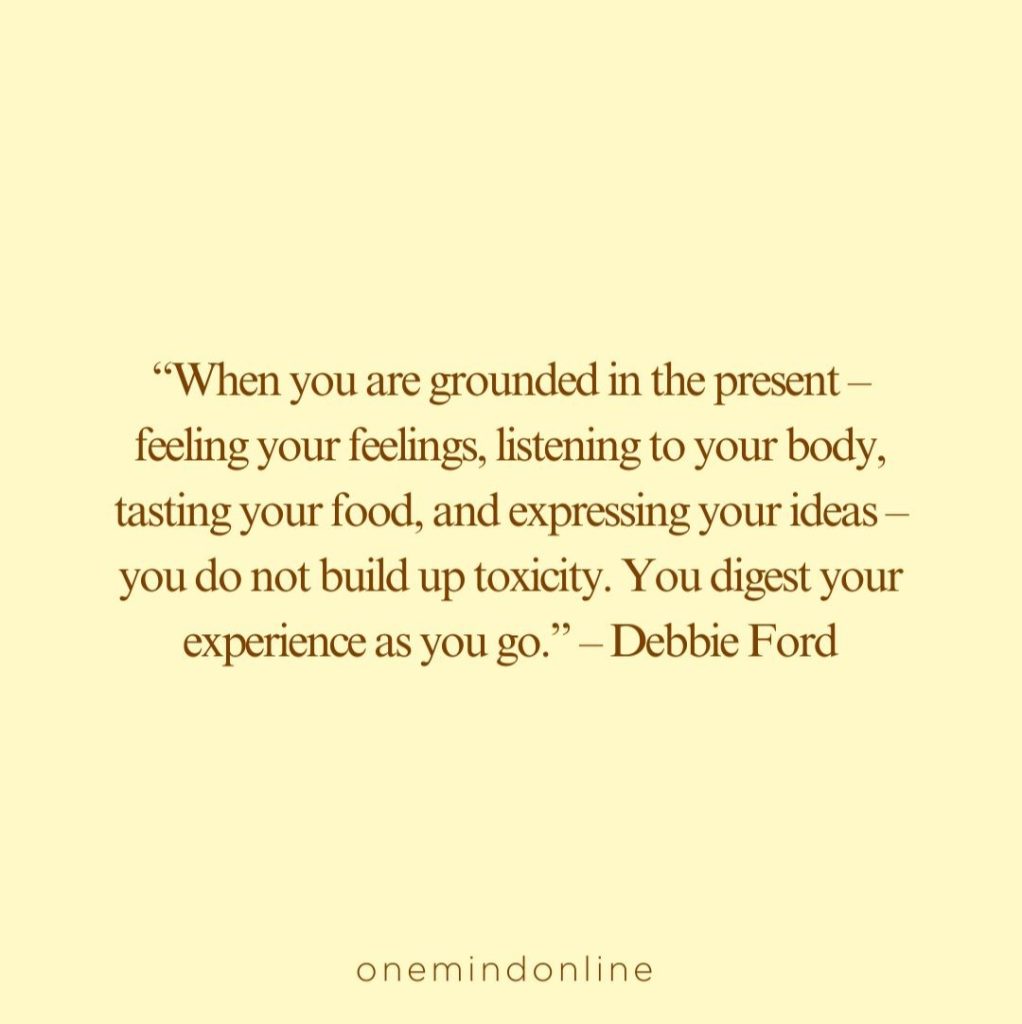
“When you are grounded in the present – feeling your feelings, listening to your body, tasting your food, and expressing your ideas – you do not build up toxicity. You digest your experience as you go.” – Debbie Ford
We can all learn to be more present to our lives, not turn away from experiences that are uncomfortable, not numb emotions that scare us, but live with our hearts wide open and learn that we can actually even process traumatic events as they happen when we are not trying to be somewhere else. As we get better at this, we learn that we can trust life.
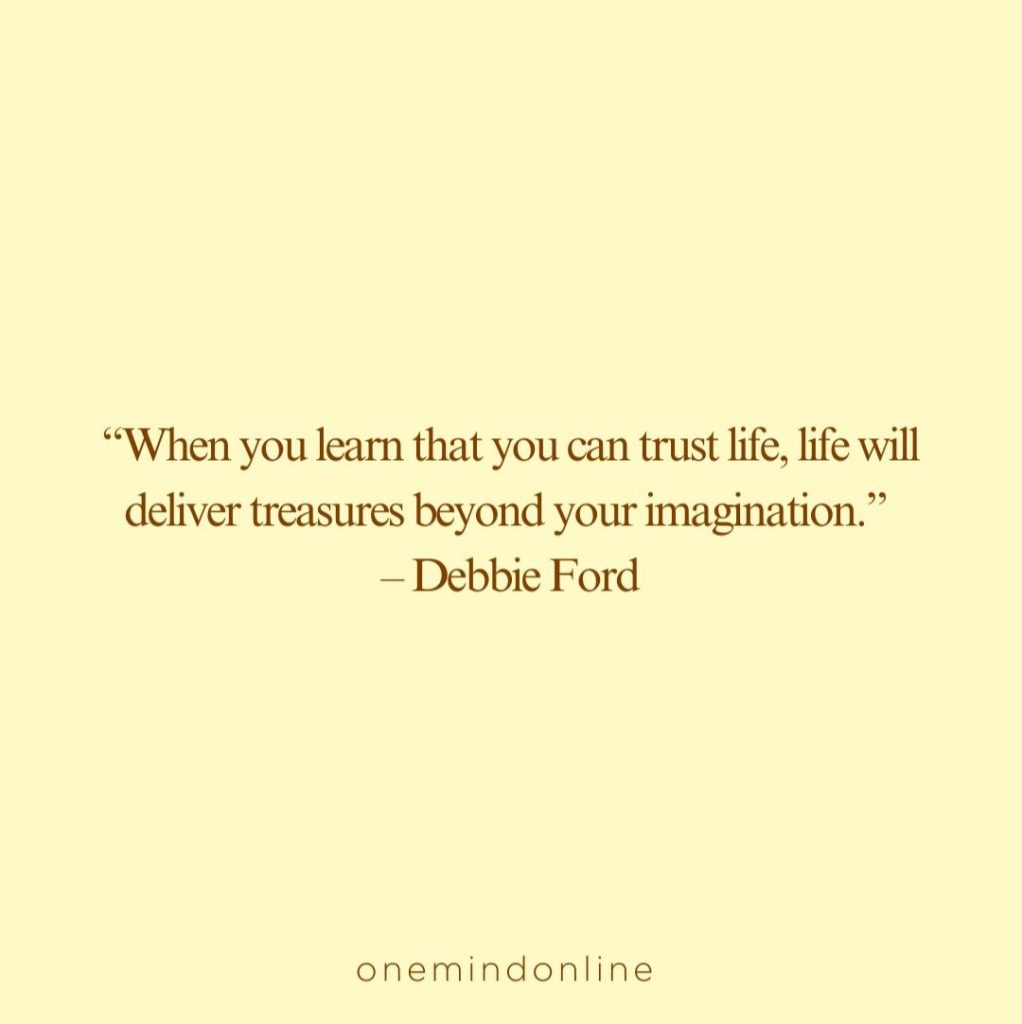
“When you learn that you can trust life, life will deliver treasures beyond your imagination.” – Debbie Ford
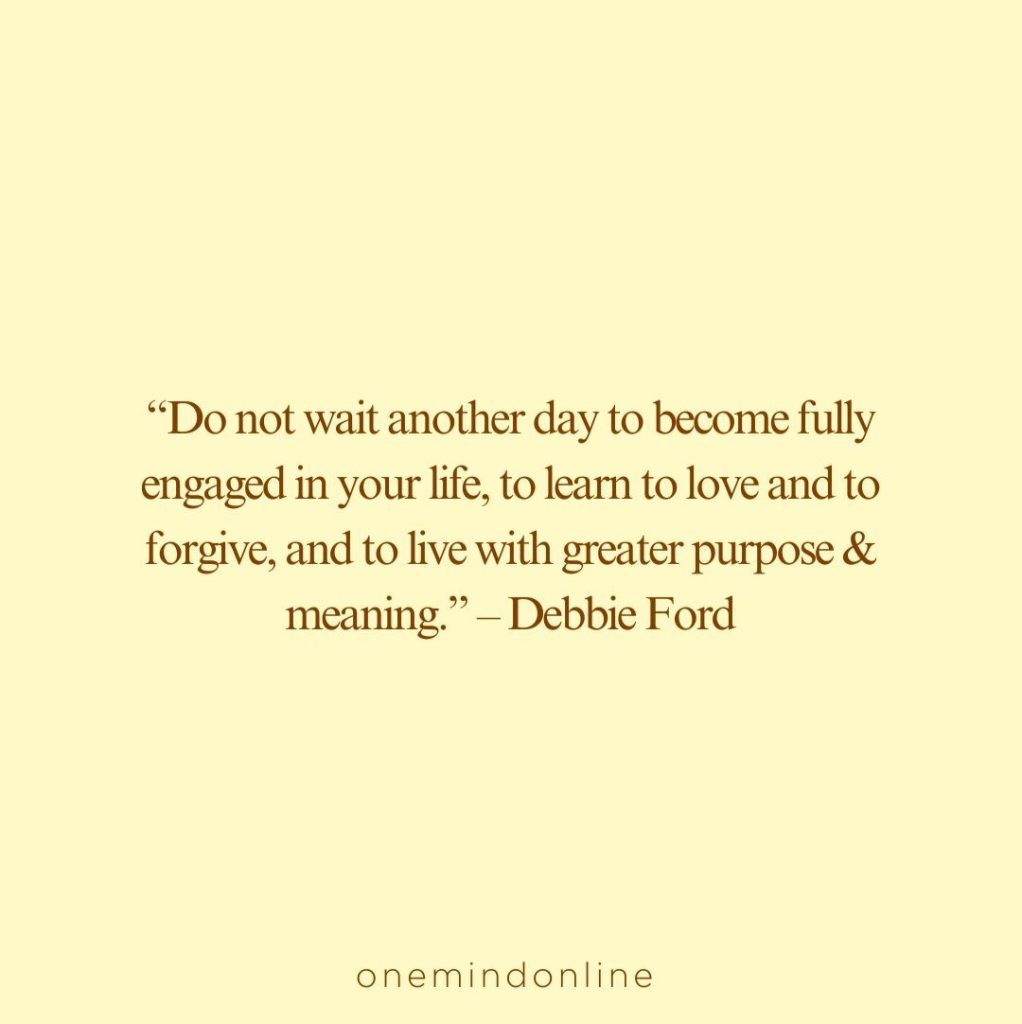
“Do not wait another day to become fully engaged in your life, to learn to love and to forgive, and to live with greater purpose & meaning.” – Debbie Ford
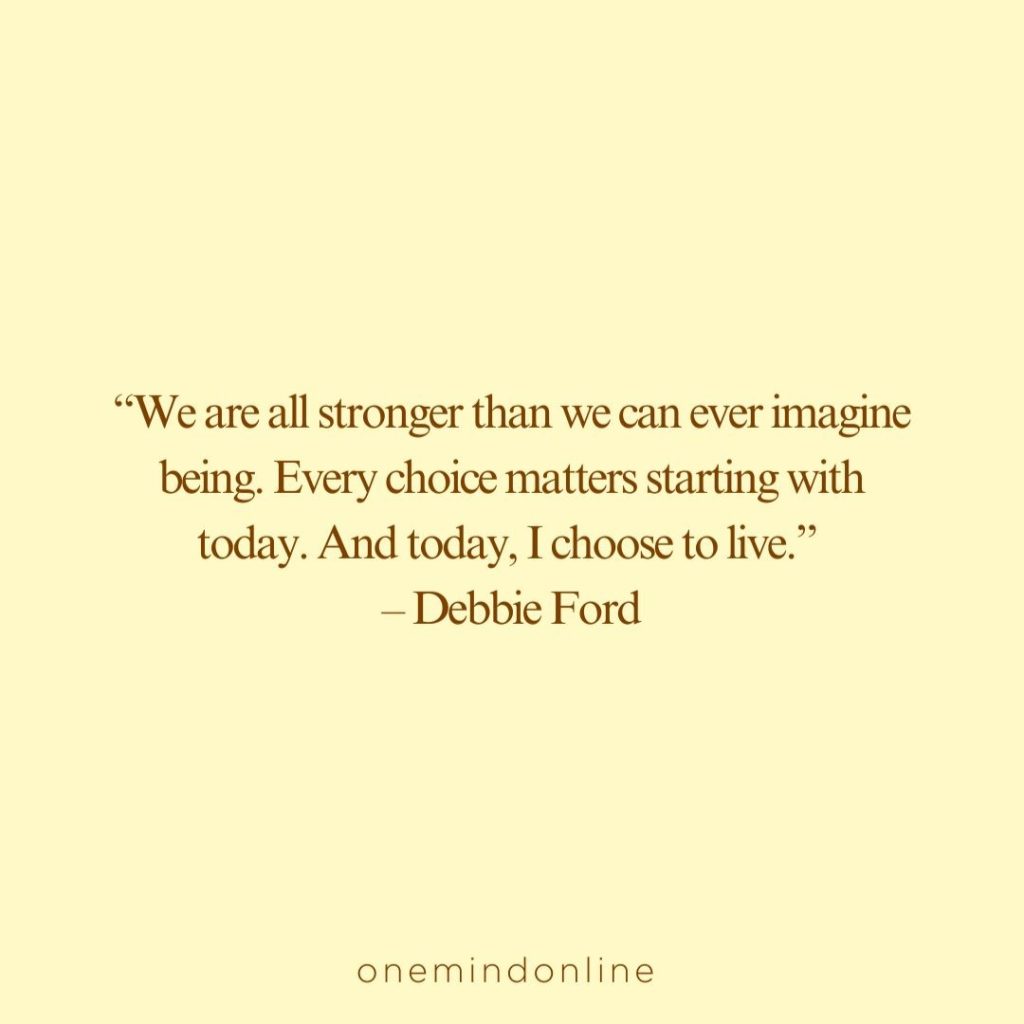
“We are all stronger than we can ever imagine being. Every choice matters starting with today. And today, I choose to live.” – Debbie Ford
Be right here, right now. Experience life at full power!
When I am able to find happiness in whatever this day brings, I will know how to find it tomorrow and the next day too! But if happiness is around some elusive corner in the faraway future. I am unlikely to ever catch up to it.
Mantras for the present moment:
- “I am here. I am present. I am alive.”
- “I trust life, and life trusts me.”
- “Today is a gift. I receive it with open arms.”
- “Every breath is a chance to begin again.”
- “I choose to live, fully and authentically.”
Start right now. Take a deep breath. Feel your feet on the ground. Notice the sights, sounds, and smells around you. Right here is where life is happening. This is where the magic unfolds.
Be fully alive today!
– pierre –
Today’s LIVE meditation is: Come to your senses.
Today’s LIVE meditation
https://youtu.be/7NYBtrFXymI 2026
https://youtu.be/_wWovEcj1a0 2025
https://youtu.be/h_vqteE5iiI 2024
https://youtu.be/JG00mcx3TOc 2023
Practice the “Daily Dose”
Let’s put it into practice! Choose what works for you – daily, once a week or whenever inspiration strikes. Putting pen to paper wires the neural pathways that will create your new habits.
1 – Affirmation
Write down your favourite affirmation on a sticky note and place it somewhere that you’ll be able to see it the whole day.
- “I am here. I am present. I am alive.”
- “I trust life, and life trusts me.”
- “Today is a gift. I receive it with open arms.”
- “Every breath is a chance to begin again.”
- “I choose to live, fully and authentically.”
2 – A moment of reflection
Use today’s question as a journal prompt. If you don’t have the time to sit down and write, just take a moment to reflect on your response.
Choosing to Live: Ford writes, “Today, I choose to live.” What does it mean to you to truly choose to live, rather than simply exist or get through the day? Write about a specific moment when you felt fully alive. What were you doing? What made that moment different? How can you bring that quality of aliveness into ordinary moments?
3 – Quotes to share
Send a quote to someone who needs it, or share them all on social media to spread the good vibes!


4 – Q&A for deeper learning
Read through the questions and answers and write down at least one “aha moment” that clicked for you.
Q1: What does it mean to “digest your experience as you go”?
Digesting your experience means fully processing emotions, sensations, and events as they happen rather than suppressing, avoiding, or postponing them. Just as your body digests food to extract nutrients and eliminate waste, emotional digestion allows you to extract wisdom and meaning from experiences while releasing what doesn’t serve you. When you don’t digest experiences in the moment, they accumulate as unprocessed emotional “toxicity” that can manifest as anxiety, resentment, physical tension, or other symptoms later.
Q2: How can I be present with uncomfortable or painful emotions without being overwhelmed?
Start small and build your capacity gradually. Being present doesn’t mean drowning in emotion; it means acknowledging what you’re feeling without immediately trying to fix it, escape it, or judge yourself for it. Try naming the emotion (“I’m feeling anxious”), locating it in your body (“There’s tightness in my chest”), and breathing with it for just a few moments. You’re not trying to make it go away—you’re simply being with it. Over time, you’ll discover that you’re stronger than you imagined and that emotions, when acknowledged, often shift on their own.
Q3: Isn’t planning for the future important? How do I balance being present with being responsible?
Absolutely—planning is essential. The issue isn’t planning for tomorrow; it’s living in tomorrow while missing today. You can set goals, make plans, and work toward the future while remaining grounded in the present moment. The difference is this: when planning, you’re fully present with the act of planning. When working, you’re present with your work. The key is not abandoning the present in favor of a fantasy that happiness only exists elsewhere. Ironically, people who are present tend to make better decisions and plans because they’re not operating from avoidance or escapism.
Q4: What if my present circumstances are genuinely difficult? Isn’t it natural to want to be somewhere else?
Of course it’s natural, and this teaching isn’t about toxic positivity or pretending everything is fine when it isn’t. Being present in difficult circumstances means acknowledging the reality of what is, feeling the appropriate emotions, and responding with clarity rather than denial. When you turn away from difficult present moments, you actually diminish your power to change them. Paradoxically, accepting what is—even when it’s painful—is often the first step toward transformation. You can work toward a better future while still being present with what is.
Q5: How do I know if I’m truly present or just convincing myself I am?
True presence has distinct characteristics: you’re aware of sensory details around you, you can feel sensations in your body, you’re not lost in mental narratives about past or future, and you experience a sense of aliveness or vitality. A simple test: Can you feel your breath right now? Can you feel your feet touching the ground? Are you aware of sounds around you? If you can answer yes and actually experience these things rather than just thinking about them, you’re present. If you’re analyzing whether you’re present, you’re probably in your head. Presence is experiential, not conceptual.
Q6: Why does trusting life seem so difficult, especially after experiencing trauma or betrayal?
Trust is rebuilt gradually through repeated experiences of successfully navigating present moments. After trauma, your nervous system is understandably on high alert, constantly scanning for danger and trying to prevent future pain by controlling or avoiding. Rebuilding trust doesn’t mean becoming naive or pretending bad things don’t happen. It means developing confidence in your ability to handle what arises. Each time you stay present with a difficult feeling and survive it, each time you face something uncomfortable and discover you’re okay, you’re making small deposits in your trust account. It’s not about trusting that bad things won’t happen—it’s about trusting yourself and life’s process.
Q7: What practical steps can I take right now to start being more present?
Begin with simple, concrete practices. Set reminders on your phone to pause and take three conscious breaths. During meals, put away distractions and actually taste your food. In conversations, practice listening without planning what you’ll say next. When walking, feel your feet touching the ground. Notice when your mind drifts to past or future and gently bring attention back to your senses. Start with just five minutes a day of sitting quietly and noticing your breath. The practice isn’t about perfection—it’s about repeatedly choosing to return to now, again and again. Each return is a victory.