

“Your Daily Dose” is a quick two minute read packed with bite-sized wisdom from all the great teachers. But you could also choose to turn it into something more… a powerful daily practice for personal growth. Give it a try!
A message from today’s meditation:
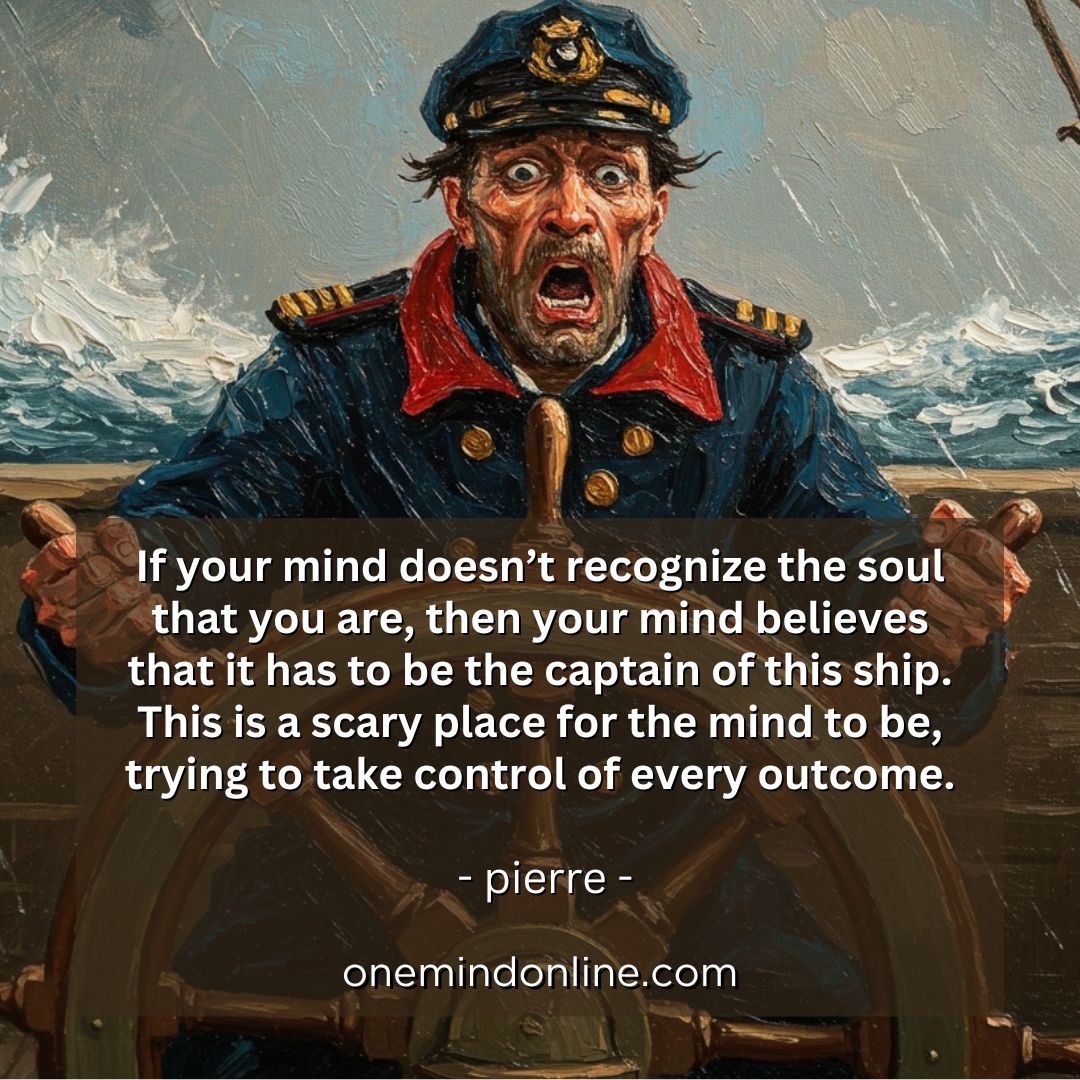
Who is the captain of your ship? Today’s meditation explores the relationship between your mind and your being. Often, we find ourselves caught in the currents of our thoughts and emotions, interpreting all of the thinking and feeling as a rigid definition of who we are. But what if there’s a deeper awareness, a truer self, that observes all of this?
Today’s meditation explores this dynamic…
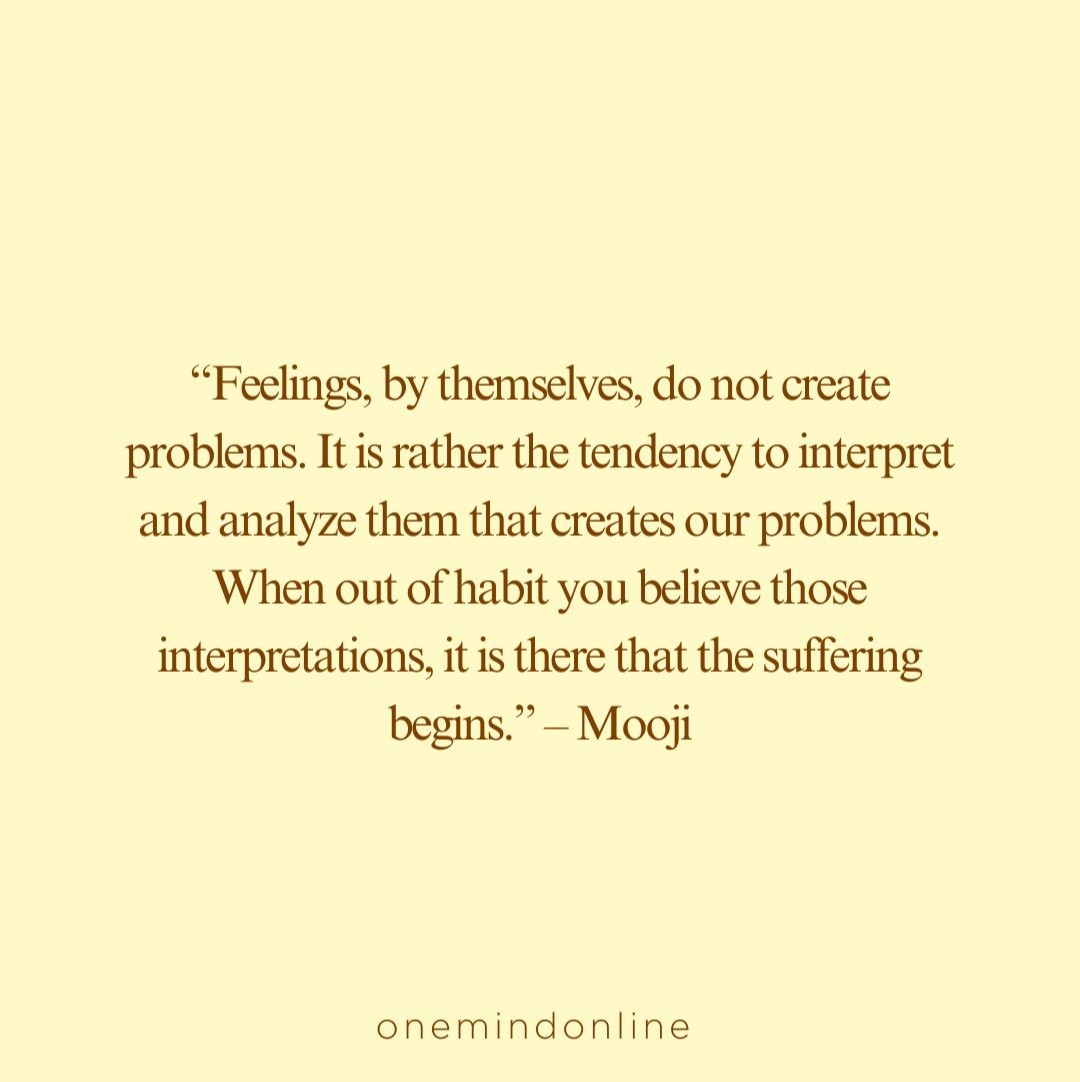
“Feelings, by themselves, do not create problems. It is rather the tendency to interpret and analyze them that creates our problems. When out of habit you believe those interpretations, it is there that the suffering begins.” – Mooji
Are you able to have feelings, to allow the feelings to be felt, without judging and over-analyzing the feelings knowing that in due time they’ll pass, making way for different feelings?
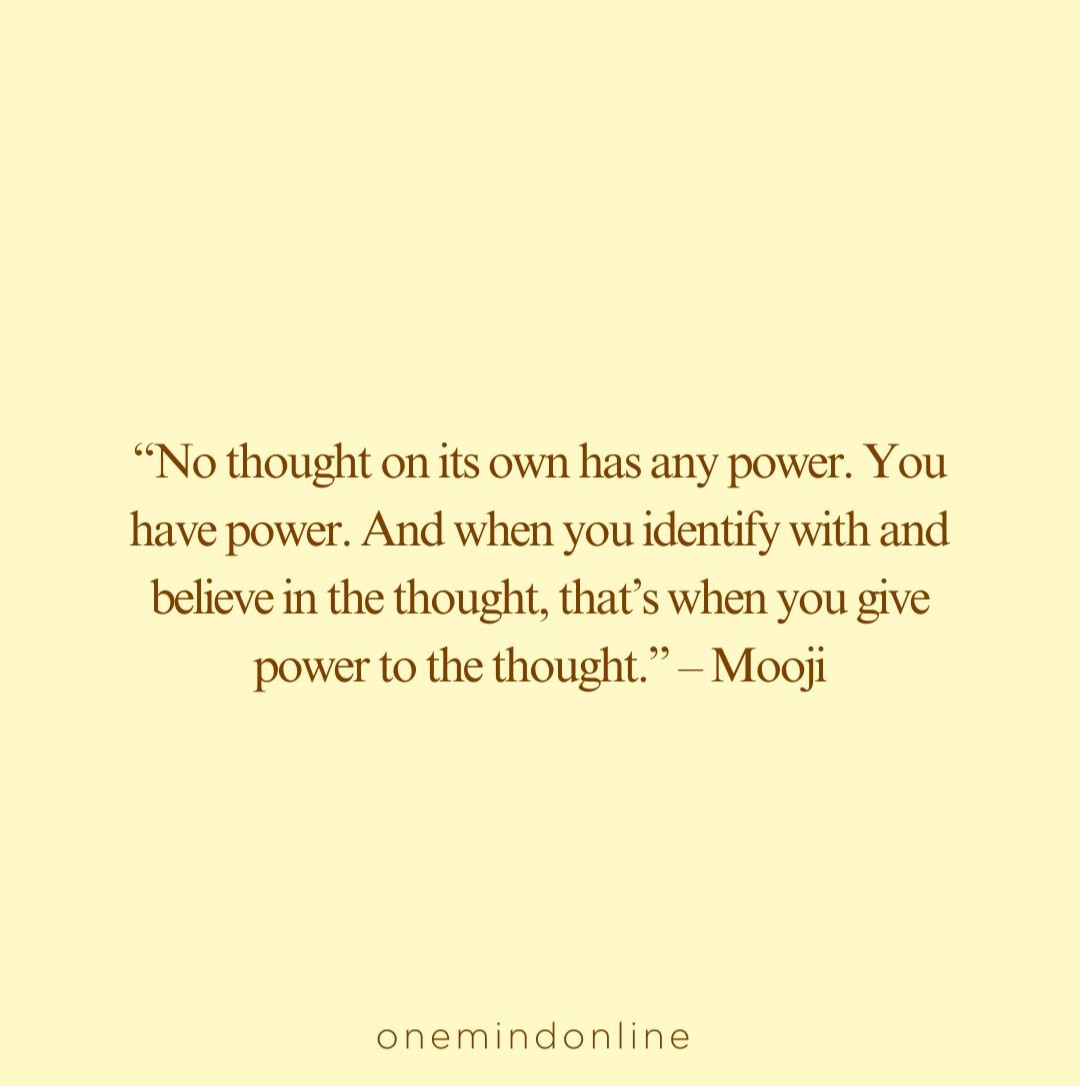
“No thought on its own has any power. You have power. And when you identify with and believe in the thought, that’s when you give power to the thought.” – Mooji
Are you able to have thoughts, to allow the thoughts to be seen, without judging and over-analyzing the thoughts knowing that in due time they’ll pass, making way for different thoughts?
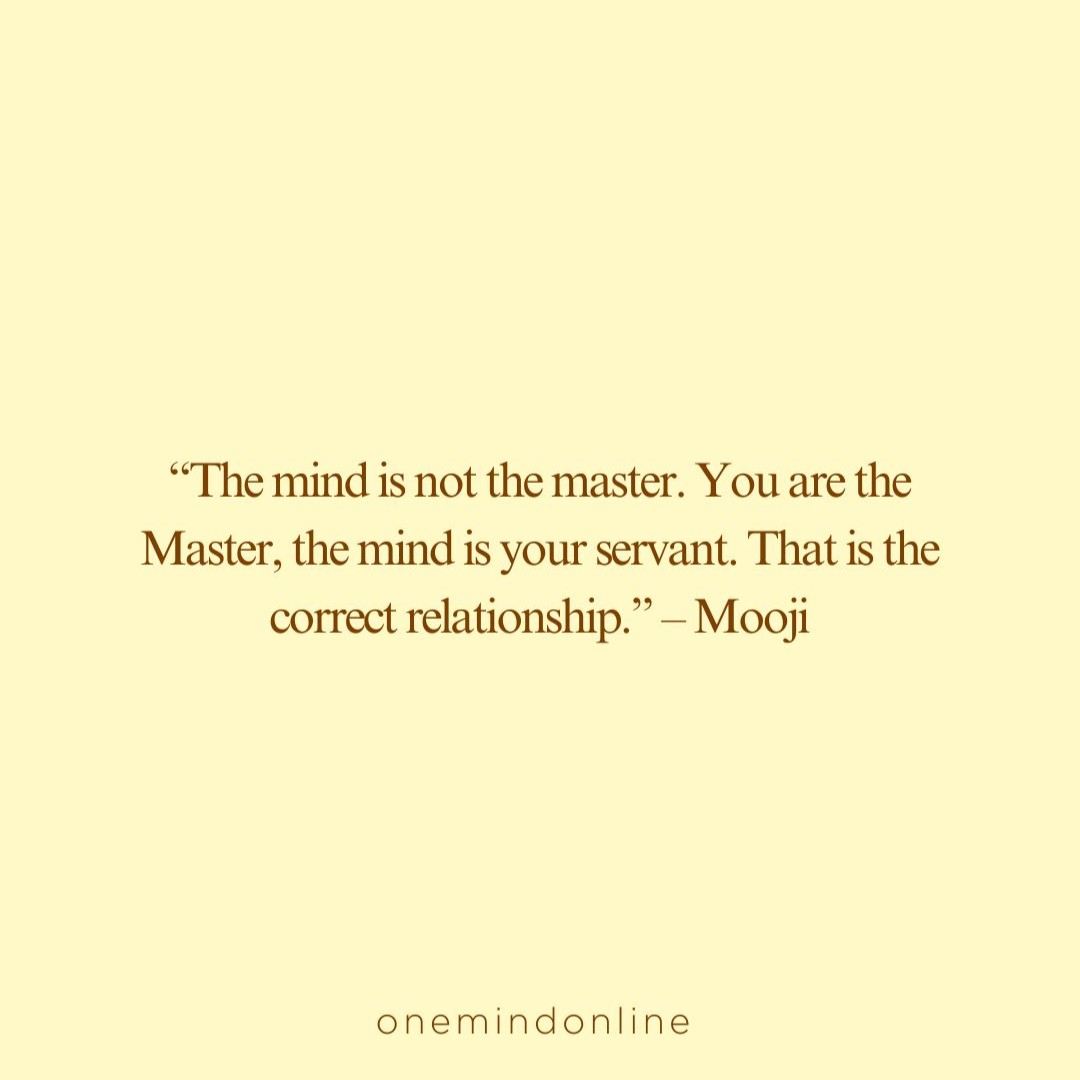
“The mind is not the master. You are the Master, the mind is your servant. That is the correct relationship.” – Mooji
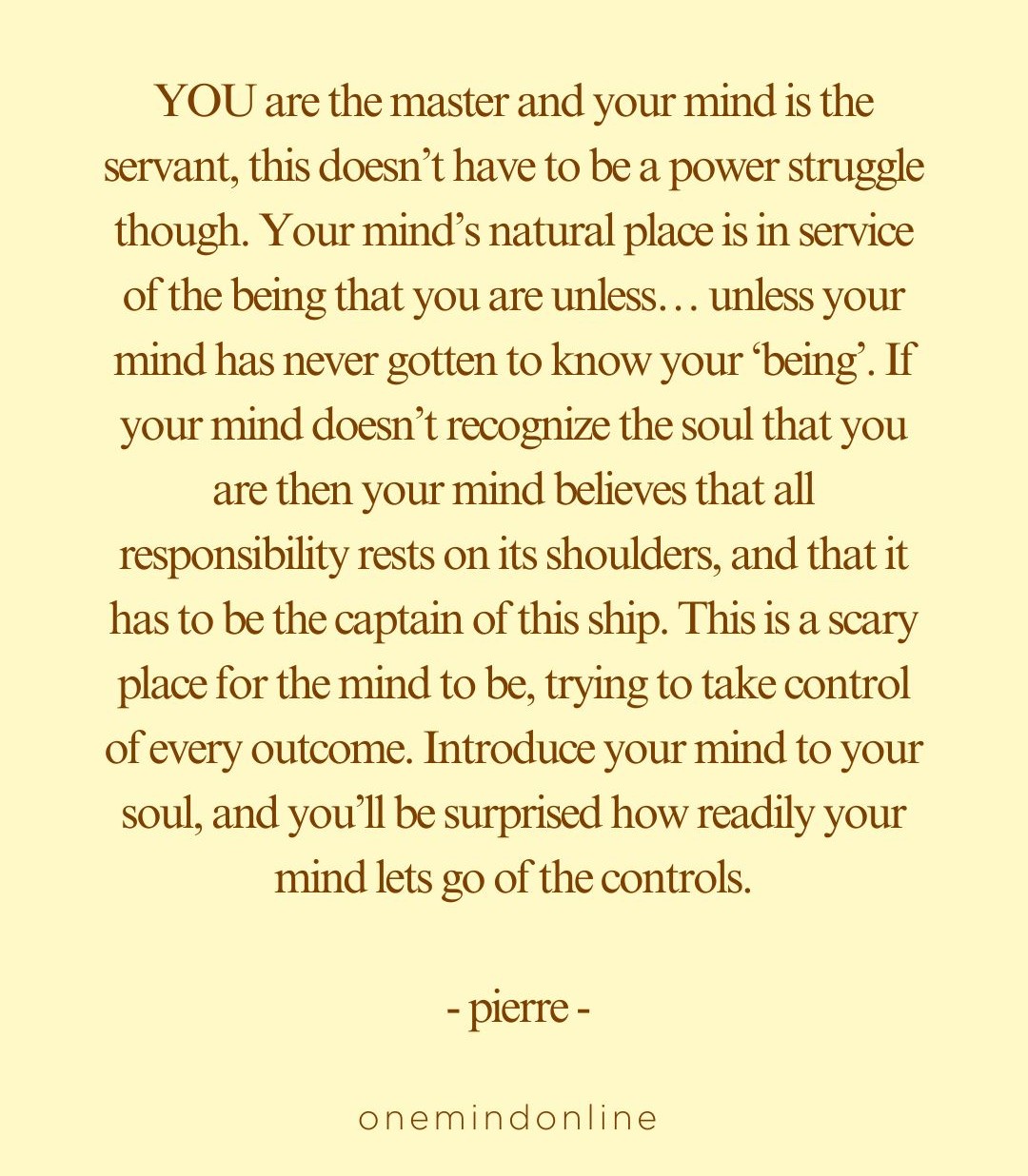
YOU are the master and your mind is the servant, this doesn’t have to be a power struggle though. Your mind’s natural place is in service of the being that you are unless… unless your mind has never gotten to know your ‘being’. If your mind doesn’t recognize the soul that you are then your mind believes that all responsibility rests on its shoulders, and that it has to be the captain of this ship. This is a scary place for the mind to be, trying to take control of every outcome. Introduce your mind to your soul, and you’ll be surprised how readily your mind lets go of the controls.
Today’s meditation journey is a practical exercise in witnessing thoughts and feelings and asking the question, “who is it that is witnessing the mind?” When we take a step back and observe what the mind is doing, then we’re not being the mind but being the soul who is watching the mind.
Everything you practice, you will become better at. We know how true this is for physical skills like learning how to ride a bicycle, and this is equally true for dealing with our inner world. The practice is taking a step back from your thoughts and emotions and just watching. By witnessing, you are not automatically believing every thought and emotion and giving it power over you. By witnessing you are stepping into your soul.
Affirmations to empower your essence:
- “My soul is the captain of my ship.” – Your mind is a servant to the being that you are.
- “I observe without judgment.” – Watch your thoughts and feelings without labeling or reacting.
- “I am worthy of inner peace.” – Your soul can choose how to respond to thoughts and emotions.
In conclusion, mastering our minds is not about suppressing our thoughts or emotions but about developing a conscious relationship with them. By understanding that we are the observers of our experiences rather than being consumed by them, we can begin to experience the profound transformation that comes from a mind in harmony with the soul.
– pierre –
Today’s LIVE meditation is: Come to your senses.
Today’s LIVE meditation
https://youtu.be/fLNuR38OP1g 2025
https://youtu.be/QZ-IUOWvWow 2024
https://youtu.be/5n49VJgnmWw 2023
https://www.youtube.com/watch?v=W7KgcZ1jX1A 2022
Practice the “Daily Dose”
Let’s put it into practice! Choose what works for you – daily, once a week or whenever inspiration strikes. Putting pen to paper wires the neural pathways that will create your new habits.
1 – Affirmation
Write down your favourite affirmation on a sticky note and place it somewhere that you’ll be able to see it the whole day.
- “My soul is the captain of my ship.” – Your mind is a servant to the being that you are.
- “I observe without judgment.” – Watch your thoughts and feelings without labeling or reacting.
- “I am worthy of inner peace.” – Your soul can choose how to respond to thoughts and emotions.
2 – A moment of reflection
Use today’s question as a journal prompt. If you don’t have the time to sit down and write, just take a moment to reflect on your response.
Recognizing the Servant’s Voice: Mooji says, “The mind is not the master. You are the Master, the mind is your servant.” Think of a specific belief or inner voice that has felt like an absolute truth or command you had to obey. Write it down exactly as it speaks to you. Then, write a response from your deeper self – the master / the soul – to that voice. What does it feel like to address your mind directly, rather than simply obeying it?
3 – Quotes to share
Send a quote to someone who needs it, or share them all on social media to spread the good vibes!
4 – Q&A for deeper learning
Read through the questions and answers and write down at least one “aha moment” that clicked for you.
Q1: What’s the difference between being the mind and witnessing the mind?
Being the mind means you’re completely identified with your thoughts and emotions – you become them. When you’re angry, you ARE the anger. When you’re anxious, you ARE the anxiety. Witnessing the mind means stepping back into your observer self and watching these mental states arise and pass without being consumed by them. You notice “my body is having the experience of anger” rather than “I am angry.” This shift creates space between you and your mental activity, allowing for conscious choice rather than automatic reaction.
Q2: How do I know if my mind is trying to be the “captain” of my ship?
Signs that your mind is trying to control everything include: constant worry about outcomes, obsessive planning and analyzing, feeling overwhelmed by the need to figure everything out, experiencing anxiety when things don’t go as planned, and feeling like you’re carrying the weight of the world on your shoulders. When the mind believes it’s responsible for everything, it becomes stressed and fearful because it’s attempting an impossible task – controlling life’s uncertainties.
Q3: Does witnessing my thoughts and emotions mean I become emotionally detached or cold?
Not at all. Witnessing actually allows you to feel more fully and authentically because you’re not resisting or judging your experiences. When you observe without judgment, you can feel emotions completely while maintaining your center. This creates space for genuine compassion – both for yourself and others. Detachment in this context means not being controlled by emotions, not avoiding them. You remain warm and connected while staying grounded in your deeper awareness.
Q4: How do I practically “introduce” my mind to my being?
The simplest way to introduce your mind to your being is to practice stepping back from the busyness of your thoughts, even for a few minutes a day, and simply observe what your mind is doing without getting pulled into the story. In that pause, you create a small gap where recognition can happen – your mind starts to sense that something is watching it, something steadier than its own constant stream of thoughts. From that observing place, practice speaking to your mind with kindness, almost as you would reassure a worried friend: acknowledge the effort it’s making, thank it for trying to protect you, and gently let it know it doesn’t have to force every outcome. You might say internally: “Thank you, mind, for trying to protect me. I’ve got this. You can relax.” Over time, this simple back-and-forth – stepping back to witness, then speaking gently to what you witness – becomes the introduction itself. Your mind slowly learns it isn’t alone at the helm, and your being becomes a felt presence it can actually rest into, rather than an abstract idea it’s never encountered.
Q5: What if I can’t stop believing my thoughts? Some feel so real and urgent.
This is completely normal and part of the practice. Start small – choose one recurring thought that causes you stress and practice observing it without immediately believing it. You might think: “That’s an interesting thought my mind is having” or “I notice I’m having the thought that…” Remember, you’re not trying to stop thoughts from happening. You’re developing the skill of conscious choice about which thoughts deserve your attention and belief. This takes practice and patience.
Q6: How is this different from positive thinking or trying to control my thoughts?
This approach is fundamentally different because it’s not about controlling, changing, or replacing thoughts. Positive thinking often involves forcing different thoughts, which can create internal conflict. Witnessing is about changing your relationship to all thoughts – positive and negative. You’re not trying to have only “good” thoughts; you’re learning to observe all thoughts from a place of centered awareness. This creates genuine peace rather than the exhausting effort of mental control.
Q7: How long does it take to develop this witnessing ability?
Like any skill, witnessing develops gradually with consistent practice. You might notice shifts in perspective within days or weeks, but developing a stable witnessing capacity is a lifelong journey. The beautiful thing is that even brief moments of witnessing can bring immediate relief and insight. Don’t focus on “achieving” a permanent state; instead, celebrate each moment you remember to step back and observe. Every instance of witnessing strengthens your ability to access this awareness more readily.
2 thoughts on “Who is the captain of your ship?”
Comments are closed.