
“Your Daily Dose” is a quick two minute read packed with bite-sized wisdom from all the great teachers. But you could also choose to turn it into something more… a powerful daily practice for personal growth. Give it a try!
A message from today’s meditation:
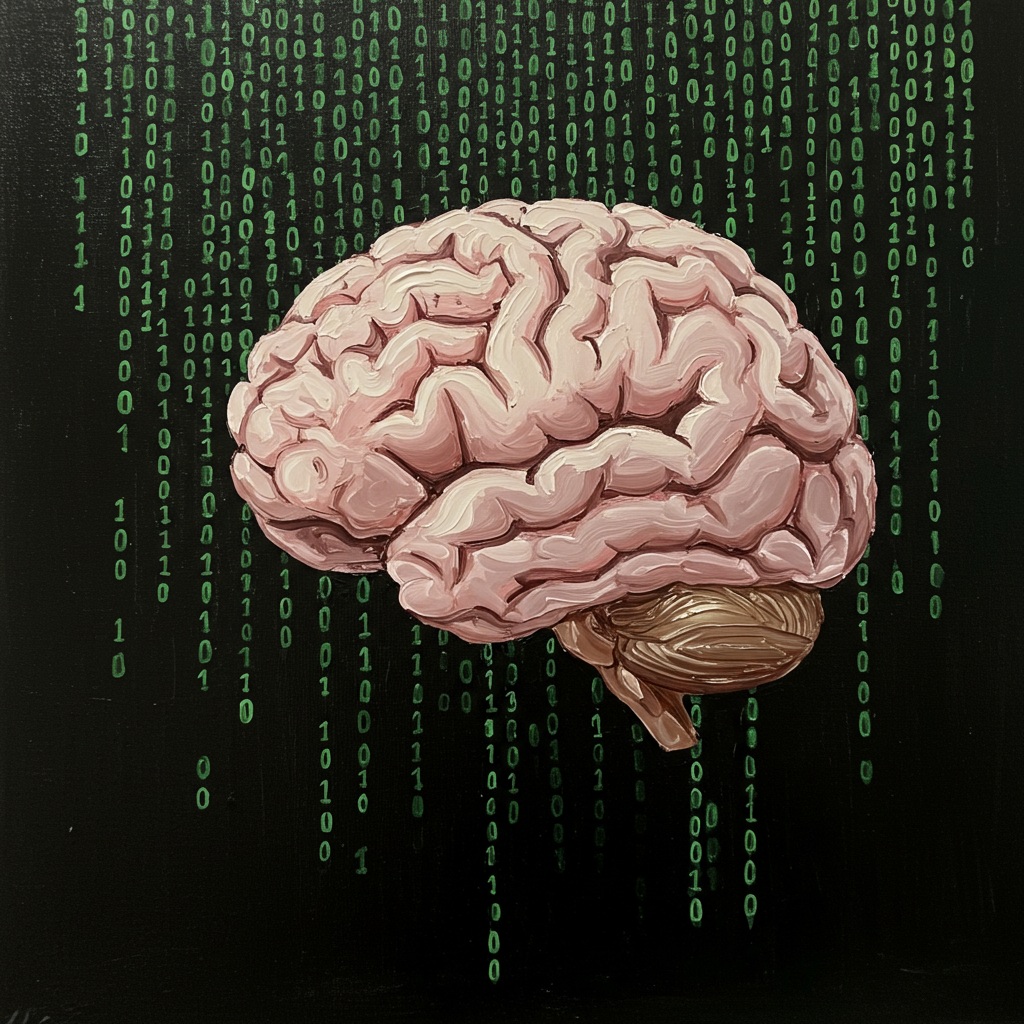
The question that today’s meditation asks is, “Are you still stuck in the matrix… or have you escaped?…”
This isn’t about plugging out of some digital world, it’s about freeing yourself from the programming that controls you, the collections of unseen scripts running in your own subconscious mind.
We all have an invisible operating system running quietly in the background of our consciousness – built from childhood experiences, absorbed beliefs, and repeated emotional patterns – and these shape our responses to the world before we’ve even had a chance to think. Most people live their entire lives inside this system without ever questioning it.
When we are not aware, we are at the mercy of years of programming that take us along for the ride without asking our permission first.
Let’s explore how to step out of the passenger seat and finally take the wheel of your own life.
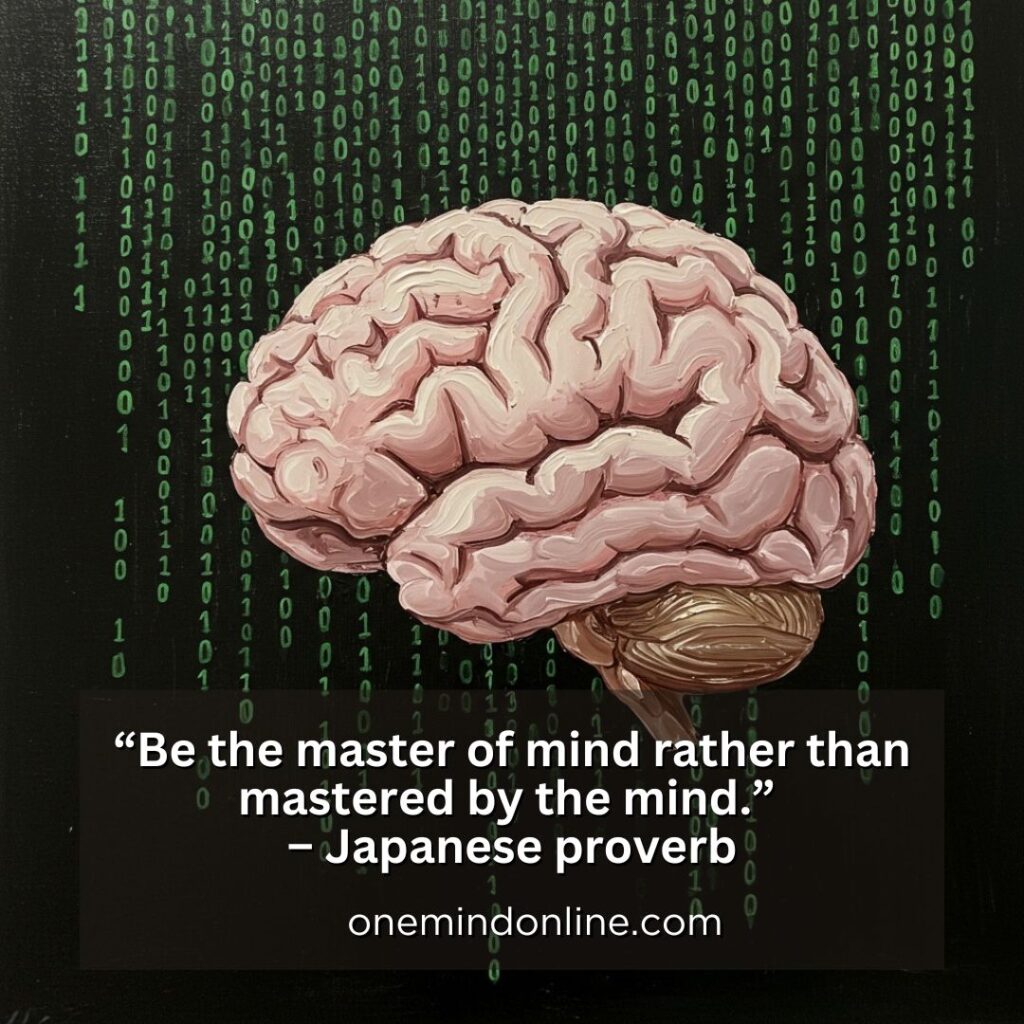
“Be the master of the mind, rather than mastered by the mind.” – Japanese proverb
“Be the witness of your thoughts. You are what observes, you are not what you observe.” – Buddhist proverb
“Wisdom tends to grow in proportion to one’s awareness of one’s ignorance.” – Anthony de Mello
Your thoughts are the source of the matrix that you live in. Old programming, old patterns produce the same old thinking on repeat every day, and the only way to escape the matrix is to step away from the thoughts and take a good look at them. But here’s the trick to escaping the matrix – do not judge any of the thinking.
The moment you label a thought as “bad” or “shameful,” you are emotionally triggered by it, and when your emotions are controlled by your thoughts, then you are still in the matrix. Awareness without judgment is how you step out.
Can you step away from your thoughts and for a moment just look at them? Can you observe how the worry about that upcoming presentation arises, without being overcome by the flooding of anxiety? Can you acknowledge a negative self-belief without falling into the quicksand of despair? If you can then you are becoming free!
While your subconscious is in control of your thoughts and actions on autopilot, you’re caught in an old programme that wasn’t even created by you, but by your childhood environment that conditioned most of your subconscious reactions.
If you want to be free from “The Matrix” you have to be able to watch your own thoughts as they come into being and choose, “will I react in the same old pattern as before, or will I choose to respond in a new way?” This is true freedom of choice.
Here are a few guiding mantras to support your journey:
- “I am not my thoughts. My thoughts are just one aspect of my being.”
- “I can choose how I respond to my thoughts. I am not a prisoner of my emotions.”
- “I am growing in awareness. With each observation, I gain a deeper understanding of myself.”
- “I am free to create my own reality. My thoughts shape my world, and I choose to create a positive one.”
By cultivating awareness and practicing mindful observation, you can break free from the matrix of thought and become the author of your own reality. Remember, the power to choose lies within you.
Today’s meditation is a very practical exercise in learning to take a step back and be the witness of what your body and your brain is doing. Please join us.
– pierre –
Today’s LIVE meditation is: Come to your senses.
Today’s LIVE meditation
https://youtu.be/xvs0usp-Ym8 2026
https://youtu.be/TKZbCBjo98I 2025
https://youtu.be/O_JYcuyrRa0 2024
https://youtu.be/eI7ajppQeXg 2023
https://youtu.be/hsOcDDYYwYU 2022
Practice the “Daily Dose”
Let’s put it into practice! Choose what works for you – daily, once a week or whenever inspiration strikes. Putting pen to paper wires the neural pathways that will create your new habits.
1 – Affirmation
Write down your favourite affirmation on a sticky note and place it somewhere that you’ll be able to see it the whole day.
- “I am not my thoughts. My thoughts are just one aspect of my being.”
- “I can choose how I respond to my thoughts. I am not a prisoner of my emotions.”
- “I am growing in awareness. With each observation, I gain a deeper understanding of myself.”
- “I am free to create my own reality. My thoughts shape my world, and I choose to create a positive one.”
2 – A moment of reflection
Use today’s question as a journal prompt. If you don’t have the time to sit down and write, just take a moment to reflect on your response.
The article presents the idea that true freedom lies in the ability to choose your response to your thoughts: Bring to mind a recent moment when you experienced the strong emotional reaction of an old inner pattern. Have you grown in your ability to step back and observe the pattern of reactivity within yourself? Can you recognize the moment of being triggered and become aware of how the old pattern wants you to react? If you slow down the reaction and give it a bit more time, what new response could you cultivate in similar situations?
3 – Quotes to share
Send a quote to someone who needs it, or share them all on social media to spread the good vibes!


4 – Q&A for deeper learning
Read through the questions and answers and write down at least one “aha moment” that clicked for you.
Q1: What does the article mean by being “stuck in the matrix”?
According to the article, being “stuck in the matrix” means being controlled by a “programme”. Your habitual thoughts and emotional reactions become a preprogrammed pattern of reacting to the world. It’s a state of living on autopilot where subconscious patterns of thinking pre-determine your feelings and actions, preventing you from experiencing true freedom of choice.
Q2: How does one begin to “escape the matrix” of their thoughts?
The first step to escaping is to become the “witness” of your thoughts. This involves stepping back mentally and observing your thoughts as they arise without immediately identifying with them or judging them.
Q3: Why is it important not to judge your thoughts when trying to escape the matrix?
When you judge a thought — labelling it bad, shameful, or wrong — you become emotionally triggered by it. That emotional charge makes you react in fear which simply means: you are still caught in the matrix reacting in the same old patterns. Observing a thought without judgment allows you to see it clearly and without the emotional charge, which is the first step toward genuine choice rather than automatic reaction.
Q4: The article mentions that old programming from childhood contributes to the “matrix.” Can you explain this further?
Much of the subconscious programming we carry was formed in childhood. Our early environment — family, culture, formative experiences — conditioned most of our default emotional and behavioural responses before we had the awareness to evaluate them. This does not make those responses wrong, but it does mean that we never consciously chose those responses. The work of personal growth is deciding which parts still serve who you are becoming.
Q5: What is the significance of choosing how to respond to thoughts instead of just reacting?
Choosing your response signifies true freedom. When you react automatically, you’re still within the old programming of the “matrix.” By consciously choosing how to respond, you break free from these automatic patterns and become the master of your own actions and emotions.
Q6: How can the provided mantras help in escaping the matrix?
The mantras serve as guiding principles to shift your perspective. They help you remember that you are not defined by your thoughts, that you have the power to choose your reactions, and that through awareness, you can create a more positive reality.
Q7: What is the “Come to your senses” meditation mentioned at the end, and how does it relate to escaping the matrix?
The “Come to your senses” meditation involves taking the time to feel the full experience that your physical senses are giving you. This practice of observing the experience your body is having without interfering, or judging, or resisting teaches how to be “the observer”. It helps us practice how to also take a step back from the constant stream of thoughts and emotions – the experience that our inner senses provide. Being able to feel the experience without being controlled by the experience is how we step free from the mental “matrix.”