
“Your Daily Dose” is a quick two minute read packed with bite-sized wisdom from all the great teachers. But you could also choose to turn it into something more… a powerful daily practice for personal growth. Give it a try!
A message from today’s meditation:
All great teachers across the ages have taught about the futility of worrying, and my favourite wisdom on the topic has been attributed to a few different people so I’ll just say I don’t know who it’s from:
“Worrying is about as effective as trying to solve an algebra equation by chewing bubble gum.”
Even when we know this though, it’s no easy task to convince our very busy mind that it shouldn’t be thinking worrying thoughts, right?
Today’s meditation and wisdom from the Dalai Lama hopes to be practical about this subject:
“If a problem is fixable, if a situation is such that you can do something about it, then there is no need to worry, go fix. If it’s not fixable, then no amount of worrying will make it better. There is no benefit in worrying whatsoever.” – Dalai Lama
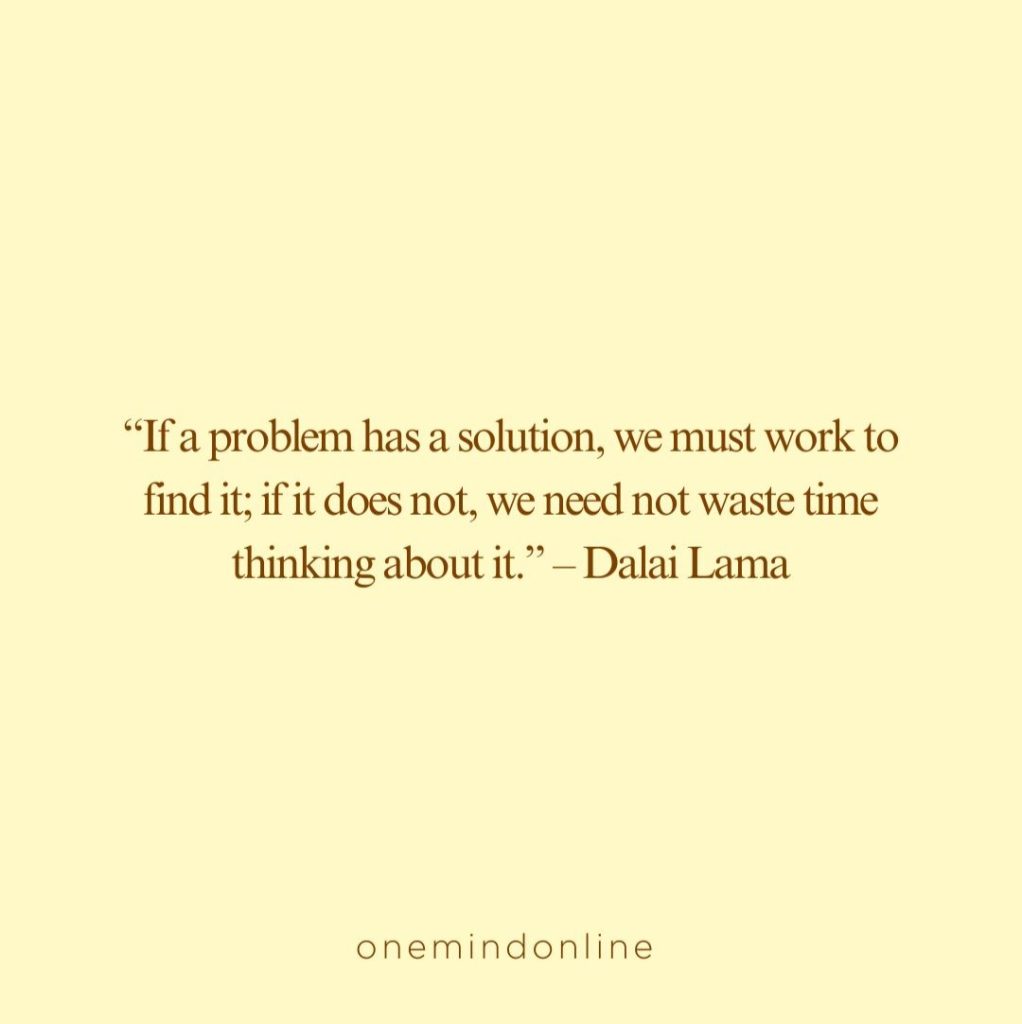
“If a problem has a solution, we must work to find it; if it does not, we need not waste time thinking about it.” – Dalai Lama
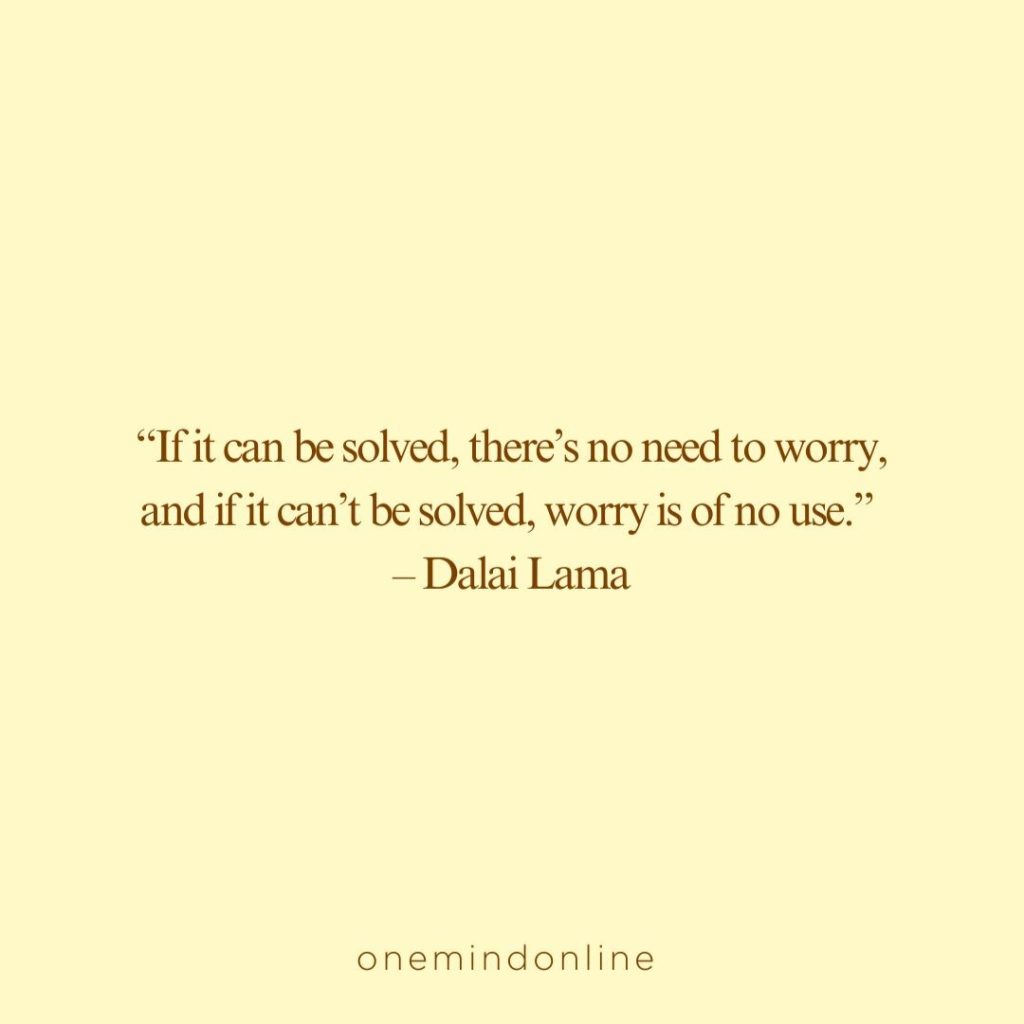
“If it can be solved, there’s no need to worry, and if it can’t be solved, worry is of no use.” – Dalai Lama
To paraphrase his words, the Dalai Lama’s advice is to take action on the problems that you can solve, and then to spend no energy whatsoever on the problems that you have no solution for. While it can be really hard to just convince our mind that it should stop worrying about things outside of our control, here’s what is really practical about this:
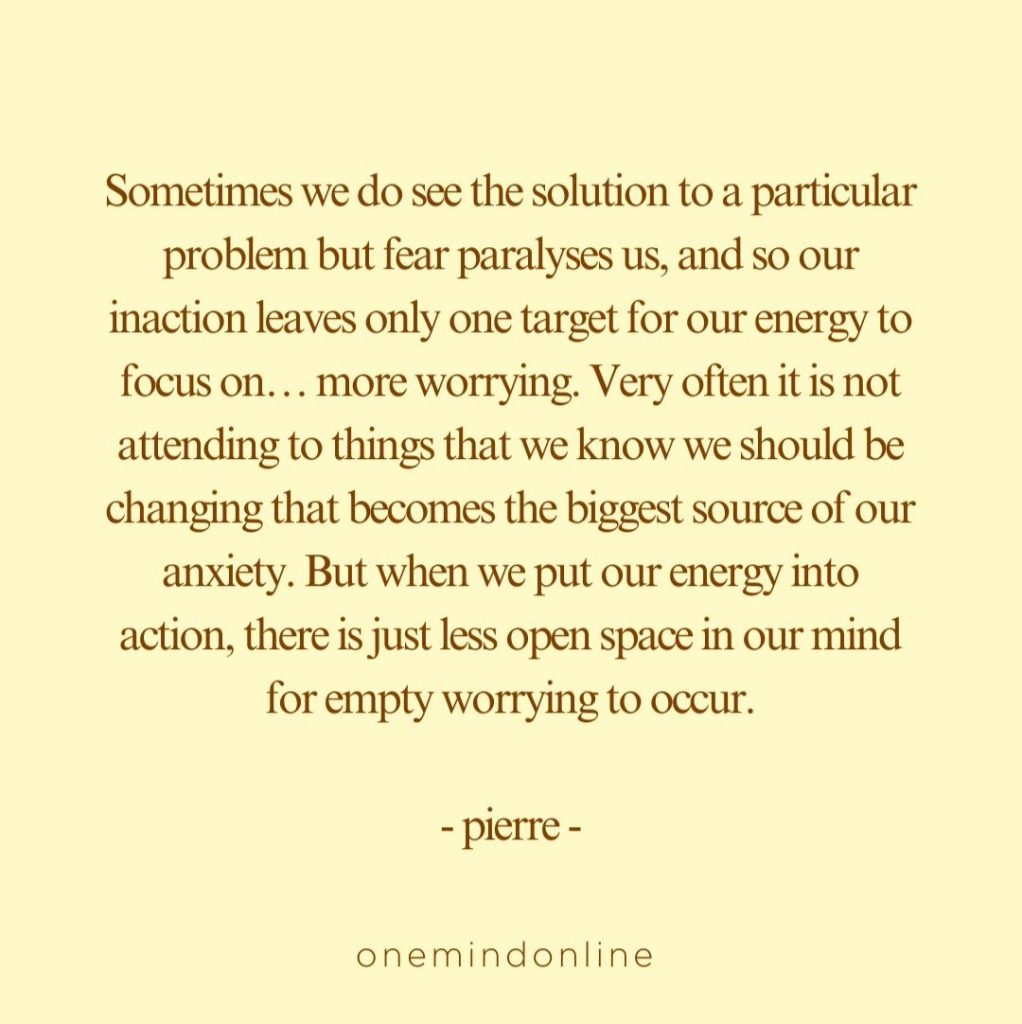
Sometimes we do see the solution to a particular problem but fear paralyses us, and so our inaction leaves only one target for our energy to focus on… more worrying. Very often it is not attending to things that we know we should be changing that becomes the biggest source of our anxiety. But when we put our energy into action, there is just less open space in our mind for empty worrying to occur.
Our meditation today is “The Serenity Prayer”, which comes to the conclusion that we need to tap into wisdom to know the difference between what to take action on and what to accept and surrender, and the Dalai Lama has some advice about what might lead us in the direction of this wisdom:
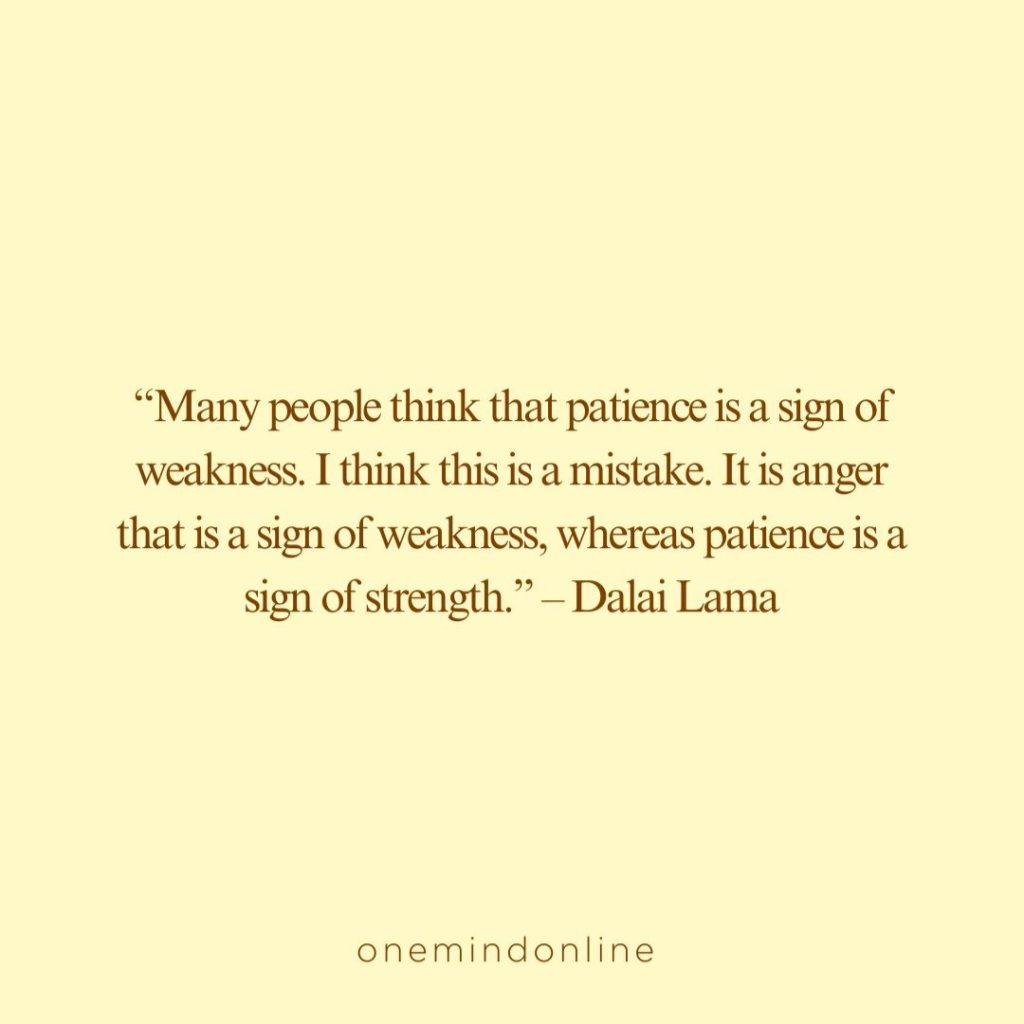
“Many people think that patience is a sign of weakness. I think this is a mistake. It is anger that is a sign of weakness, whereas patience is a sign of strength.” – Dalai Lama
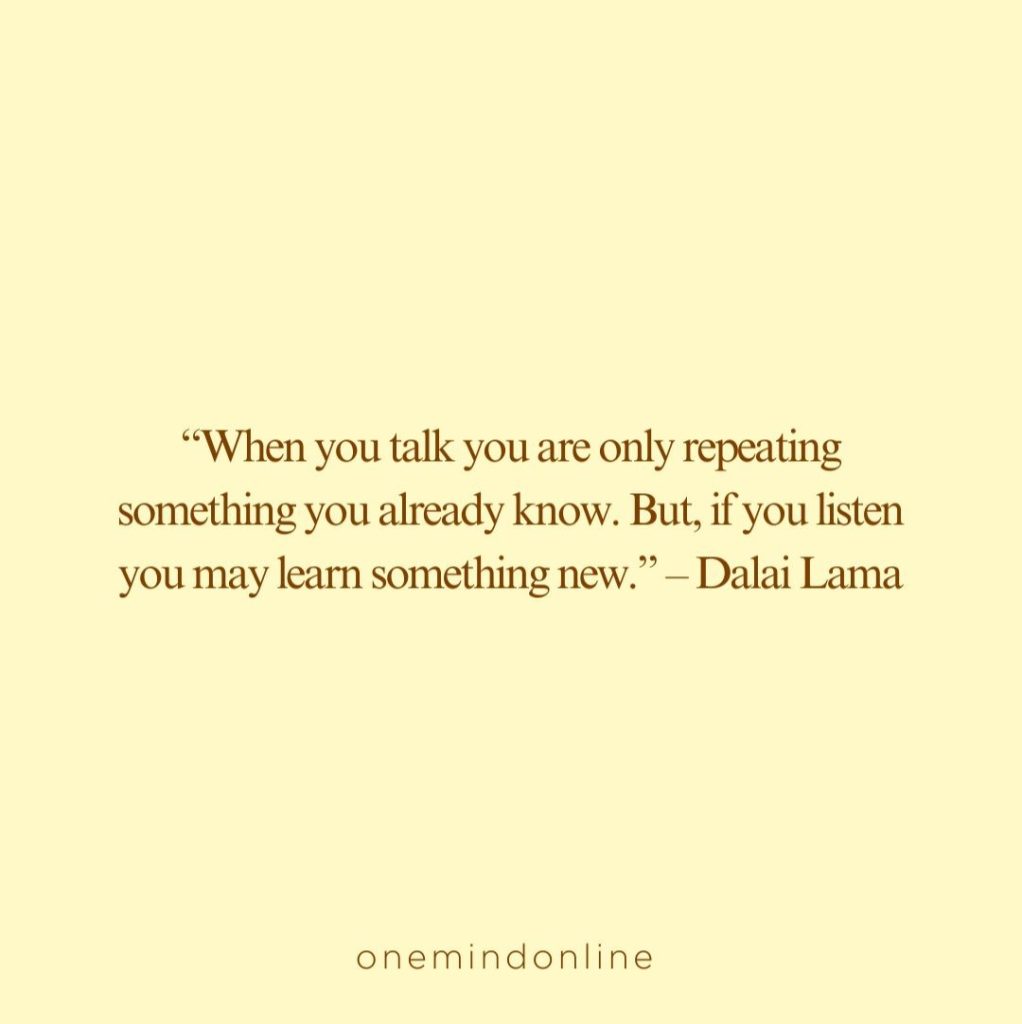
“When you talk you are only repeating something you already know. But, if you listen you may learn something new.” – Dalai Lama
The Dalai Lama’s advice is that we should focus our energy on actionable problems and let go of those beyond our control, and along with this he advocates patience as a path to wisdom.
Patience isn’t passive waiting – it’s an active practice of listening deeply, both to our circumstances and to our inner wisdom. It requires us to slow down enough to discern what truly deserves our energy and what needs to be released.
Today’s meditation, “The Serenity Prayer”, asks exactly this: “Help me let go of what I can’t change, and help me take action on what is mine to change.” The voice of wisdom is available to all of us, and today’s journey is an opportunity to practice the patience needed to listen.
A few affirmations to reflect on:
- “I direct my energy toward what I can control and release what I cannot.”
- “I trust my inner wisdom to guide me toward what truly matters.”
- “I am breaking free from cycles of worry and stepping into peace.”
- “I listen more than I speak, and in listening, I grow wiser.”
- “I accept what cannot be changed and courageously address what I can change.”
A brain that worries too much, can be trained to worry less, there is a choice but it requires patience. By embracing the wisdom of the ages and practicing mindfulness, we can break free from the cycle of negative thinking and experience greater peace and fulfillment.
Have a beautiful day and, don’t worry, be happy 😉
– pierre –
Today’s LIVE meditation is: The serenity prayer.
Today’s LIVE meditation
https://youtu.be/2EJt50oaoYE 2025
https://youtu.be/Z0PxfIry_NM 2024
https://youtu.be/w_5ro6DYw8Q 2023
https://youtu.be/QGD21e1GFBI 2022
Practice the “Daily Dose”
Let’s put it into practice! Choose what works for you – daily, once a week or whenever inspiration strikes. Putting pen to paper wires the neural pathways that will create your new habits.
1 – Affirmation
Write down your favourite affirmation on a sticky note and place it somewhere that you’ll be able to see it the whole day.
- “I direct my energy toward what I can control and release what I cannot.”
- “I trust my inner wisdom to guide me toward what truly matters.”
- “I am breaking free from cycles of worry and stepping into peace.”
- “I listen more than I speak, and in listening, I grow wiser.”
- “I accept what cannot be changed and courageously address what I can change.”
2 – A moment of reflection
Use today’s question as a journal prompt. If you don’t have the time to sit down and write, just take a moment to reflect on your response.
The Worry Inventory: Make two columns in your journal. In the first, list your current worries. In the second, honestly assess whether each worry represents something you can take action on or something beyond your control. What patterns do you notice? How much of your mental energy is devoted to things you cannot change?
3 – Quotes to share
Send a quote to someone who needs it, or share them all on social media to spread the good vibes!


4 – Q&A for deeper learning
Read through the questions and answers and write down at least one “aha moment” that clicked for you.
Q1: Why do we worry even when we know it’s unproductive?
A: Worry often feels like we’re doing something about a problem, even when we’re not. Our brains are wired to anticipate and prepare for threats, which was useful for survival. The challenge is that modern worries rarely require the same response as ancient threats. Understanding that worry is a habit—not a solution—is the first step toward changing the pattern.
Q2: How can I tell the difference between a problem I can solve and one I need to accept?
A: Ask yourself: “Is there a concrete action I can take right now or in the near future that would address this issue?” If yes, it’s actionable. If the situation depends entirely on factors outside your influence—other people’s choices, past events, or uncertain futures—it falls into the acceptance category. The Serenity Prayer’s request for wisdom is about developing this discernment through practice and patience.
Q3: Doesn’t accepting things we can’t change mean giving up?
A: Not at all. Acceptance is about acknowledging reality as it is, which actually frees up energy to focus on what you can influence. Giving up is passive resignation; acceptance is active wisdom. It’s choosing where to invest your limited mental and emotional resources for maximum impact.
Q4: What if taking action on a problem feels too overwhelming or scary?
A: This is where patience and starting small become essential. You don’t have to solve everything at once. Identify one small, manageable step you can take today. Action creates momentum, and momentum dissolves fear. Even recognizing that fear is blocking you is valuable information—that awareness itself is a form of action.
Q5: How do I stop my mind from worrying, especially at night?
A: Rather than fighting worry directly, redirect your mental energy. When you notice worry arising, ask: “Can I do something about this right now?” If yes, write down one action step for tomorrow. If no, consciously practice release—visualize setting it down, use breath work, or redirect to gratitude. Over time, your brain learns new pathways. It’s retraining, not instant transformation.
Q6: What does patience have to do with overcoming worry?
A: Patience allows us to slow down enough to hear our inner wisdom. When we’re impatient, we react from fear and fill silence with worry. Patience creates space to listen—to observe our thoughts without immediately believing them, to notice patterns, and to discern what truly deserves our attention. It’s the difference between reactive anxiety and responsive wisdom.
Q7: Can anyone really train themselves to worry less?
A: Yes, though it requires commitment and compassion for yourself. Neuroplasticity—the brain’s ability to form new neural pathways—means we can rewire habitual thought patterns. Through consistent practice of mindfulness, action on what we can control, and acceptance of what we cannot, we gradually shift from chronic worry to greater peace. The key is patience with the process and celebrating small shifts rather than expecting perfection.