

“Your Daily Dose” is a quick two minute read packed with bite-sized wisdom from all the great teachers. But you could also choose to turn it into something more… a powerful daily practice for personal growth. Give it a try!
A message from today’s meditation:
Having the ability to be the observer is a kind of superpower.
When you feel something like anger wake up within you, are you already acting from anger or do you observe how anger wakes up in your body, and do you become aware of how it wants you to act?
Because when you’re looking at the experience of anger as an observer then you have choice, you can choose to take the action that anger suggests or you can decide that there might be a more helpful response.
Anita Moorjani’s thoughts for us today speaks of our relationship to ego, and anger is just one of the examples of how we can experience ego.
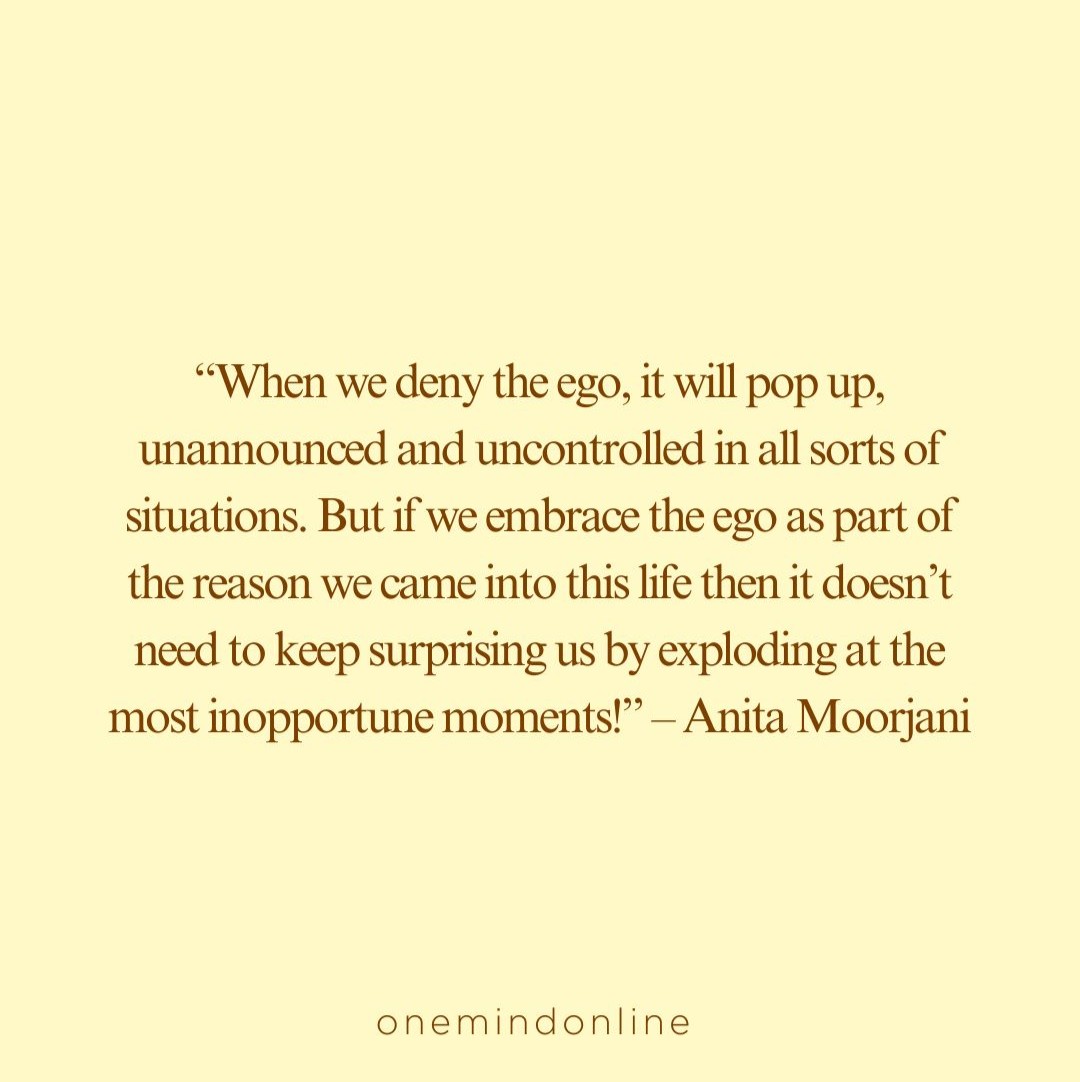
“When we deny the ego, it will pop up, unannounced and uncontrolled in all sorts of situations. But if we embrace the ego as part of the reason we came into this life then it doesn’t need to keep surprising us by exploding at the most inopportune moments!” – Anita Moorjani
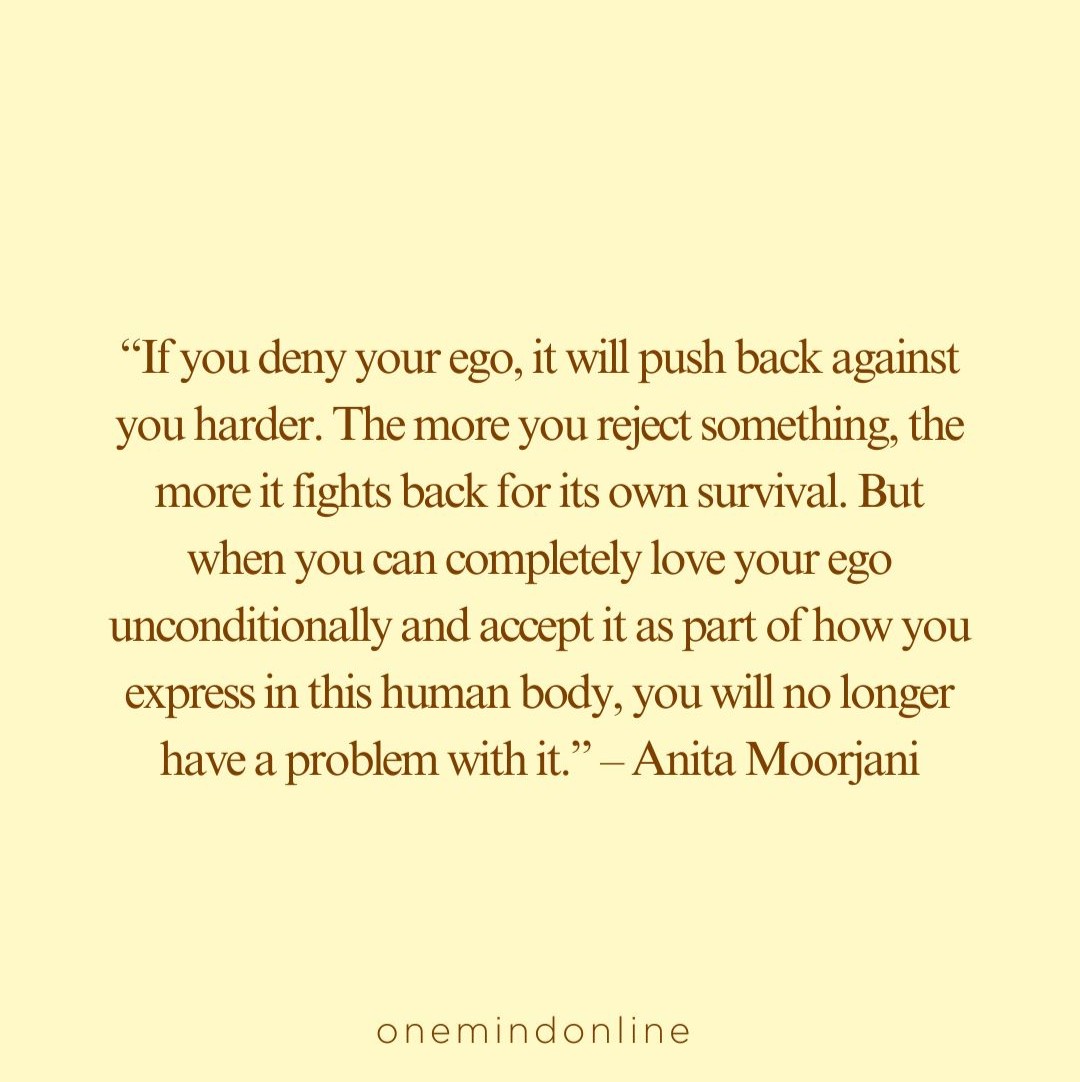
“If you deny your ego, it will push back against you harder. The more you reject something, the more it fights back for its own survival. But when you can completely love your ego unconditionally and accept it as part of how you express in this human body, you will no longer have a problem with it.” – Anita Moorjani
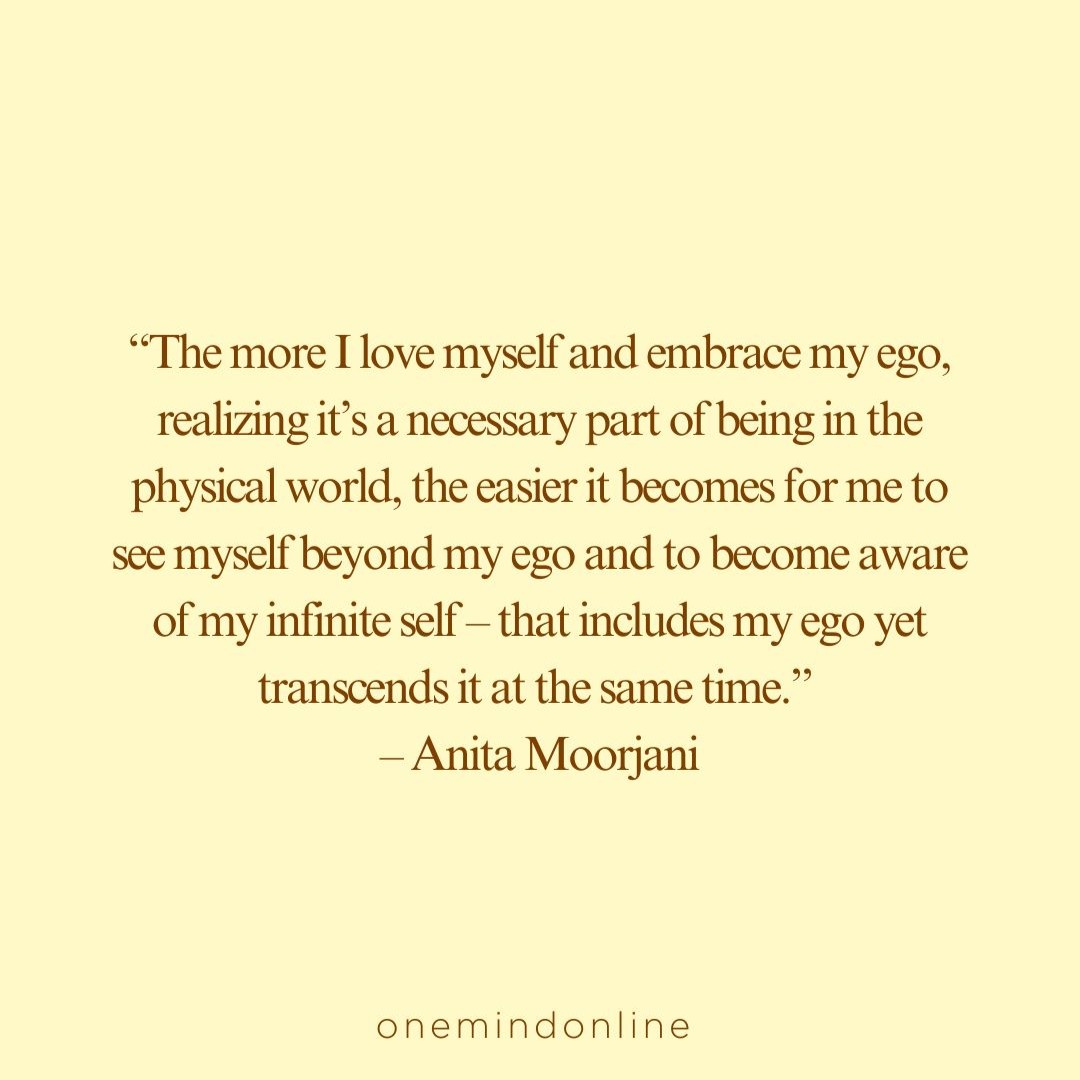
“The more I love myself and embrace my ego, realizing it’s a necessary part of being in the physical world, the easier it becomes for me to see myself beyond my ego and to become aware of my infinite self – that includes my ego yet transcends it at the same time.” – Anita Moorjani
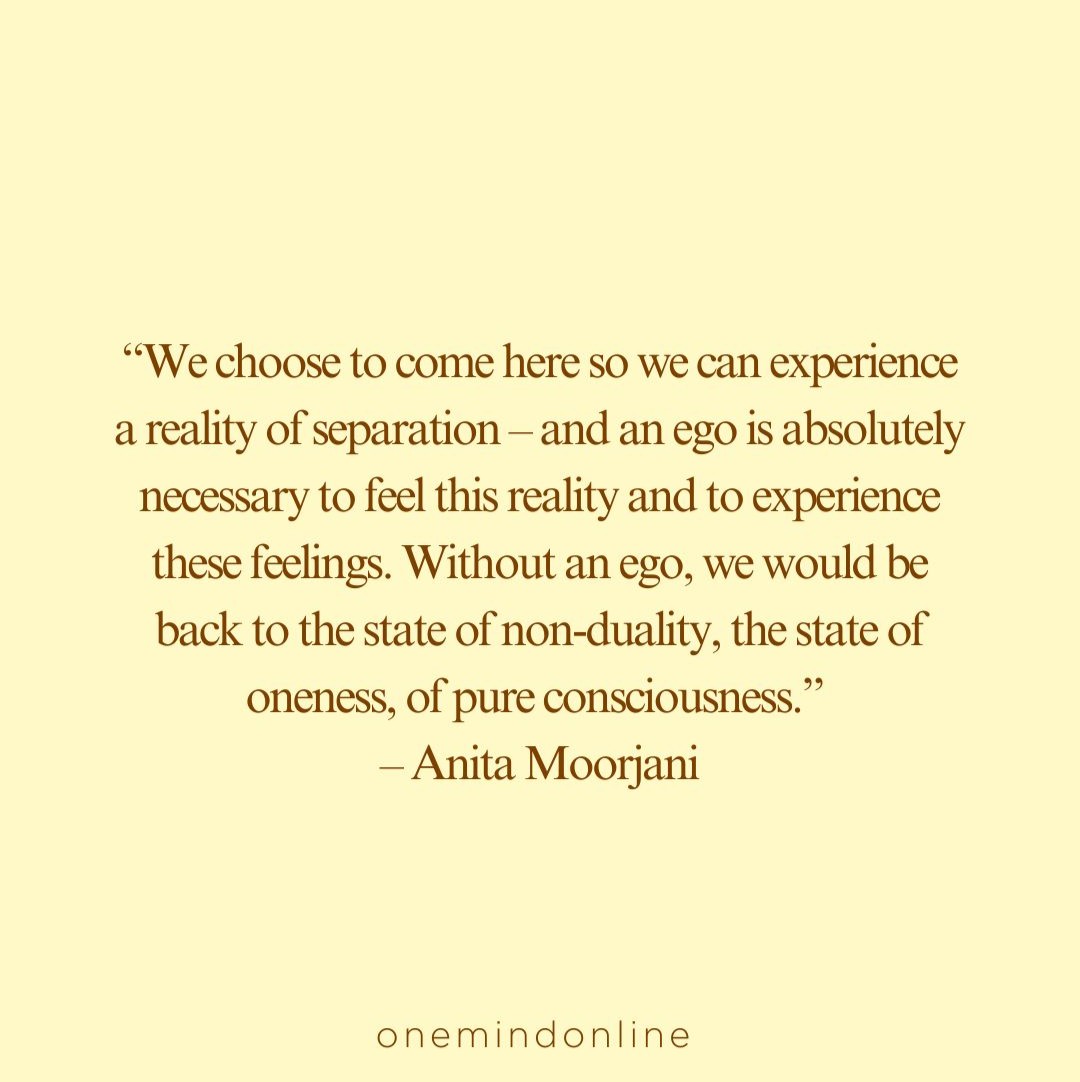
“We choose to come here so we can experience a reality of separation – and an ego is absolutely necessary to feel this reality and to experience these feelings. Without an ego, we would be back to the state of non-duality, the state of oneness, of pure consciousness.” – Anita Moorjani
As a pure soul Anita suggests, that we don’t have an ego but experience pure consciousness. Then when we are born, ego is something we get to experience as a part of having this body, almost like one of the senses that this body comes with.
And it reminds me of how Eckhart Tolle says that when you are able to observe the ego’s reaction, then you’re not being controlled by it but beginning to go beyond ego.
Today’s meditation is not specifically about ego but a really simple exercise in expanding our ability to be the observer. The more we practise taking a step back and observing our bodies’ physical responses, the better we also become at being the observer of our inner senses, thoughts and feelings and yes, ego.
Don’t go to war with ego, it’ll always fight back and you’ll never have peace. When being the observer of your emotions becomes your default way of being, then ego is never in control – then actions begin to come from your SOUL.
… that deeper, wiser part of you that sees beyond the immediate drama of personality and circumstance. This doesn’t mean you become emotionless or detached; rather, you become more authentic, more present, and more capable of responding from love rather than fear.
A few thoughts to help you embody the observer:
- Observe without judgement: Notice your thoughts and feelings without labelling them as good or bad.
- Accept the ego: Accept the ego as a part of yourself, but don’t let it have the drivers’ seat.
- Cultivate presence: Focus on what the present moment makes available to you.
- Choose your responses: Rather than reacting impulsively, take a moment to consider your options and choose a response that aligns with your values.
- Connect with your authentic self: Discover your true nature beyond the ego and live from a place of love and compassion.
The practice of observing is not just about understanding the ego; it is also about cultivating a sense of peace and presence. When we can observe our thoughts and feelings without judgement, we can find a sense of stillness and clarity within. This inner peace is the foundation for a more fulfilling and harmonious life.
Have an AWESOME Saturday peeps!
– pierre –
Today’s LIVE meditation is: Come to your senses.
Today’s LIVE meditation
https://youtu.be/G7h8tzt2sR0 2026
https://youtu.be/wI8losrdeYI 2025
https://youtu.be/PJu1h2lS6CY 2024
https://youtu.be/dP-JWeXm4TQ 2023
https://youtu.be/8qwhpFOw024 2022
Practice the “Daily Dose”
Let’s put it into practice! Choose what works for you – daily, once a week or whenever inspiration strikes. Putting pen to paper wires the neural pathways that will create your new habits.
1 – Affirmation
Write down your favourite affirmation on a sticky note and place it somewhere that you’ll be able to see it the whole day.
- Observe without judgement: Notice your thoughts and feelings without labelling them as good or bad.
- Accept the ego: Accept the ego as a part of yourself, but don’t let it have the drivers’ seat.
- Cultivate presence: Focus on what the present moment makes available to you.
- Choose your responses: Rather than reacting impulsively, take a moment to consider your options and choose a response that aligns with your values.
- Connect with your authentic self: Discover your true nature beyond the ego and live from a place of love and compassion.
2 – A moment of reflection
Use today’s question as a journal prompt. If you don’t have the time to sit down and write, just take a moment to reflect on your response.
The War vs. Embrace Exploration: Reflect on an aspect of yourself that you’ve been trying to change or “fix” – perhaps anger, jealousy, perfectionism, or people-pleasing tendencies. Write about your relationship with this part of yourself. How have you been “at war” with it? What happens when you try to suppress or deny this aspect? Now, imagine embracing this part of yourself as Anita Moorjani suggests. What would it look like to love this aspect of yourself unconditionally? What might this part of you be trying to tell you or protect you from? How might accepting the existence of this part of you actually give you more freedom to choose a new response?
3 – Quotes to share
Send a quote to someone who needs it, or share them all on social media to spread the good vibes!
4 – Q&A for deeper learning
Read through the questions and answers and write down at least one “aha moment” that clicked for you.
Q1. What exactly does it mean to be “the observer” of my thoughts and emotions?
Being the observer means developing the ability to step back and witness your inner experience without being completely swept away by it. Instead of saying “I am angry,” you learn to say “I notice anger arising in me.” This creates space between you and your emotions, allowing you to see them as temporary experiences rather than defining aspects of who you are. The observer is the part of you that can watch your thoughts, feelings, and reactions with curiosity rather than judgment, giving you the power to choose how to respond rather than simply reacting automatically.
Q2. How is embracing my ego different from being controlled by it?
Embracing your ego means accepting it as a natural part of your human experience while maintaining awareness of its influence. When you embrace your ego, you’re not denying or fighting it, but you’re also not letting it make all your decisions. It’s like having a protective friend who sometimes gives overly cautious advice – you can appreciate their concern without always following their suggestions. Being controlled by ego means reacting unconsciously to its impulses, while embracing it means acknowledging its presence and choosing consciously whether to act on its suggestions.
Q3. Why does fighting against my ego make things worse?
Fighting your ego creates internal resistance and conflict. When you try to suppress or deny any part of yourself, it tends to push back harder, often emerging in unexpected and uncontrolled ways. This is because the ego’s primary function is survival and self-protection, so when you attack it, it naturally becomes more defensive and reactive. By accepting your ego as part of your human experience, you remove the resistance and create space for conscious choice rather than unconscious reaction.
Q4. If ego is necessary for human experience, how do I know when it’s helping vs. hindering me?
Your ego is helping when it provides healthy boundaries, motivates you to take care of yourself, or alerts you to potential problems. It becomes hindering when it operates from fear, keeps you stuck in reactive patterns, or prevents you from connecting authentically with others. The key is developing the observer awareness to recognize when your ego is active and then consciously choosing whether its guidance serves your highest good in that moment. Generally, ego-driven actions feel tight, defensive, or driven by fear, while soul-driven actions feel expansive, loving, and aligned with your deeper values.
Q5. How can I practically develop this “observer” ability in my daily life?
Start with simple body awareness throughout your day. Notice when your shoulders tense, when your breathing changes, or when you feel physical reactions to different situations. This builds your capacity to observe. When you feel triggered, try to pause and ask yourself: “What am I noticing in my body right now? What thoughts are arising? What does this feeling want me to do?” The more you practice this in low-stakes situations, the more naturally it will come during challenging moments. Regular meditation or mindfulness practices also strengthen your observer muscles.
Q6. What’s the difference between observing and being detached or emotionally disconnected?
It’s easy to confuse observing with dissociating because both involve stepping back from immediate reactivity, but the similarity ends there. Dissociating is essentially an escape hatch – a way of checking out of this moment because some part of us feels unable to handle the reality in front of us, and while it might offer temporary relief, it never builds the skills we need to actually navigate life, leaving us stuck in the same patterns again and again. Being the observer asks something different of us: rather than turning away or running from what’s happening, we stay closely present with reality exactly as it is, even while we resist the urge to react immediately. That pause isn’t avoidance in disguise – it’s breathing room. It’s the space that keeps us from firing off old, automatic programming and instead lets our deeper wisdom catch up and weigh in before we act. Every time we practice this, we’re not hiding from reality; we’re building our capacity to meet it, growing steadier and more skillful with each moment we choose to observe rather than escape.