

“Your Daily Dose” is a quick two minute read packed with bite-sized wisdom from all the great teachers. But you could also choose to turn it into something more… a powerful daily practice for personal growth. Give it a try!
A message from today’s meditation:
Our teacher for this week is the Persian poet Hafez (another common spelling of his name is Hafiz) who’s pen name means “the memorizer, the safe keeper”. He was born in 1325 in what is now known as Iran. To this day his works are often found in the homes of Persian speakers, who learn his poems by heart and use them as everyday proverbs and sayings.
Stepping into a new week, we take a look at the week ahead in order to form a clear picture of what we want to create during this week.
Do you have goals you want to achieve this week? Do you have boxes you want to get checked off this week?
Take a good look at your goals for this week and ask yourself this question – “Am I creating from a place of fear, or from a place of freedom?”
It’s easy to fall into the trap of always creating from a place of fear, because fear is naturally our driver of survival. But when all of our actions are always motivated by our need to avoid bad consequences, then we never get beyond only just surviving, forever creating from within the tight grip of fear.
As you look into your week ahead, take a look at your goals and ask yourself, “what opportunities am I opening up by reaching for these goals? What possibilities are available to me by my very nature as a creative being?”
While fear can be a valid driving force in helping us reach our goals, it is actually quite limited, and not a healthy place to live long term.
“Fear is the cheapest room in the house. I would like to see you living in better conditions.” – Hafez
“What we speak becomes the house we live in.” – Hafez
Our words hold immense power, they are the bricks with which we construct our reality. What we speak becomes the house we live in… if we don’t become more conscious of our words, and our thoughts, and our feelings, we risk building a whole house of fear, in which we might live our entire lives.
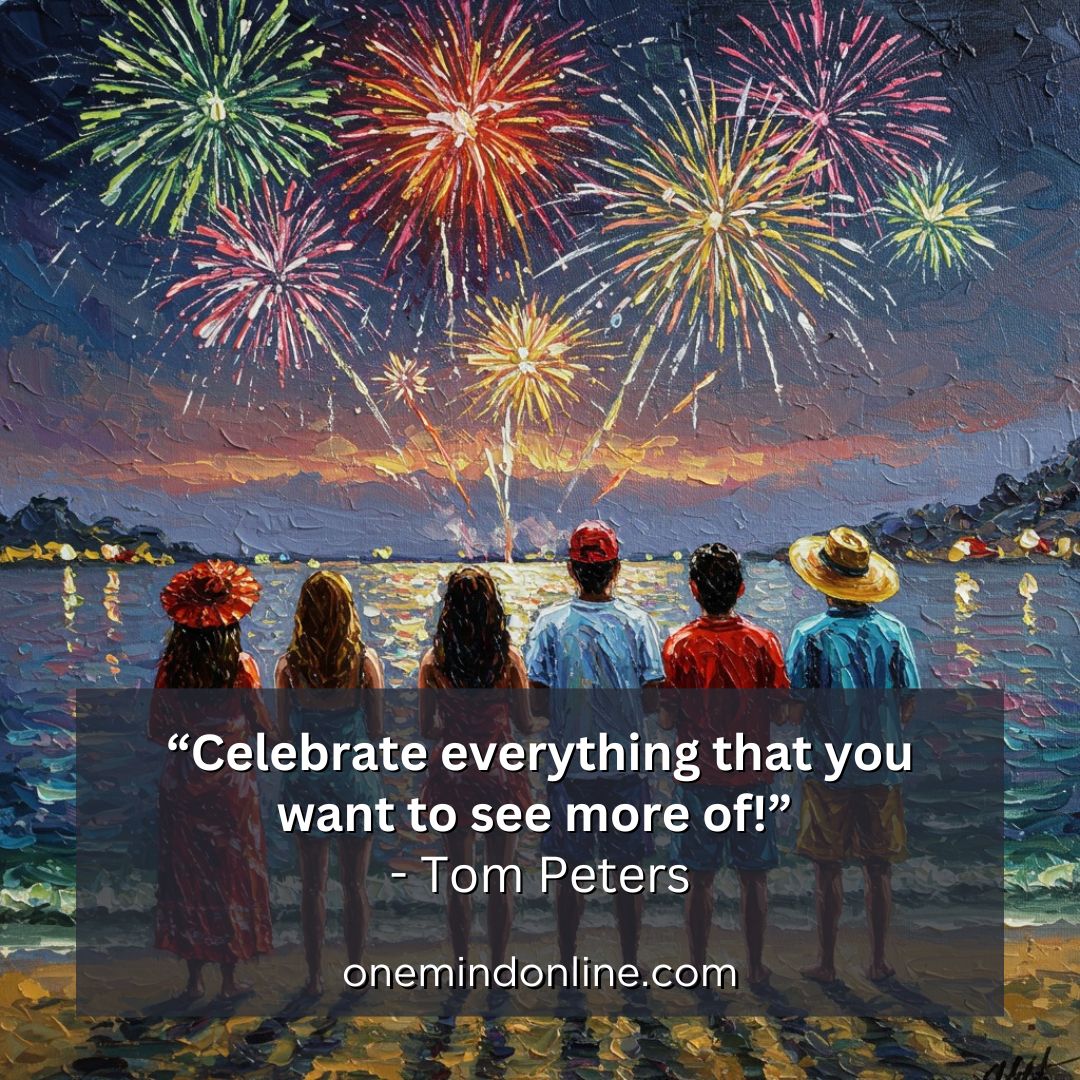
Conversely, by focusing on our dreams and aspirations, we create a home filled with light and possibility. Instead of keeping your attention on the things you are afraid of, the “punishments” you want to avoid… put your focus on what you want to bring into your life – and Celebrate everything that you want to see more of!
“Stay close to anything that makes you glad you are alive.” – Hafez
To cultivate a life of abundance and joy, let’s embrace a mindset of celebration. We must actively seek out and appreciate every positive aspect of our lives. Just as Hafez encourages, let’s “stay close to everything that makes us glad we are alive.” By celebrating every small spark of joy, we invite more of what we love into our world.
As we navigate the week ahead, let’s remember that our journey is not solely about achieving goals, but about becoming the happiest versions of ourselves. By paying attention to what sparks joy in our lives, and ensuring that we fill our lives with celebration, we create a foundation for a life filled with purpose, peace, and fulfillment.
This week as you embark on your journey, a few affirmations to design your life:
- “I choose to create from freedom, not fear.”
- “I stay close to everything that makes me glad to be alive.”
- “My words are building blocks, I construct a home of possibility.”
- “I celebrate every spark of joy to invite more light into my world.”
- “I am the architect of my reality, designing a life worth celebrating.”
Why not embrace a new ritual this week? Turn every cup of tea and every glass of water into a toast to every little thing that you want to see more of. And like a skilled architect you will become the creator of your reality, designing a life that is not merely lived, but celebrated.
Have a great week everyone!
– pierre –
Today’s LIVE meditation is: Jumpstart the week.
Today’s LIVE meditation
https://youtu.be/wt9dQWTQ-6w 2025
https://youtu.be/dhQkjpZa6Y8 2024
https://youtu.be/DTNMCPQhPgg 2023
https://youtu.be/uRIkizzJ2TQ 2022
Practice the “Daily Dose”
Let’s put it into practice! Choose what works for you – daily, once a week or whenever inspiration strikes. Putting pen to paper wires the neural pathways that will create your new habits.
1 – Affirmation
Write down your favourite affirmation on a sticky note and place it somewhere that you’ll be able to see it the whole day.
- “I choose to create from freedom, not fear.”
- “I stay close to everything that makes me glad to be alive.”
- “My words are building blocks, I construct a home of possibility.”
- “I celebrate every spark of joy to invite more light into my world.”
- “I am the architect of my reality, designing a life worth celebrating.”
2 – A moment of reflection
Use today’s question as a journal prompt. If you don’t have the time to sit down and write, just take a moment to reflect on your response.
The Architecture of Your Inner Dialogue: “What we speak becomes the house we live in.” Think back over the last week and recall two or three specific things you said to yourself – perhaps while getting ready in the morning, or in a very stressful moment, after making a mistake, or when you realize you’ve forgotten something. Write them down as close to word-for-word as you can remember. Now look at what you’ve written. What kind of “house” are these words building? Are they laying a foundation of fear, criticism, and limitation, or are they bricks of possibility, encouragement, and growth? How did each of these internal conversations make you feel in the moment they happened? Finally, pick one of these moments and rewrite it in the voice of your wisest self – someone speaking from freedom rather than fear. If you could renovate that one thought right now, what is the house that you will build with your words?
3 – Quotes to share
Send a quote to someone who needs it, or share them all on social media to spread the good vibes!
4 – Q&A for deeper learning
Read through the questions and answers and write down at least one “aha moment” that clicked for you.
Q1. What does it mean to “create from fear” versus “create from freedom”?
Creating from fear means you’re primarily motivated by avoiding negative consequences, criticism, or failure. You’re driven by what you don’t want to happen rather than what you do want to create. This leads to stress, anxiety, and a constant feeling of just surviving. Creating from freedom means you’re motivated by possibility, growth, and authentic desire. You’re drawn toward your goals because they align with your values and bring you joy, not because you’re afraid of what might happen if you don’t achieve them.
Q2. How can I tell if I’m living in “the cheapest room in the house” as Hafez describes?
You can usually feel it before you can name it: a kind of low-grade bracing, as if you’re perpetually preparing for something to go wrong. That’s the tell. Hafez isn’t just warning us away from fear – he’s telling us it’s cramped, cheap, and beneath what we’re capable of. You know you’re renting that room when your choices are shaped more by “what if this fails” than by “what do I actually want,” when relief feels like the best-case outcome rather than joy, and when you can’t remember the last time a goal felt like an invitation instead of an obligation. The good news buried in that image is the word “cheapest” – it implies better rooms exist, and that living in fear isn’t a life sentence but a choice that we can change. Once you notice you’ve been camping out in the cheapest room, you can start asking what a better one might look like: one furnished with curiosity instead of dread, spaciousness instead of survival.
Q3. Is it realistic to always create from a place of freedom? What about necessary but unpleasant tasks?
Not every unpleasant task is a fear-based one – the real question isn’t whether the task is pleasant, but who you believe put it on your plate. If you’re building the life you actually want, then even the tedious parts of that life are yours by choice, not a burden someone else handed you. This is where Hafez’s reminder that our words build the house we live in becomes so practical: notice the language you’re already using. “I HAVE to do this” and “I GET to do this” describe the exact same task, but they build two completely different rooms to live in – one cramped and resentful, the other spacious and chosen. Freedom isn’t the absence of difficulty; it’s remembering, even mid-task, that you’re the one who chose this path toward something you want. The unpleasant parts don’t disappear, but they stop being evidence that you’re trapped, and start being proof that you’re building something on purpose.
Q4. How do I practically “celebrate everything I want to see more of”?
Start small and be specific. If you want more gratitude in your life, celebrate every moment you notice yourself being grateful. If you want more meaningful connections, celebrate each genuine conversation you have. The celebration can be as simple as a mental acknowledgment, a written note, or a physical gesture like raising your coffee cup in a toast. The key is conscious recognition and appreciation of positive moments as they occur.
Q5. What if I feel like I don’t have much to celebrate in my current life?
This is often a matter of awareness rather than circumstances. If it feels like there’s nothing to celebrate, start smaller than you think you need to – right now, your heart is beating and your lungs are pulling in air without you having to ask them to. That’s not nothing; that’s the baseline gift underneath everything else you’re hoping for. From there, look for the most basic positive elements already present in your life: a roof over your head, access to clean water, a moment of peace, or simply the fact that you’re capable of growth at all – that the very act of asking this question is a sign of a mind still reaching, still open to becoming. Celebration doesn’t require grand achievements; it’s about recognizing and appreciating what’s already here rather than waiting for your circumstances to change before you celebrate. Often, the act of looking for things to celebrate is what creates the shift – once you start there, with breath and heartbeat and shelter and the simple capacity to change, you’ll usually find there’s more to celebrate than you initially thought. You just hadn’t been looking that closely yet.
Q6. How does changing my self-talk actually change my reality?
Your brain’s primary job isn’t to make you happy or successful – it’s to execute the instructions you give it, as faithfully and efficiently as possible. Every time you say “I always mess this up” or “nothing ever works out for me,” you’re not just describing your life, you’re issuing a command, and your brain gets to work proving you right – filtering your attention toward evidence that confirms it, nudging your decisions to match it. Say “I know I can figure this out” instead, and you’ve given it a different job: now it’s scanning for options, openings, resources you’d have otherwise walked right past. This isn’t about pretending things are fine when they’re not – it’s about recognizing that your self-talk is a working instruction set, not a neutral commentary track. Change the instructions, even in small, honest ways, and you change what your brain goes looking for next – which, over time, is exactly how a different reality gets built.
Q7. What’s the difference between healthy goal-setting and fear-based achievement?
Healthy goal-setting comes from a place of inspiration and growth. You set goals because you’re excited about who you’ll become in the process of achieving them. Fear-based achievement focuses primarily on avoiding negative outcomes or gaining external validation. Healthy goals energize you even when they’re challenging, while fear-based goals drain you and create chronic stress. The litmus test is simple: Does thinking about this goal make you feel expanded and excited, or contracted and anxious?