
“Your Daily Dose” is a quick two minute read packed with bite-sized wisdom from all the great teachers. But you could also choose to turn it into something more… a powerful daily practice for personal growth. Give it a try!
A message from today’s meditation:
We’ve all been there. A wave of anxiety crashes over us, anger boils beneath the surface, or sadness settles in like an unwelcome guest. What do we do? We reach for our phones, turn on the TV, dive into work – anything to push away the discomfort. Our instinct screams at us to make ourselves feel better, and fast.
Today’s wisdom comes from great teachers on the topic of meditation. And the central message for today is that, “of course you have thoughts and feelings, but your thoughts and feelings are not who you are.”
This becomes increasingly clear as you find that there is a space within you from where you are able to observe your thinking and feeling without getting caught up in any of it. It’s like standing on the peak of a mountain, watching clouds pass through the valley below. The clouds flow in, the clouds flow out, but the mountain remains.
This space isn’t some mystical realm accessible only to enlightened monks. It becomes increasingly available to us through a surprisingly counterintuitive practice: we stop resisting. When we cease our exhausting battle against difficult thoughts and feelings and simply allow them to be felt, something remarkable happens. We begin to notice their naturally transient nature. Thoughts and feelings arise, they peak, and eventually they dissolve – all on their own.
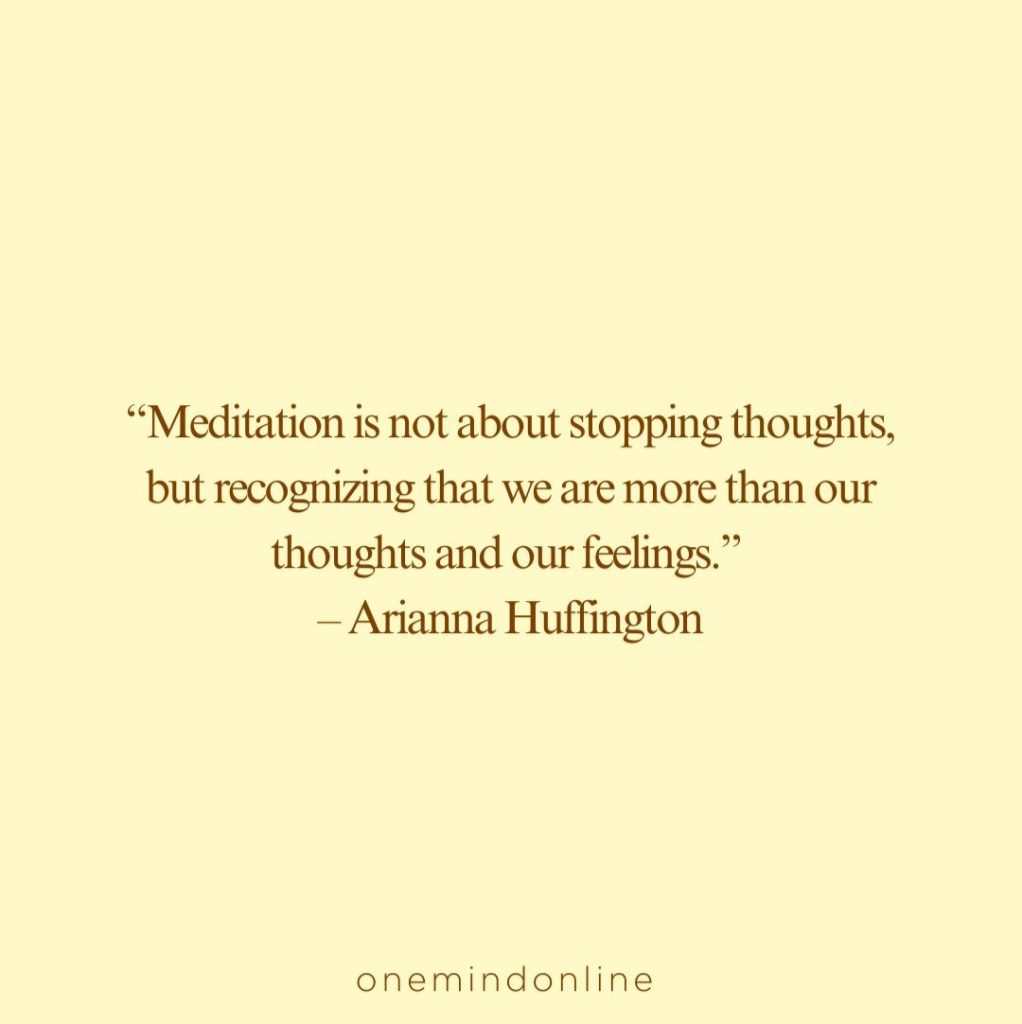
“Meditation is not about stopping thoughts, but recognizing that we are more than our thoughts and our feelings.” – Arianna Huffington
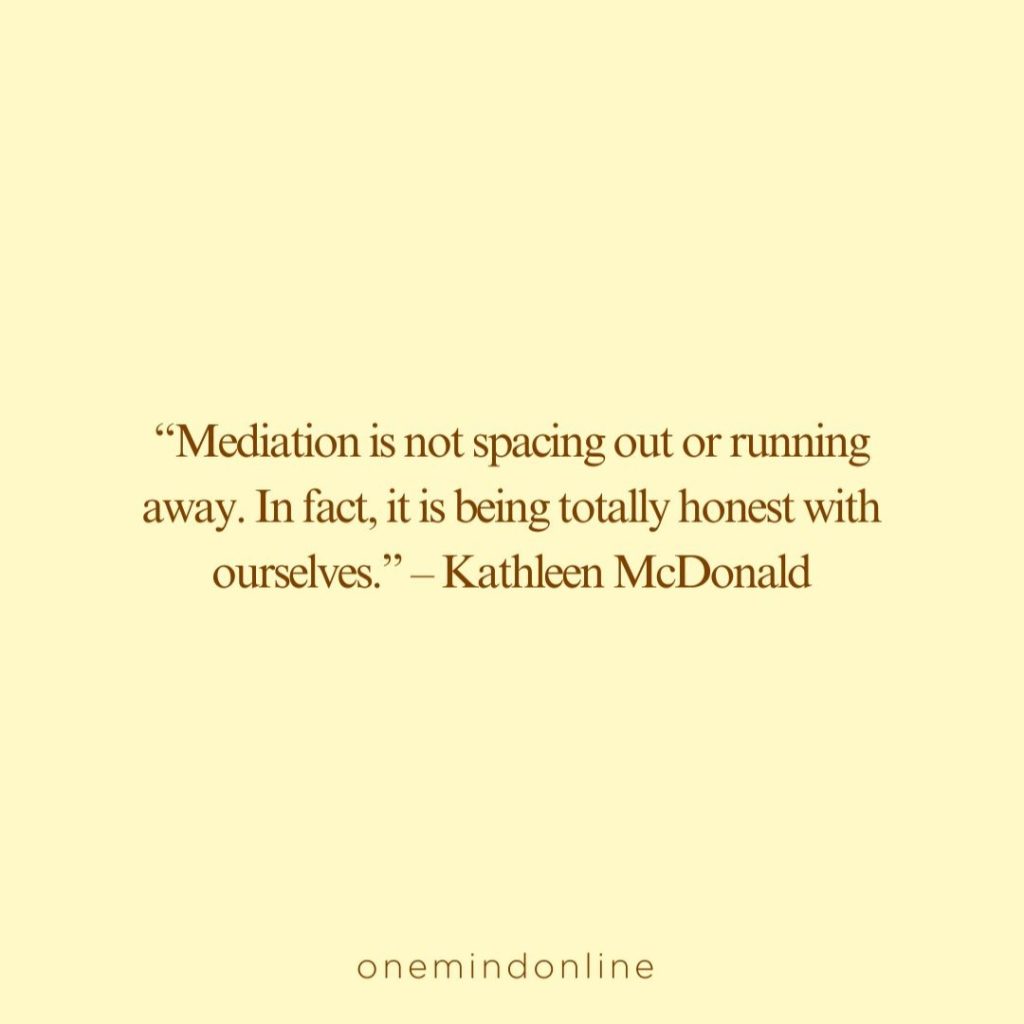
“Mediation is not spacing out or running away. In fact, it is being totally honest with ourselves.” – Kathleen McDonald
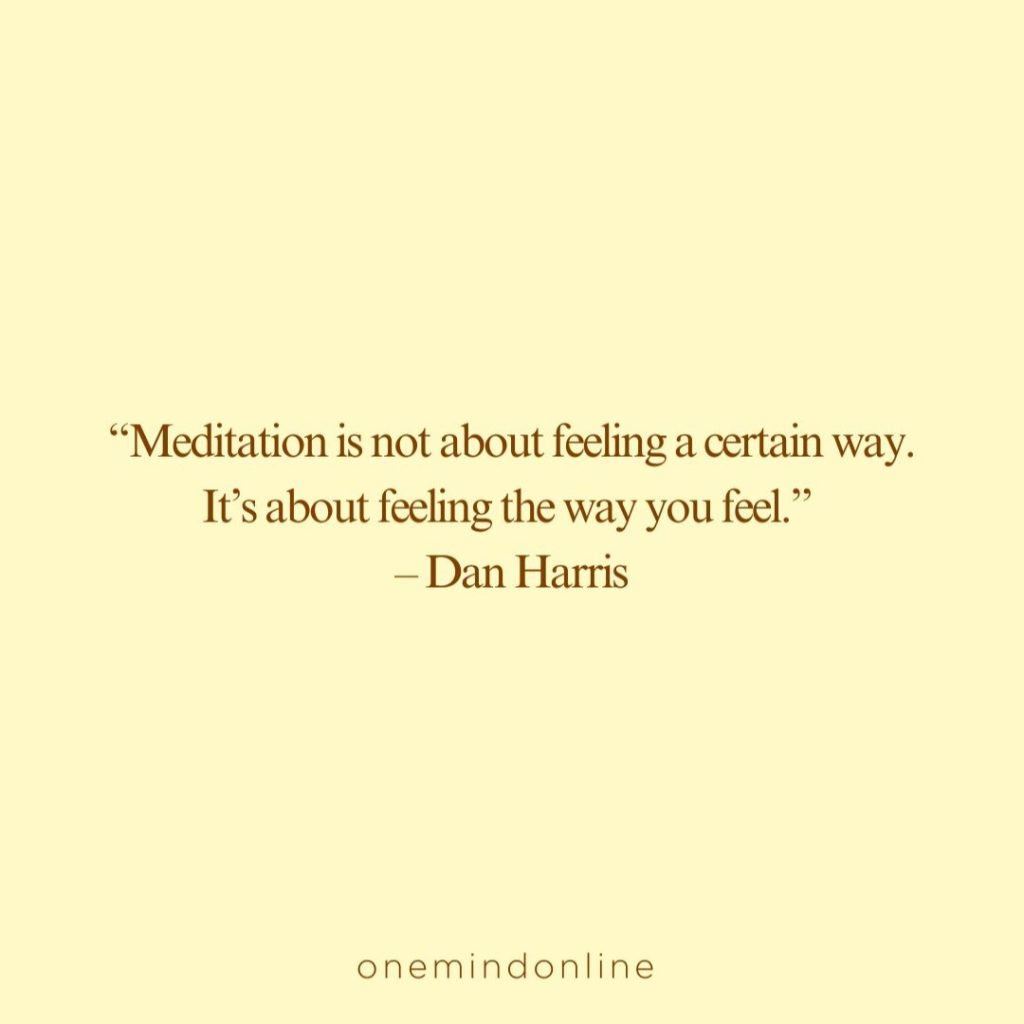
“Meditation is not about feeling a certain way. It’s about feeling the way you feel.” – Dan Harris
By allowing ourselves to fully experience our emotions, without resistance, we gain a deeper understanding of ourselves. We learn to navigate the currents of our inner world without getting swept away by any of them.
Instead of being so quick to try and make ourselves feel better, we need to become better at feeling. That is how we find both peace and healing.
When we stop fighting with reality, when we stop demanding that this moment be different from what it is, then we create space for life to happen. The mountain doesn’t resist the weather. The mountain’s arms are wide open to the changing of each season, each moment of sunshine, and even the experience of every storm. And beneath all the changing conditions, the mountain remains constant, unshakable, whole.
That mountain exists within you too.
Here are some guiding mantras to help you find the mountain in you:
- “My thoughts and feelings are not me. I am the observer, the vast awareness that witnesses them come and go.”
- “I allow myself to feel all emotions, both positive and negative. There is no need to resist; resistance only fuels the fire.”
- “Emotions are transient. They come and they go, like waves in the ocean. My peace remains constant beneath the surface.”
- “With practice, I become better at feeling. This allows me to release the grip of difficult emotions and cultivate inner peace.”
Today’s meditation cultivates a sense of acceptance and compassion for ourselves and our experience. It allows us to be present in the moment, appreciating the beauty and complexity of our emotional landscape.
– pierre –
Today’s LIVE meditation is: I am the mountain.
Today’s LIVE meditation
https://youtu.be/z68gwdNK9PM 2026
https://youtu.be/TSQduE0zhsU 2024
https://youtu.be/teIiSZkl_JA2023
Practice the “Daily Dose”
Let’s put it into practice! Choose what works for you – daily, once a week or whenever inspiration strikes. Putting pen to paper wires the neural pathways that will create your new habits.
1 – Affirmation
Write down your favourite affirmation on a sticky note and place it somewhere that you’ll be able to see it the whole day.
- “My thoughts and feelings are not me. I am the observer, the vast awareness that witnesses them come and go.”
- “I allow myself to feel all emotions, both positive and negative. There is no need to resist; resistance only fuels the fire.”
- “Emotions are transient. They come and they go, like waves in the ocean. My peace remains constant beneath the surface.”
- “With practice, I become better at feeling. This allows me to release the grip of difficult emotions and cultivate inner peace.”
2 – A moment of reflection
Use today’s question as a journal prompt. If you don’t have the time to sit down and write, just take a moment to reflect on your response.
The Observer’s Perspective: Recall a moment when you felt overwhelmed by your thoughts or emotions. Now imagine observing that experience from the “mountain within” – a place of steady awareness. From this inner mountain, are you able to see how the weather has shifted since you’ve had that experience? From this inner mountain, write a note to yourself as a reminder for the next time that emotions feel overwhelming. Tell yourself how you recognize the constantly changing nature of the weather, and that when you experience the next storm, your mountain will be the reminder that all storms pass.
3 – Quotes to share
Send a quote to someone who needs it, or share them all on social media to spread the good vibes!

4 – Q&A for deeper learning
Read through the questions and answers and write down at least one “aha moment” that clicked for you.
Q1: Does “becoming better at feeling” mean I should never try to improve my mood or feel happier?
Not at all. Becoming better at feeling means developing the capacity to be present with your emotions without resistance, which actually creates space for genuine joy and contentment. The difference is that you’re not fighting your emotional state out of fear or avoidance. Instead, you’re allowing emotions to come and also go naturally, which often leads to longer lasting positive feelings.
Q2: If my thoughts and feelings aren’t who I am, then who am I?
You are the awareness that observes thoughts and feelings. Think of it this way: you can notice when you’re thinking or feeling something, which means there’s a part of you that exists beyond those thoughts and feelings—the witness or observer. This awareness is your deeper self, the constant presence that remains even as thoughts and emotions come and go.
Q3: Won’t allowing myself to fully feel negative emotions make them worse or make them last longer?
Paradoxically, the opposite is true. When we resist emotions, we actually give them more power and longevity. Resistance creates tension and keeps emotions stuck. When you allow emotions to be present without fighting them, they naturally arise, peak, and pass—just like waves. Fighting with emotions is what makes them persist.
Q4: How do I observe my emotions without getting caught up in them when they feel so overwhelming?
Start small. Begin with less intense emotions to practice this skill. Use physical anchors like your breath or body sensations to help you stay grounded in the observer role. Remember, you’re not trying to eliminate the emotion—you’re simply noticing it: “Anxiety is here,” rather than “I am anxious.” This subtle shift in language can help create that observing space.
Q5: Is this approach just spiritual bypassing—using meditation to avoid dealing with real problems?
Actually, it’s the opposite. As Kathleen McDonald says, meditation is about being “totally honest with ourselves,” not running away. This practice helps you face your emotions and experiences more directly, not avoid them. It’s about developing the capacity to be with what is, which is the foundation for addressing real problems effectively rather than reactively.
Q6: How long does it take to develop this “observer” awareness?
This varies for everyone, but the good news is that you can experience glimpses of this awareness right away. With regular practice—even just a few minutes daily—you’ll notice the observer space becoming more accessible over time. It’s like building a muscle; it strengthens with consistent, gentle practice. Some people notice significant shifts within weeks, while for others it unfolds more gradually over months.
Q7: What should I do when emotions feel too intense to simply observe?
First, know that it’s okay to use healthy coping strategies when emotions feel overwhelming. This practice isn’t about pushing yourself beyond your capacity. Start by grounding yourself physically—feel your feet on the floor, take slow breaths, or place a hand on your heart. If an emotion feels too intense to observe alone, it may be helpful to work with a therapist or counselor who can provide support as you develop this capacity. Self-compassion is key—you’re learning a new skill, and that takes time.