
“Your Daily Dose” is a quick two minute read packed with bite-sized wisdom from all the great teachers. But you could also choose to turn it into something more… a powerful daily practice for personal growth. Give it a try!
A message from today’s meditation:
Imagine for a moment the scene of commuting to and from work every day in a noisy train car. Looking around you, you can see how the train is crammed with anxieties, doubts, and the echoes of others’ opinions – this is a screenshot of the reality of what we’re surrounded by day after day. We are bombarded by streams of data from all directions, constantly being fed a diet of, the anxieties, fears and opinions of the whole world around us. And just like eating too much junk food, all of this accumulates within us too.
Krishnamurti’s suggests meditation as a way to declutter and get back to a fresh and innocent mind.
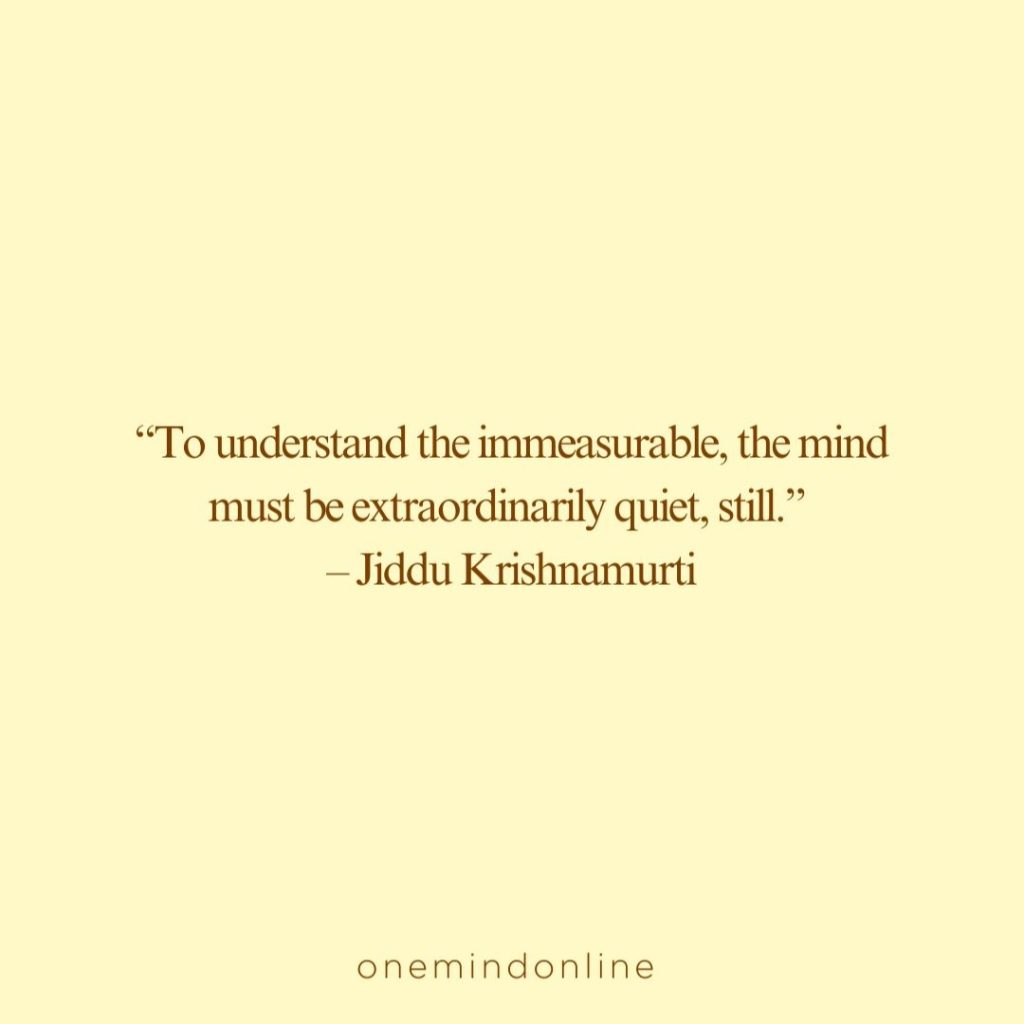
“To understand the immeasurable, the mind must be extraordinarily quiet, still.” – Jiddu Krishnamurti
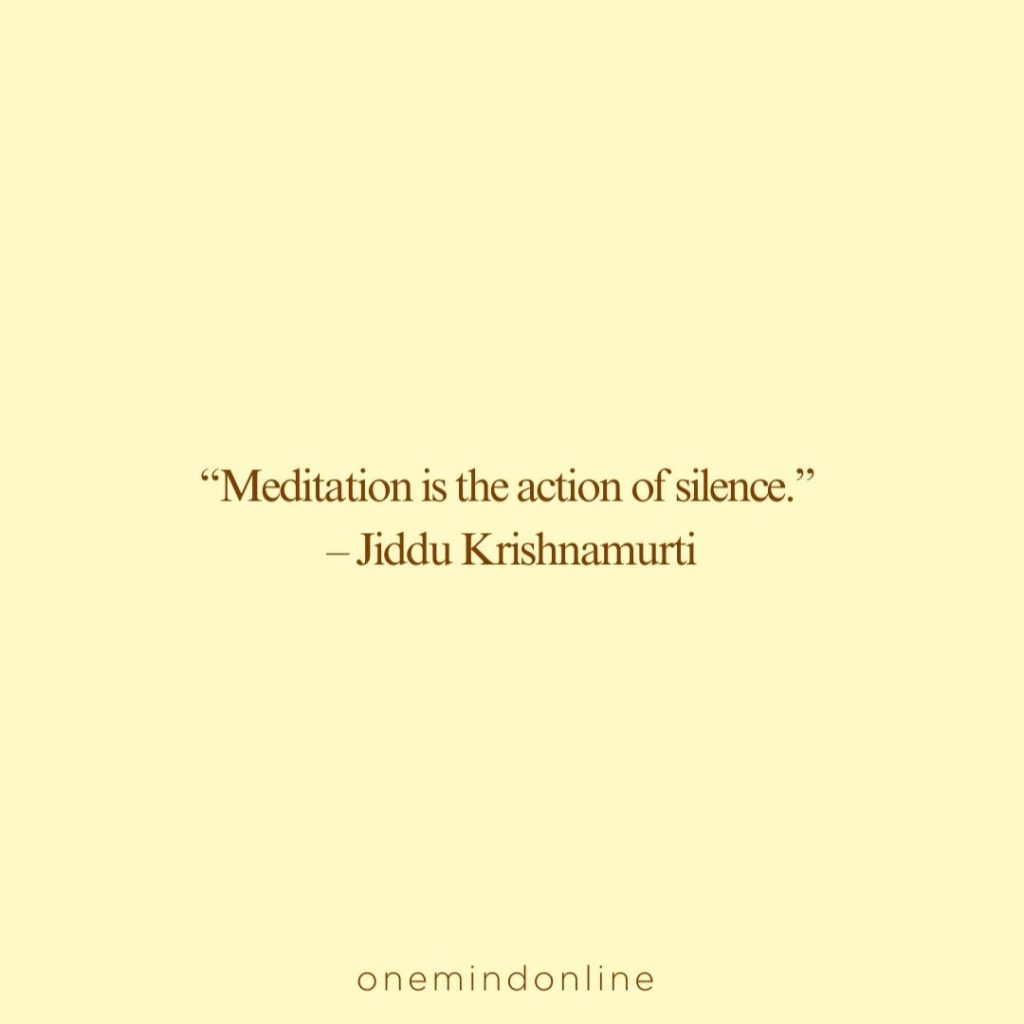
“Meditation is the action of silence.” – Jiddu Krishnamurti
I love this quote by Krishnamurti. As much as meditation is a passive activity it is not devoid of action, there is deep action that takes place within that space of silence. That surrender leads to a softening of all the old programmes and patterns that are not the real you. And a slow, gradual unveiling and remembering of the incredible human being that you are.
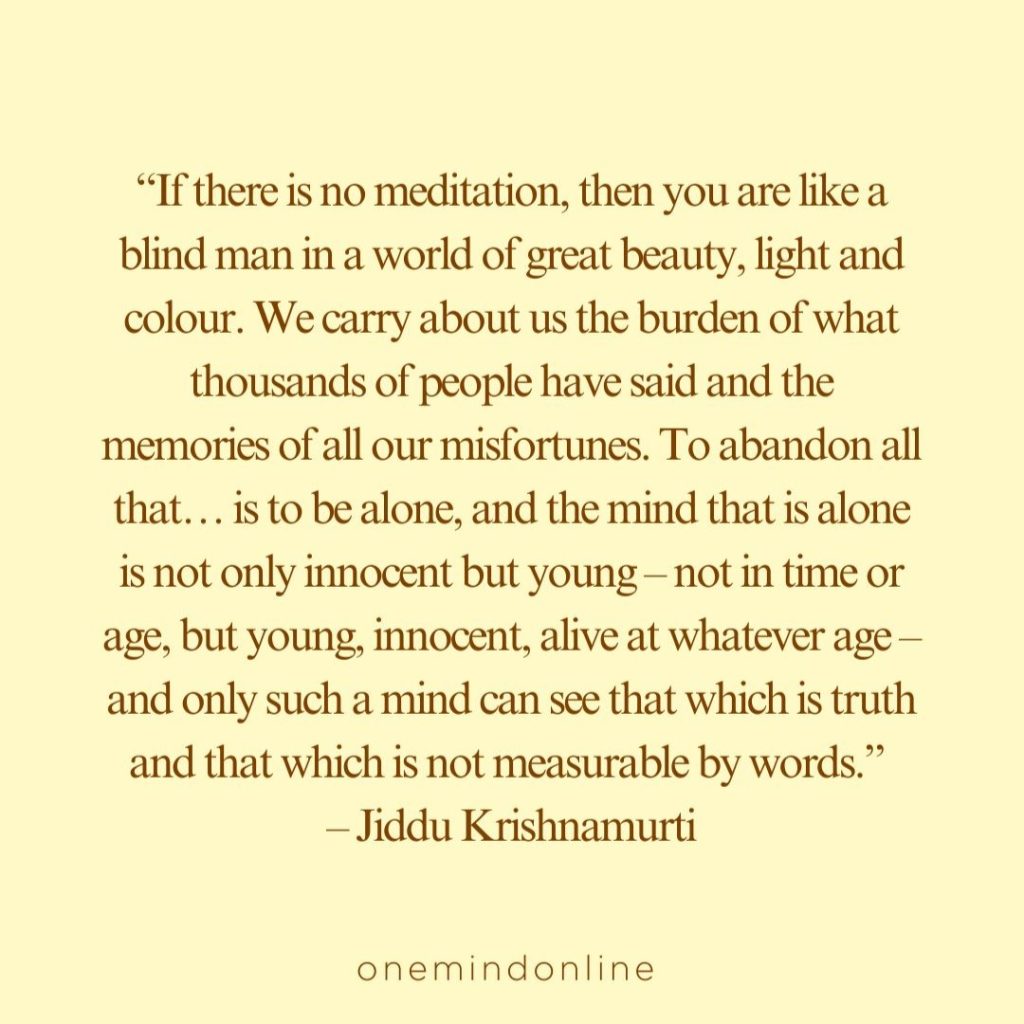
“If there is no meditation, then you are like a blind man in a world of great beauty, light and colour. We carry about us the burden of what thousands of people have said and the memories of all our misfortunes. To abandon all that… is to be alone, and the mind that is alone is not only innocent but young – not in time or age, but young, innocent, alive at whatever age – and only such a mind can see that which is truth and that which is not measurable by words.” – Jiddu Krishnamurti
We become burdened by years of carrying around the words and opinions of the world around us and when we’re finally able to put all of that noise down, we find that our mind is alone, almost as if we’ve been carrying with us a bunch of noisy passengers all along.
This mind that finds itself alone, Krishnamurti calls innocent and young. And I have seen this happen, how when we become able to let go of all of the baggage we’ve been dragging along, there is a youthfulness that our minds return to. It was never lost, just drowning under all the weight.
Here are some guiding mantras to illuminate your journey:
- “Silence is not emptiness, but a canvas for my true self to emerge.”
- “Silence is the language of the soul. Let it speak.”
- “With each breath, I release noise and embrace inner stillness.”
- “My mind is young, innocent, and capable of seeing beyond words.”
I hope that today you find your own load becoming just a little bit lighter, and that you become reunited with another part of your youthful and innocent mind.
Have an awesome Sunday!
– pierre –
Today’s LIVE meditation is: Finding silence.
Today’s LIVE meditation
https://youtu.be/vY63ZfZVkFk 2026
https://youtu.be/6zCKhR1naMU 2024
https://youtu.be/H3guu3fKEkQ 2023
Practice the “Daily Dose”
Let’s put it into practice! Choose what works for you – daily, once a week or whenever inspiration strikes. Putting pen to paper wires the neural pathways that will create your new habits.
1 – Affirmation
Write down your favourite affirmation on a sticky note and place it somewhere that you’ll be able to see it the whole day.
- “Silence is not emptiness, but a canvas for my true self to emerge.”
- “Silence is the language of the soul. Let it speak.”
- “With each breath, I release noise and embrace inner stillness.”
- “My mind is young, innocent, and capable of seeing beyond words.”
2 – A moment of reflection
Use today’s question as a journal prompt. If you don’t have the time to sit down and write, just take a moment to reflect on your response.
Identifying Your Noisy Passengers: Think about the “crowded train car” metaphor in your own life. Who are the noisy passengers you’ve been carrying with you? Write about the specific voices, opinions, fears, or memories that occupy space in your mind. Where did they come from? Whose words or expectations have you internalized over the years? Take time to name them, one by one, and explore how they’ve influenced your choices and self-perception.
3 – Quotes to share
Send a quote to someone who needs it, or share them all on social media to spread the good vibes!

4 – Q&A for deeper learning
Read through the questions and answers and write down at least one “aha moment” that clicked for you.
Q1. What does it mean to carry “noisy passengers” in our minds?
The noisy passengers represent all the accumulated mental clutter we’ve collected over our lifetimes—the anxieties we’ve absorbed from our environment, the critical voices we’ve internalized from others, the fears we’ve developed from past experiences, and the constant stream of opinions and data we’re exposed to daily. Like actual passengers on a crowded train, these thoughts and influences take up space in our consciousness, creating noise that drowns out our authentic self. Most of us have carried these passengers for so long that we don’t even realize they’re there, mistaking their voices for our own inner dialogue.
Q2. How can meditation be both “passive” and involve “deep action”?
This paradox is at the heart of transformative meditation practice. While meditation appears passive from the outside—we’re simply sitting still, not doing anything—internally, profound work is taking place. The “action of silence” refers to what takes place when we stop actively engaging with our mental chatter and simply observe. In that space of non-doing, old patterns begin to soften, rigid beliefs become flexible, and our true nature has room to emerge. It’s similar to how a wound heals best when we stop picking at it—the healing action happens naturally in the stillness, not through our constant interference.
Q3. Why does Krishnamurti say we become like “blind men” without meditation?
Without the clarity that comes from meditation and inner silence, we move through life unable to perceive its true beauty and depth. We’re so preoccupied with our internal noise—our worries, memories, and the accumulated opinions of others—that we can’t see what’s actually in front of us. We experience life through a filter of past conditioning rather than directly. Meditation removes this filter, allowing us to see clearly, perhaps for the first time, the “great beauty, light and colour” that exists in each moment when we’re truly present to it.
Q4. What does it mean for the mind to be “alone” after releasing burdens?
The aloneness Krishnamurti describes isn’t loneliness or isolation—it’s the experience of your mind becoming free from external influences and internalized voices. When you release the burden of what others have said and the weight of accumulated misfortunes, your consciousness stands alone, unmediated by all those external inputs. This is a profoundly liberating state because you finally encounter your own authentic thoughts, feelings, and perceptions rather than simply reacting to the crowd of influences you’ve been carrying. It’s the difference between a room full of competing conversations and the clarity of your own voice in a quiet space.
Q5. Can our minds really become “young and innocent” again, regardless of age?
Yes, according to Krishnamurti, and this aligns with what many meditation practitioners experience. The youthfulness he describes isn’t about biological age but about the quality of our awareness. A young, innocent mind is one that can see things freshly, without the heavy overlay of past experiences, cynicism, and accumulated judgments. This innocence was never truly lost—it’s been buried under layers of conditioning and trauma. When we release those layers through meditation and inner work, that natural freshness of perception returns. People can experience this renewal at any stage of life; it’s about unburdening rather than turning back time.
Q6. How do we actually “put down” the burdens we’ve been carrying?
Putting down our burdens begins with awareness—recognizing that we’re carrying them in the first place. In meditation, we create space to observe our thoughts without immediately believing or acting on them. We notice when we’re replaying someone else’s critical voice or rehashing an old pain. The act of observing these patterns with compassionate awareness, without judgment, begins to loosen their grip. It’s not about forcefully suppressing or fighting these thoughts, which often strengthens them. Instead, it’s about seeing them clearly, recognizing they’re not fundamentally who we are, and choosing not to pick them up again. This is a gradual process that deepens with consistent practice.
Q7. Do I need to meditate for hours to experience these benefits?
No. While longer or more consistent practice will deepen the benefits, even brief moments of genuine silence can offer relief and insight. The key is quality over quantity. A few minutes of truly letting go and being present can be more valuable than an hour of sitting while mentally rehearsing your to-do list. Start where you are—even taking three conscious breaths where you fully release your mental grip can provide a taste of that lightness and clarity. What matters most is bringing sincere intention to the practice and allowing yourself to gradually build a relationship with silence, whatever form that takes in your life.