“Your Daily Dose” is a quick two minute read packed with bite-sized wisdom from all the great teachers. But you could also choose to turn it into something more… a powerful daily practice for personal growth. Give it a try!
A message from today’s meditation:
Today’s journey starts with a thought from Jiddu Kirshnamurti,
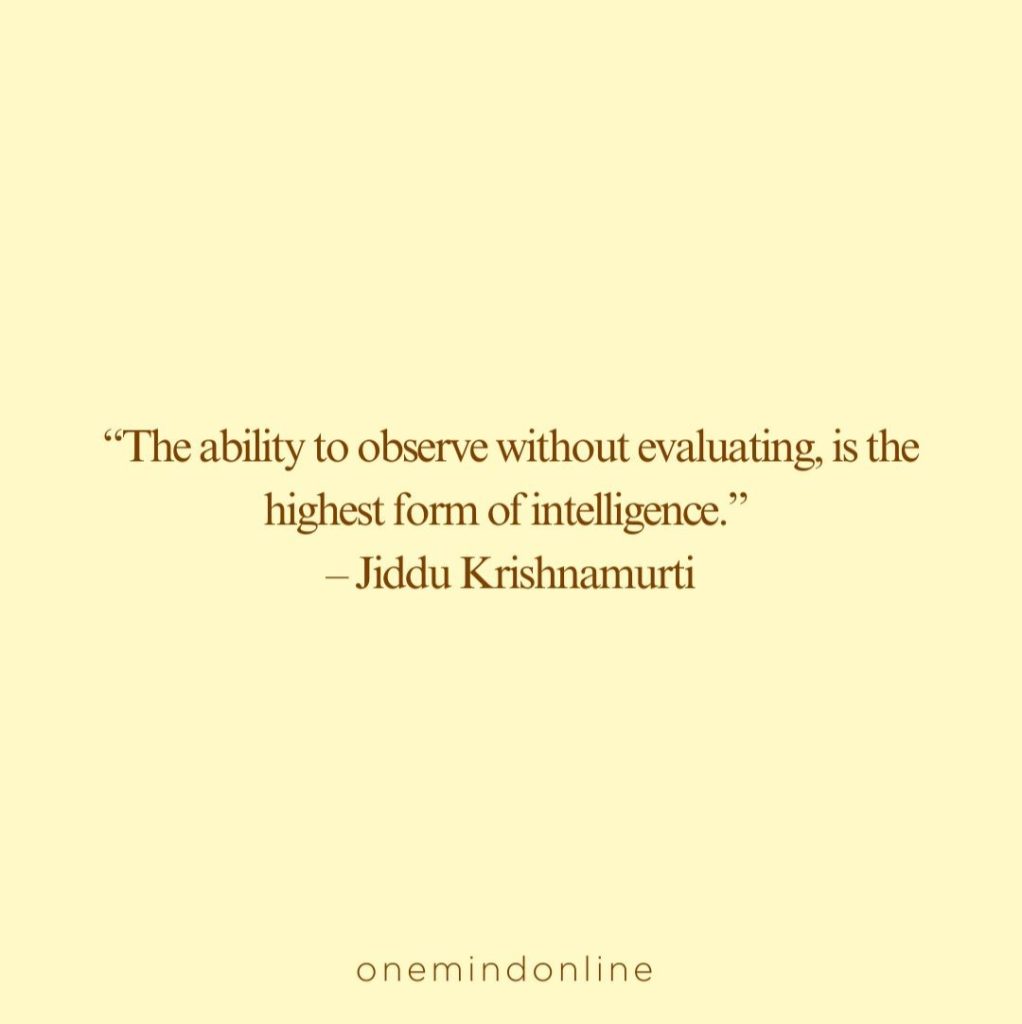
“The ability to observe without evaluating, is the highest form of intelligence.” – Jiddu Krishnamurti
Have you ever paused to reflect on how quickly we tend to judge – not just others, but ourselves, events, and even fleeting thoughts? This innate compulsion to label things as “right” or “wrong” is so deeply ingrained in our human nature that we seldom recognize the immense disservice it does to our personal growth and freedom.
Here are a few more thoughts on judgement:
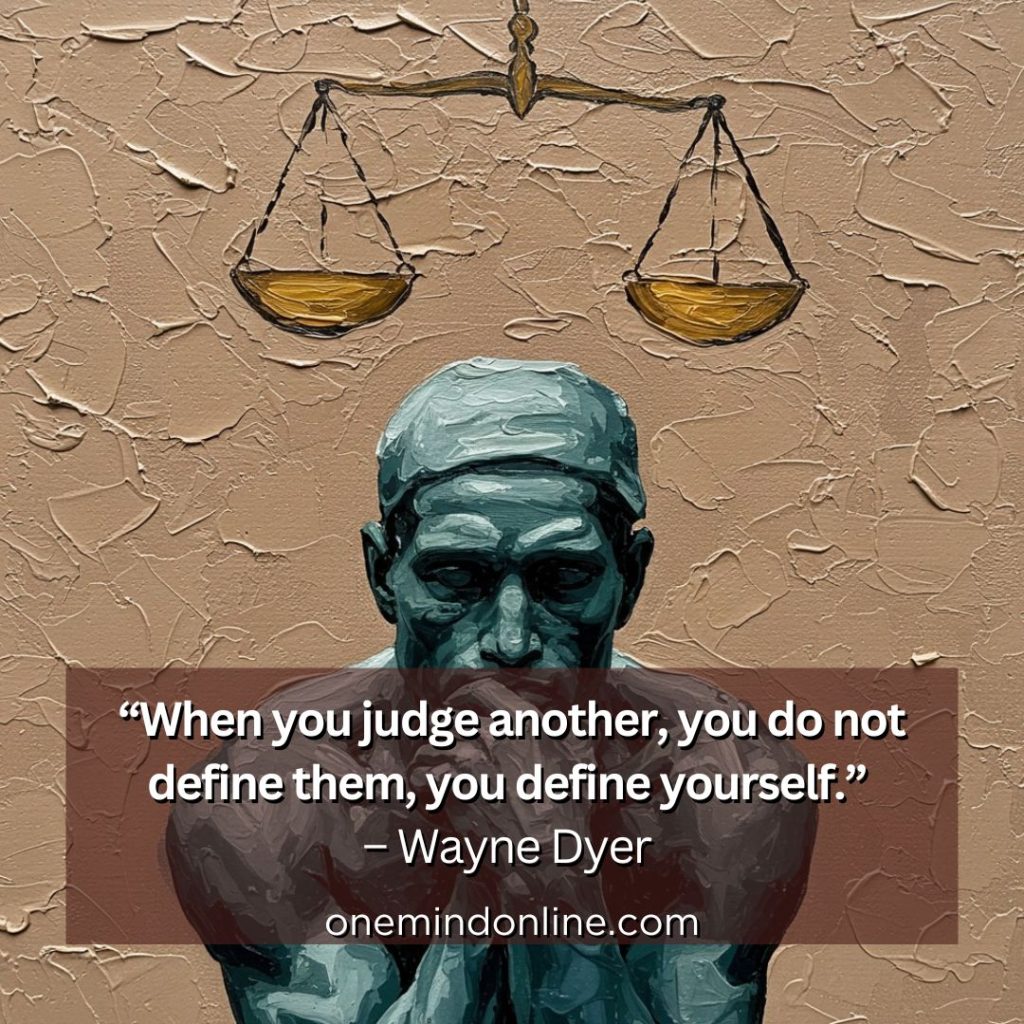
“When you judge another, you do not define them, you define yourself.” – Wayne Dyer
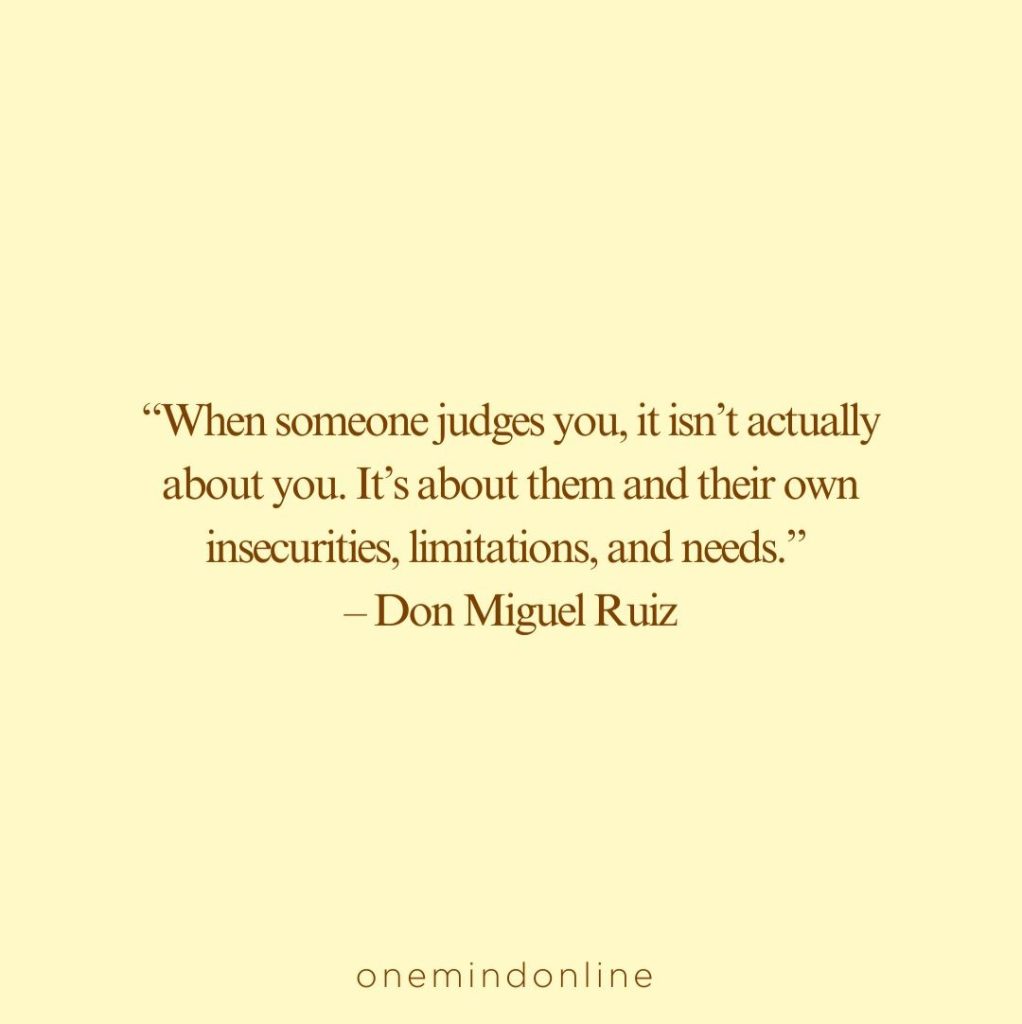
“When someone judges you, it isn’t actually about you. It’s about them and their own insecurities, limitations, and needs.” – Don Miguel Ruiz
The compulsion to instantly evaluate, judge, criticize or otherwise place things or people into a well defined box is such an inherent human survival trait, that we don’t even realize that over time we’ve created these patterns of evaluation to take over the “job” of judging things. You see, it’s not just that we judge, it’s that we have well formed patterns of judgement that means our “programme” has already decided what our judgement will be before the event has even occurred!
In this way, our compulsion to evaluate everything has robbed us of actual freedom of choice, because now whatever happens to you, the decision that you will make is already pre-determined. You have given control of your life to a programme that prevents you from experiencing any more of life than your patterns of survival will allow.
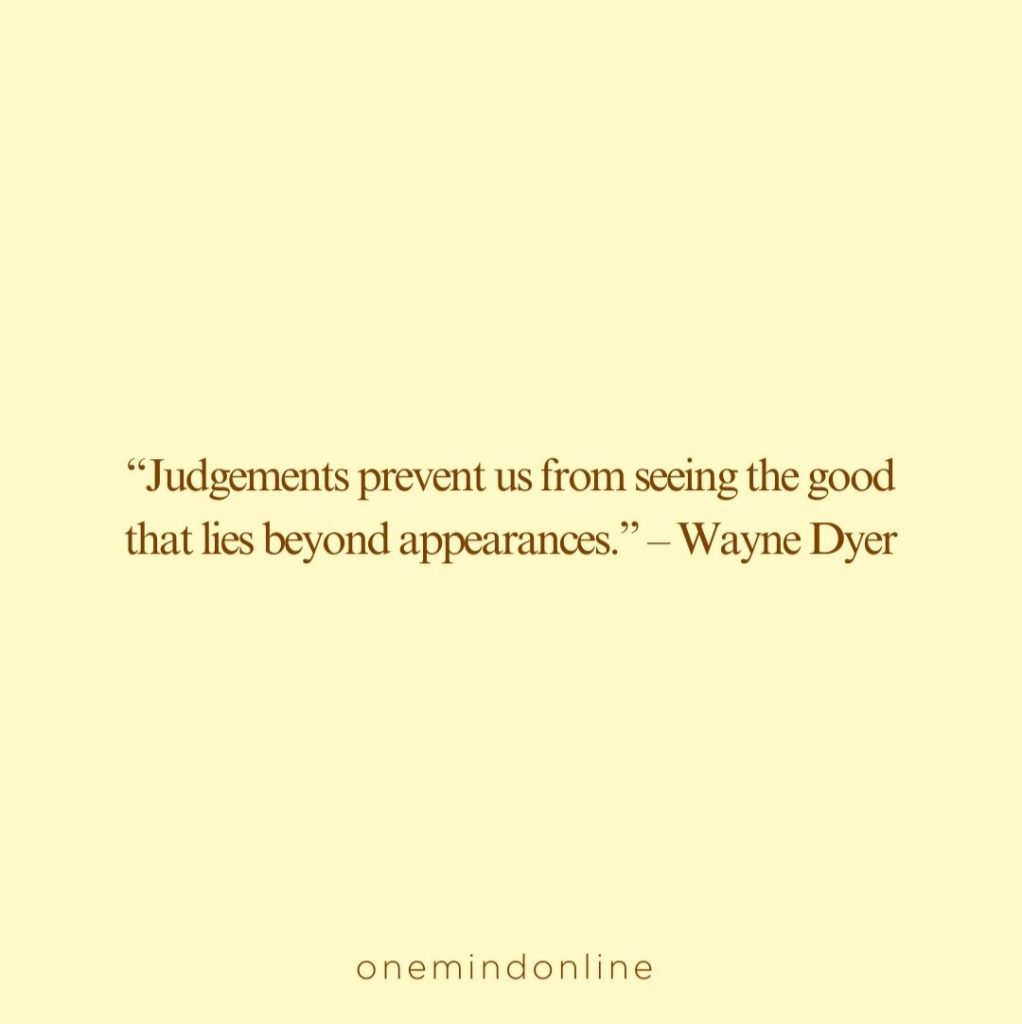
“Judgements prevent us from seeing the good that lies beyond appearances.” – Wayne Dyer
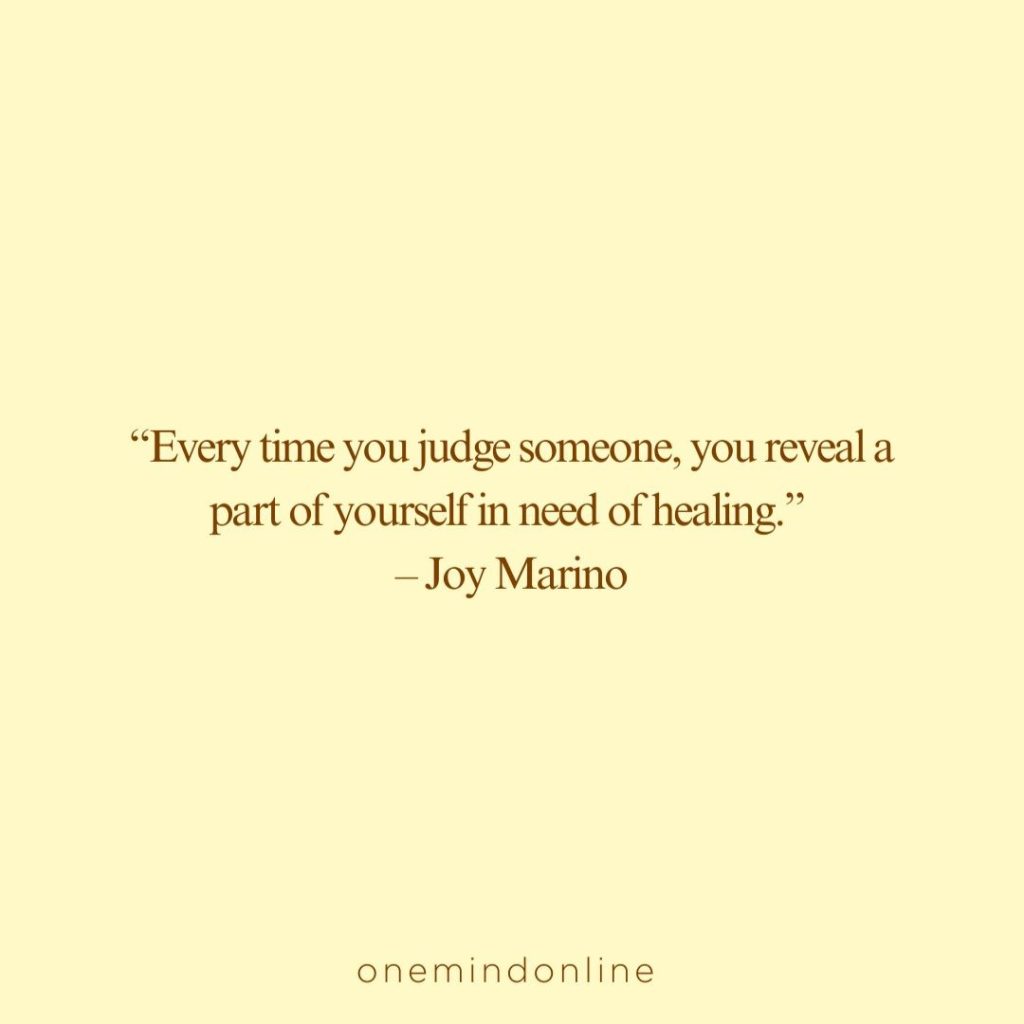
“Every time you judge someone, you reveal a part of yourself in need of healing.” – Joy Marino
How do we escape this trap and regain actual freedom of choice?
Stop judging everything, anything, everyone, anyone… and just observe. See it only for what it is.
This pattern of judgement, just like all our other patterns can only be softened in baby steps, and the simplest way I have found of doing this is to join us in meditation and pay attention to your own thoughts and emotions.
Are you able to observe your own thinking and feeling without “evaluating” as Krishnamurthi suggests? Without judging it as right or wrong? Good or bad?
If you can, if you’re able to observe and simply see a human brain producing human thoughts you’ve not only achieved “the highest form of intelligence” but also freedom, and more specifically freedom of choice.
Because now… when you do have to make a decision about something – when you are standing in front of a choice in the absence of an old pattern to judge something as good or bad, you will have the opportunity to exercise real “free will’, because you have broken free of compulsion.
Mantras for Freedom:
- “I observe my thoughts and feelings without labeling them as good or bad.”
- “I am free from the compulsion to judge everything I encounter.”
- “In the space between observation and response, I discover free will to choose.”
- “I see people and situations clearly, beyond my programmed responses.”
I hope you enjoy today’s silent meditation, and take the opportunity to observe your own thoughts without judgement.
Have a beautiful Sunday,
– pierre –
Today’s LIVE meditation is: Finding silence.
Today’s LIVE meditation
https://youtu.be/Pre9-OxZZCA 2025
https://youtu.be/pF6weH6BtHI 2020
Practice the “Daily Dose”
Let’s put it into practice! Choose what works for you – daily, once a week or whenever inspiration strikes. Putting pen to paper wires the neural pathways that will create your new habits.
1 – Affirmation
Write down your favourite affirmation on a sticky note and place it somewhere that you’ll be able to see it the whole day.
- “I observe my thoughts and feelings without labeling them as good or bad.”
- “I am free from the compulsion to judge everything I encounter.”
- “In the space between observation and response, I discover free will to choose.”
- “I see people and situations clearly, beyond my programmed responses.”
2 – A moment of reflection
Use today’s question as a journal prompt. If you don’t have the time to sit down and write, just take a moment to reflect on your response.
Tracking Your Judgment Patterns: For the next 24 hours, notice when you automatically judge something or someone. Write about three instances where you caught yourself judging. What was the judgment? What might have triggered it? What part of yourself might this judgment be revealing?
3 – Quotes to share
Send a quote to someone who needs it, or share them all on social media to spread the good vibes!

4 – Q&A for deeper learning
Read through the questions and answers and write down at least one “aha moment” that clicked for you.
Q1: Isn’t judgment sometimes necessary? Don’t we need to evaluate things to make good decisions?
In this context, there’s an important distinction between discernment and judgment. Judgement is the reactive decisions we make without deep understanding of all perspectives. An automatic process of unconsciously labeling things as good/bad, right/wrong before we’ve truly observed them. Discernment is the ability to see clearly and make wise choices based on observation. You can absolutely make decisions and assess situations without being enslaved to pre-programmed judgmental reactions. True discernment comes from “wisely seeing” (as taught in Buddhism), and then being able to exercise free will in choosing what serves your greatest good.
Q2: How can I tell the difference between observing and judging?
Observation is neutral and descriptive: “I notice I’m feeling angry right now” or “This person is speaking loudly.” Judgment adds evaluation and interpretation: “I shouldn’t be angry” or “This person is rude and disrespectful.” Observation creates space and awareness; judgment creates resistance and reaction. When you observe, you feel more open and curious. When you judge, you feel contracted and certain.
Q3: Won’t I become passive or indifferent if I stop judging everything?
Not at all. Observing without judgment doesn’t mean accepting harmful behavior or becoming apathetic. In fact, when you’re not caught up in reactive judgment, you can respond more effectively to situations. You can still have boundaries, make choices, and take action—but from a place of clarity rather than compulsion. Freedom from judgment creates more effective engagement, not less.
Q4: How long does it take to break patterns of judgment?
This is a lifelong practice rather than a destination. These judgment patterns have been forming since childhood and are deeply wired into our nervous systems. The article wisely mentions taking “baby steps”—you won’t eliminate judgment overnight. However, with consistent practice, you can develop the awareness to catch yourself judging more quickly and create more moments of pure observation. Progress happens gradually, but each moment of awareness counts.
Q5: IF I start judging myself for being judgmental… Isn’t that just another layer of the problem?
Absolutely—and this is a very common trap! When you notice yourself judging, the goal is simply to observe that too, without adding another layer of judgment about your judging. You might notice: “I’m judging this person. And now I’m judging myself for judging.” Simply observing this pattern with curiosity and perhaps a bit of humor is more helpful than beating yourself up about it. Self-compassion is key.
Q6: How does meditation help with reducing judgment?
Meditation creates a safe laboratory where you can practice observing your thoughts and emotions without reacting to them. When you sit quietly, thoughts arise—some pleasant, some unpleasant. The practice is to notice them without getting hooked, without labeling them as good or bad thoughts to have. This trains your “observation muscle.” Over time, this capacity to observe without evaluating transfers to daily life, giving you more freedom in how you respond to everything you encounter.
Q7: What’s the connection between judgment and freedom of choice?
When you’re operating from pre-programmed judgment patterns, your responses are essentially predetermined—you’re running on autopilot. If your pattern says “people who do X are bad,” then whenever you encounter X, your reaction is already decided before you’ve truly observed the situation. True freedom of choice requires space between stimulus and response—space that only exists when you can observe without immediately evaluating. Breaking free from compulsive judgment literally gives you access to choices you couldn’t see before because your automatic reactions were blocking them.