“Your Daily Dose” is a quick two minute read packed with bite-sized wisdom from all the great teachers. But you could also choose to turn it into something more… a powerful daily practice for personal growth. Give it a try!
A message from today’s meditation:
A thought on meditation…
I have seen countless lives change with this one choice – “the decision that meditation will be my new normal.”
Like getting up in the morning and automatically brushing your teeth, making meditation a part of your day every day, will change how you live your life.
Here are a few thoughts from the Dalai Lama on meditation:
“Whatever forms of meditation you practice, the most important point is to apply mindfulness continuously, and make a sustained effort. It is unrealistic to expect results from meditation within a short period of time. What is required is continuous sustained effort.” – Dalai Lama
“The mind is definitely something that can be transformed, and meditation is a means to transform it.” – Dalai Lama
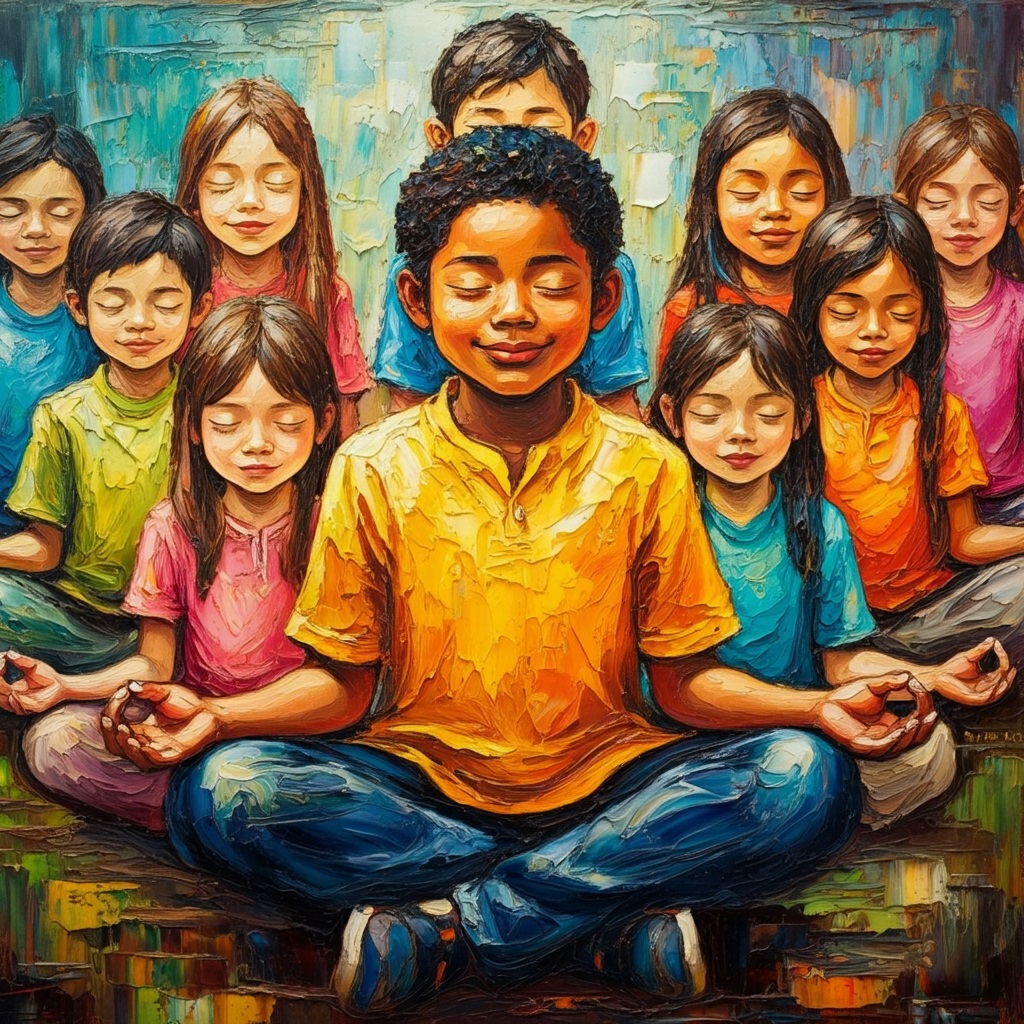
“If every 8 year old in the world is taught meditation, we will eliminate violence from the world within one generation.” – Dalai Lama
It is of course natural to encounter inner resistance to meditation. One of the greatest challenges we face in our daily lives is the constant chatter of our minds. Our inner narratives can be relentless, pulling us into the past or projecting us into the future and our growth is dependent on developing the skill to not let those inner narratives control our lives.
If it is completely impossible for you to sit through a meditation, then you are not in control of your life, period!
The part of you that says, “I can’t do this”… or… “I won’t do this”… or… “this is a waste of time…” (or any other variation of this) this part of you is in complete control of your life. This disempowering inner narrative doesn’t only have an opinion about meditation, it’s making all of your decisions for you, and it will control you forever until you put the voice of wisdom back in the driver’s seat. Meditation IS how you take back control. Meditation IS how your inner voice of wisdom slowly becomes more and more clear.
It’s important to remember that just like a muscle, your mind needs to be trained. A well-trained mind is a resilient mind, capable of overcoming obstacles, achieving goals, and experiencing lasting happiness. With practice, your mind becomes the greatest resource that you have.
Cultivate a healthy relationship with your mind:
- “I am capable of training my mind, just as I would train my body.”
- “Discomfort is not danger – allowing discomfort to be felt is the edge where transformation begins.”
- “Even a few minutes of daily practice is reshaping my relationship with my thoughts.”
- “I am patient with myself as I develop this practice; lasting change takes sustained effort.”
- “Each time I sit in meditation, I am choosing myself and my wellbeing.”
In conclusion, the mind is not merely a passive observer of the world but an active participant in shaping our reality. By cultivating mindfulness and practicing meditation, we can transform our minds into our greatest resource, empowering us to navigate life’s challenges with grace and resilience.
Come and join us for a little while, even if you don’t make it through the whole session.
Have a beautiful Sunday beautiful people!
– pierre –
Today’s LIVE meditation is: Finding silence.
Today’s LIVE meditation
https://youtu.be/fHc9QMHKKvQ 2025
https://youtu.be/UFweVgeNhVA 2024
https://youtu.be/A3lKLx0OuVU 2022
Practice the “Daily Dose”
Let’s put it into practice! Choose what works for you – daily, once a week or whenever inspiration strikes. Putting pen to paper wires the neural pathways that will create your new habits.
1 – Affirmation
Write down your favourite affirmation on a sticky note and place it somewhere that you’ll be able to see it the whole day.
- “I am capable of training my mind, just as I would train my body.”
- “Discomfort is not danger – allowing discomfort to be felt is the edge where transformation begins.”
- “Even a few minutes of daily practice is reshaping my relationship with my thoughts.”
- “I am patient with myself as I develop this practice; lasting change takes sustained effort.”
- “Each time I sit in meditation, I am choosing myself and my wellbeing.”
2 – A moment of reflection
Use today’s question as a journal prompt. If you don’t have the time to sit down and write, just take a moment to reflect on your response.
Your Resistance Map: The article states – “If it is completely impossible for you to sit through a meditation, then you are not in control of your life.” What feelings arise when you read this? Of course it’s not only during meditation that we feel inner resistance, where else in your life do you encounter this same resistance – the voice that says “I can’t,” “I won’t,” or “this is a waste of time”?
When that voice of inner resistance controls the decisions you make, then you will have no choice but to reach for the same old coping mechanisms of the past, and therefore repeat the same old patterns as in the past. What are the patterns that you WILL repeat when your life is controlled by “I can’t,” “I won’t,” or “this is a waste of time”?
3 – Quotes to share
Send a quote to someone who needs it, or share them all on social media to spread the good vibes!




4 – Q&A for deeper learning
Read through the questions and answers and write down at least one “aha moment” that clicked for you.
Q1: Why is meditation so difficult when it seems like such a simple practice?
A: Meditation reveals how little control we actually have over our wandering minds. The difficulty you experience isn’t a sign of failure—it’s evidence of why the practice is necessary. Your mind has spent years, perhaps decades, running on autopilot. Sitting still and observing your thoughts exposes this pattern, which can feel uncomfortable. That discomfort is actually the starting point of transformation.
Q2: How long does it take to see results from meditation?
A: As the Dalai Lama reminds us, “It is unrealistic to expect results from meditation within a short period of time.” Meaningful transformation requires continuous sustained effort. Some people notice subtle shifts in a few weeks—better sleep, slight improvements in patience—but deep changes typically unfold over months or years. The key is consistency, not speed.
Q3: What if I can’t quiet my mind during meditation?
A: This is a fundamental misconception: meditation isn’t about stopping your thoughts or achieving a perfectly quiet mind. It’s about changing your relationship with your thoughts—learning to observe them without being controlled by them. Even experienced meditators have busy minds. The practice is in noticing when you’ve been pulled away and gently returning to your breath or point of focus.
Q4: How much time do I really need to meditate each day?
A: Start small and build gradually. Even three to five minutes daily can make a significant difference, especially when you’re building the habit. It’s far better to meditate for five minutes every single day than to do a 30-minute session once a week. As the practice becomes more natural, you can gradually extend the duration. Consistency matters more than intensity.
Q5: What does it mean when you say my inner voice is “controlling” me?
A: Your inner narrator—the voice that judges, worries, criticizes, and resists—often makes decisions before your conscious, wise self even has a chance to weigh in. It might tell you “you’re too tired” to exercise, “you’re not good enough” to apply for that job, or “this won’t work” before you try something new. When this voice dominates, you’re living reactively rather than intentionally. Meditation helps you recognize this voice and choose not to follow it blindly.
Q6: Is it normal to feel uncomfortable or restless during meditation?
A: Absolutely. Discomfort is not only normal—it’s often where the most growth happens. When you sit still, you’re forcing your mind and body to confront patterns they usually avoid through distraction and busyness. Restlessness, boredom, anxiety, or physical discomfort are all part of the process. Embracing these sensations rather than running from them is itself a powerful practice.
Q7: What if I miss days or can’t seem to maintain consistency?
A: Missing days doesn’t erase your progress or mean you’ve failed. The practice is in beginning again—each day, each breath, each moment. When you notice you’ve stopped meditating, that awareness itself is valuable. Instead of judging yourself, simply return to the practice. Treat yourself with the same patience you’d offer a good friend who was learning something challenging. Progress isn’t linear, and showing up imperfectly is infinitely better than not showing up at all.