“Your Daily Dose” is a quick two minute read packed with bite-sized wisdom from all the great teachers. But you could also choose to turn it into something more… a powerful daily practice for personal growth. Give it a try!
A message from today’s meditation:
It is at the bottom of your softness that you will discover your deepest strength. Before you start reading, maybe take a few breaths first. Make it real slow, slowly in, and slowly out.
With every exhale think, “softness…” as you breathe out, soften your body, feel yourself melt, surrender…
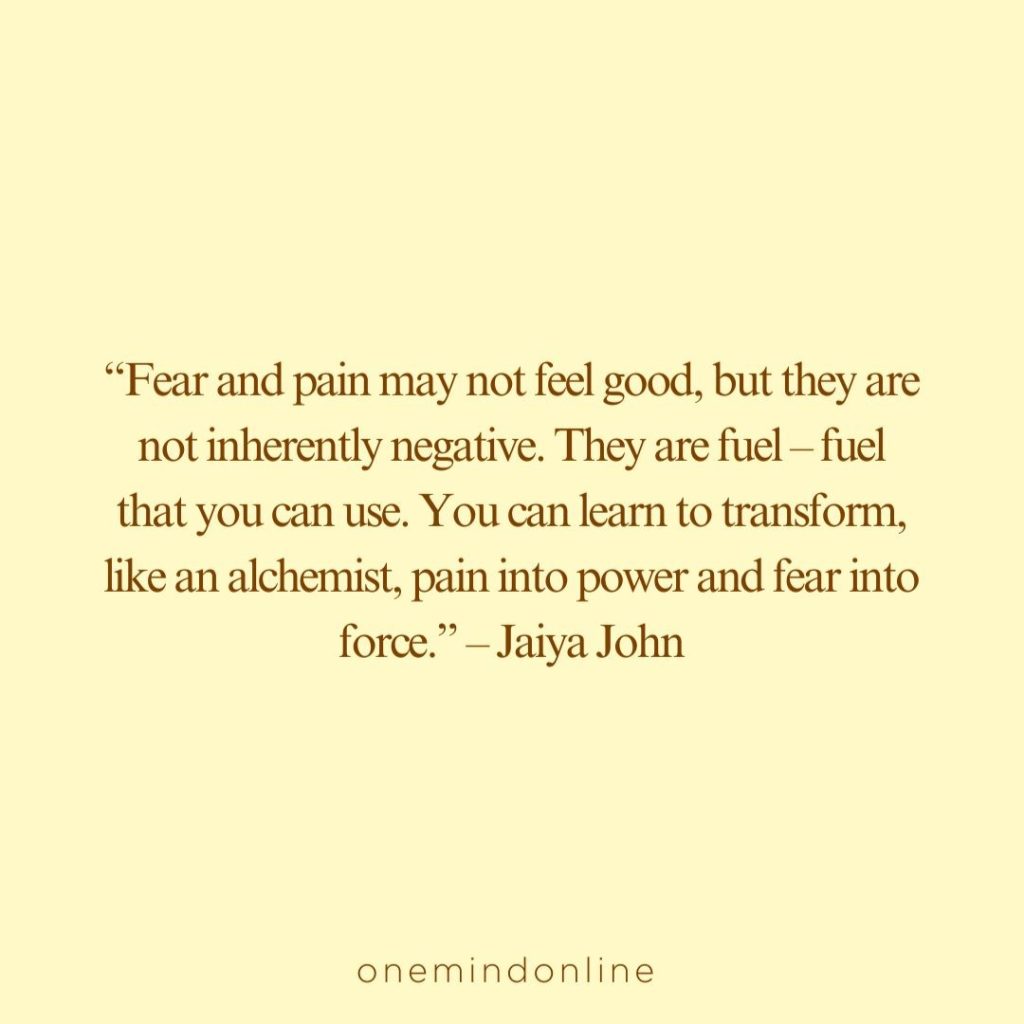
“Fear and pain may not feel good, but they are not inherently negative. They are fuel – fuel that you can use. You can learn to transform, like an alchemist, pain into power and fear into force.” – Jaiya John
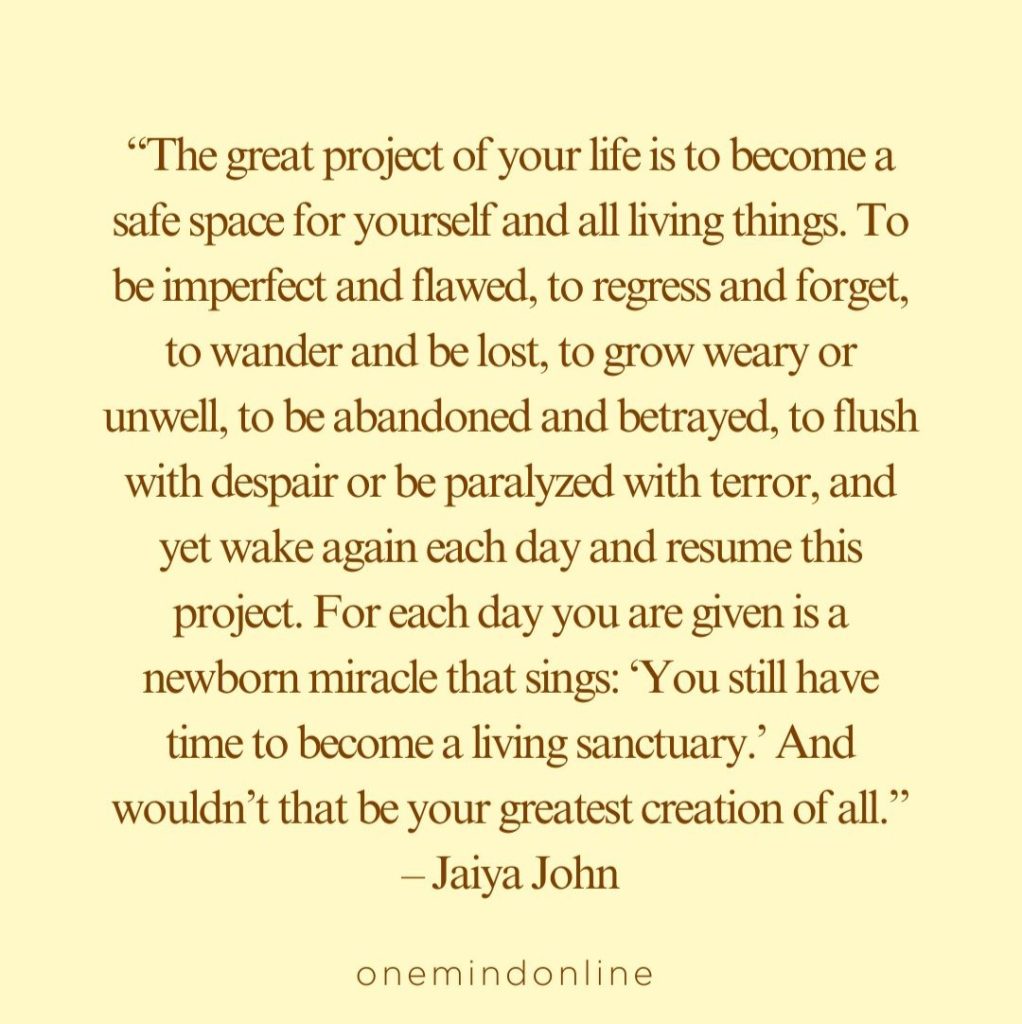
“The great project of your life is to become a safe space for yourself and all living things. To be imperfect and flawed, to regress and forget, to wander and be lost, to grow weary or unwell, to be abandoned and betrayed, to flush with despair or be paralyzed with terror, and yet wake again each day and resume this project. For each day you are given is a newborn miracle that sings: ‘You still have time to become a living sanctuary.’ And wouldn’t that be your greatest creation of all.” – Jaiya John
I just love his description of “the great project of your life is to become a safe space”, for yourself firstly of course, but then also for those around you. And of course you will encounter all of the human follies along the way but to remember: “You still have time to become a human sanctuary.”
I really do believe that becoming your own place of safety, where you are safe even with your own thoughts, is the fundamental project of your life.
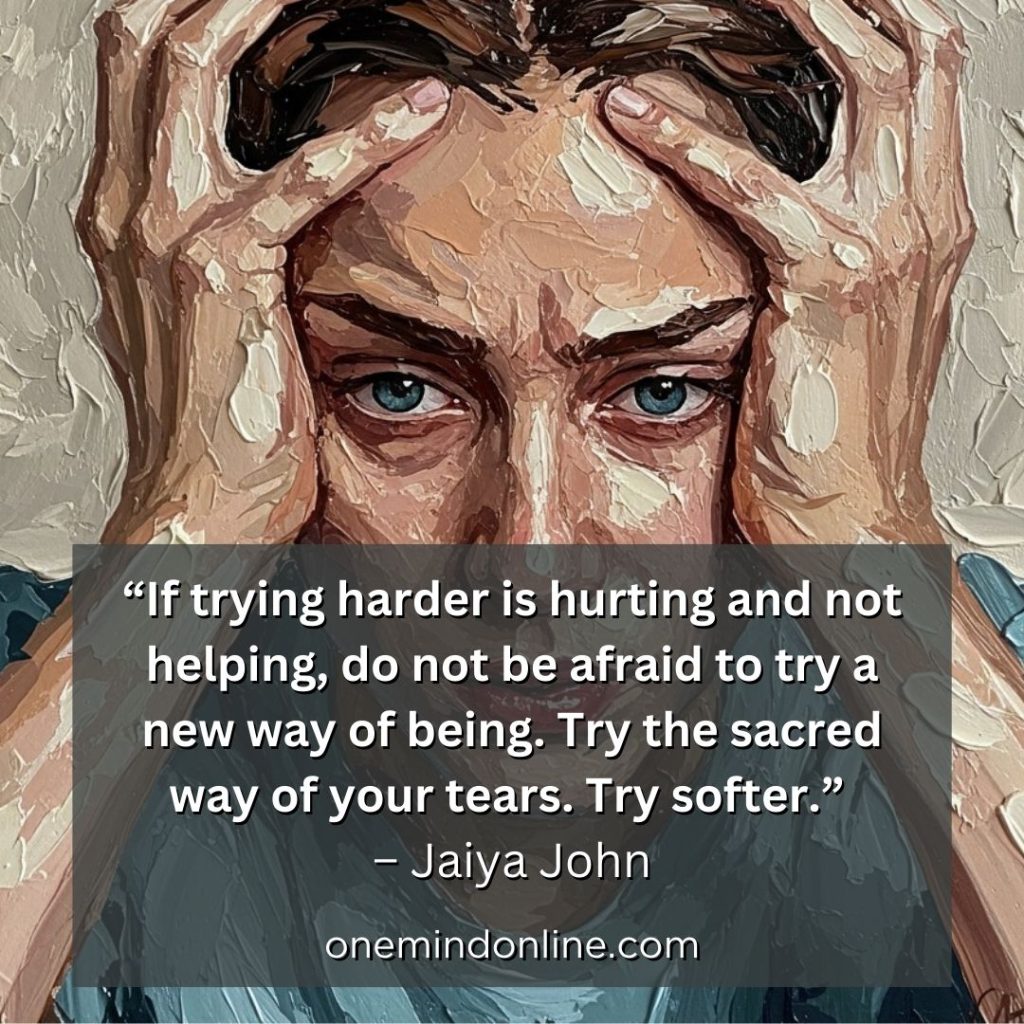
“If trying harder is hurting and not helping, do not be afraid to try a new way of being. Notice how life softens and dilates for new life to come through. This is also true for you. Try the sacred way of your tears. Try softer.” – Jaiya John
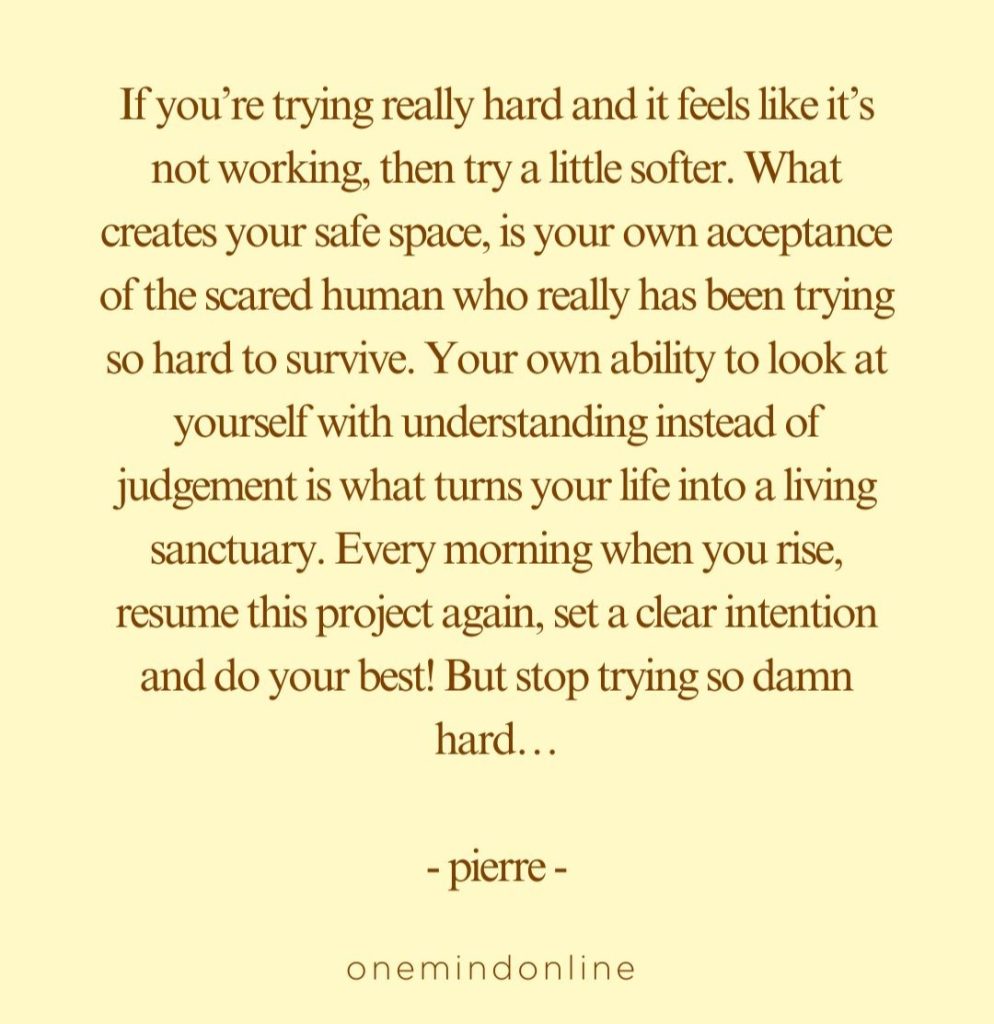
If you’re trying really hard and it feels like it’s not working, then try a little softer. What creates your safe space, is your own acceptance of the scared human who really has been trying so hard to survive. Your own ability to look at yourself with understanding instead of judgement is what turns your life into a living sanctuary. Every morning when you rise, resume this project again, set a clear intention and do your best! But stop trying so damn hard…
Here are some mantras to help you build your sanctuary:
- “I am a safe space. Perfect in my imperfections.”
- “My tears are sacred. They pave the way for softness.”
- “My softness is my strength. Allow yourself to be open and receptive.”
- “I can transform pain and fear. These emotions can fuel positive change.”
- “I will not give up on becoming my own sanctuary. This is a lifelong project, so be patient.”
- “Every day is a new beginning. Start fresh each morning with an open heart.”
Of course, continue to do your best! But release the frantic effort. Let gentleness be your guide. Your sanctuary is built by your ability to soften and find yourself being safe in whatever experience you’re having.
Wishing you a beautiful journey within!
– pierre –
Today’s LIVE meditation is: Come to your senses.
Today’s LIVE meditation
https://youtu.be/bn3K_AGV5fQ 2026
https://youtu.be/ElJEFamQfEE 2025
https://youtu.be/jmevRlZ7G6k 2024
https://youtu.be/D5KREpGf2vc 2023
Practice the “Daily Dose”
Let’s put it into practice! Choose what works for you – daily, once a week or whenever inspiration strikes. Putting pen to paper wires the neural pathways that will create your new habits.
1 – Affirmation
Write down your favourite affirmation on a sticky note and place it somewhere that you’ll be able to see it the whole day.
- “I am a safe space. Perfect in my imperfections.”
- “My tears are sacred. They pave the way for softness.”
- “My softness is my strength. Allow yourself to be open and receptive.”
- “I can transform pain and fear. These emotions can fuel positive change.”
- “I will not give up on becoming my own sanctuary. This is a lifelong project, so be patient.”
- “Every day is a new beginning. Start fresh each morning with an open heart.”
2 – A moment of reflection
Use today’s question as a journal prompt. If you don’t have the time to sit down and write, just take a moment to reflect on your response.
When Trying Harder Hurts: Identify an area of your life where you’ve been “trying so damn hard” but not seeing the results you want. What would “trying softer” look like in this situation? What fears come up when you imagine releasing the frantic effort and approaching this challenge with gentleness instead?What might become available if you allowed yourself to take much smaller steps?
3 – Quotes to share
Send a quote to someone who needs it, or share them all on social media to spread the good vibes!
4 – Q&A for deeper learning
Read through the questions and answers and write down at least one “aha moment” that clicked for you.
Q1: What does it mean to “try softer” instead of trying harder?
Trying softer means releasing the frantic, desperate energy behind your efforts and replacing it with intentional gentleness. It’s not about giving up or reducing your commitment, but about changing the quality of energy you bring to your goals. When you try harder with rigid force, you often create resistance. Trying softer is about allowing yourself to be fully human—to acknowledge your imperfections, to honor your emotions, and to give yourself permission to rest when you need it. As Jaiya John beautifully puts it, sometimes we need to “try the sacred way of your tears”—recognizing that vulnerability, emotional expression, and self-compassion aren’t signs of weakness but pathways to authentic strength. It means treating yourself the way you would treat someone you deeply care about: with patience, understanding, and grace.
Q2: Why is becoming a “safe space for yourself” described as the fundamental project of life?
When you’re not safe with your own thoughts and feelings, you’re in a constant state of internal conflict. This inner war drains enormous energy and prevents authentic growth. Becoming your own safe space means you can experience all of your humanity—including difficult emotions and imperfections—without self-abandonment or harsh judgment. This inner safety is the foundation for genuine healing, growth, and connection with others.
Q3: Isn’t accepting my flaws just giving up on self-improvement?
Not at all. True transformation happens from a place of acceptance, not self-rejection. When you’re constantly at war with yourself, most of your energy goes into maintaining that conflict. Acceptance creates the safety needed for genuine change. You can acknowledge your current reality with compassion while still working toward growth—the difference is you’re no longer motivated by self-hatred but by self-love.
Q4: How do I practically begin building my inner sanctuary?
Start each morning by setting an intention to treat yourself with understanding rather than judgment. When difficult emotions arise, pause and acknowledge them without immediately trying to fix or eliminate them. Practice the breathing exercise from the article—softening with each exhale. Notice when you’re being harsh with yourself and consciously choose a gentler inner voice. Remember, this is a daily practice, not a one-time achievement.
Q5: What if I’ve been abandoned, betrayed, or traumatized? Can I still create this sanctuary?
Absolutely, and perhaps it’s even more crucial. The quote specifically acknowledges that you may “be abandoned and betrayed, to flush with despair or be paralyzed with terror, and yet wake again each day and resume this project.” Your sanctuary isn’t conditional on having a perfect past or an easy journey. It’s built precisely by continuing to show up for yourself through all of life’s difficulties. Professional support through therapy can be invaluable in this process.
Q6: How will I know if I’m making progress in becoming my own sanctuary?
You’ll notice subtle shifts: you might catch yourself being kinder in your self-talk, or you’ll pause before judging yourself harshly. You may find yourself less afraid of your own emotions or more willing to acknowledge vulnerability. Progress looks like increased capacity to sit with discomfort without immediately needing to fix or escape it. You’ll feel moments of genuine self-compassion breaking through old patterns of self-criticism. Remember, this is measured in small daily choices, not dramatic transformations.