This inspiring article is a breezy 2-minute read! But hey, if you’re feeling adventurous and have a few extra moments, we’ve got a whole menu of other goodies to nibble on.
A message from today’s meditation:
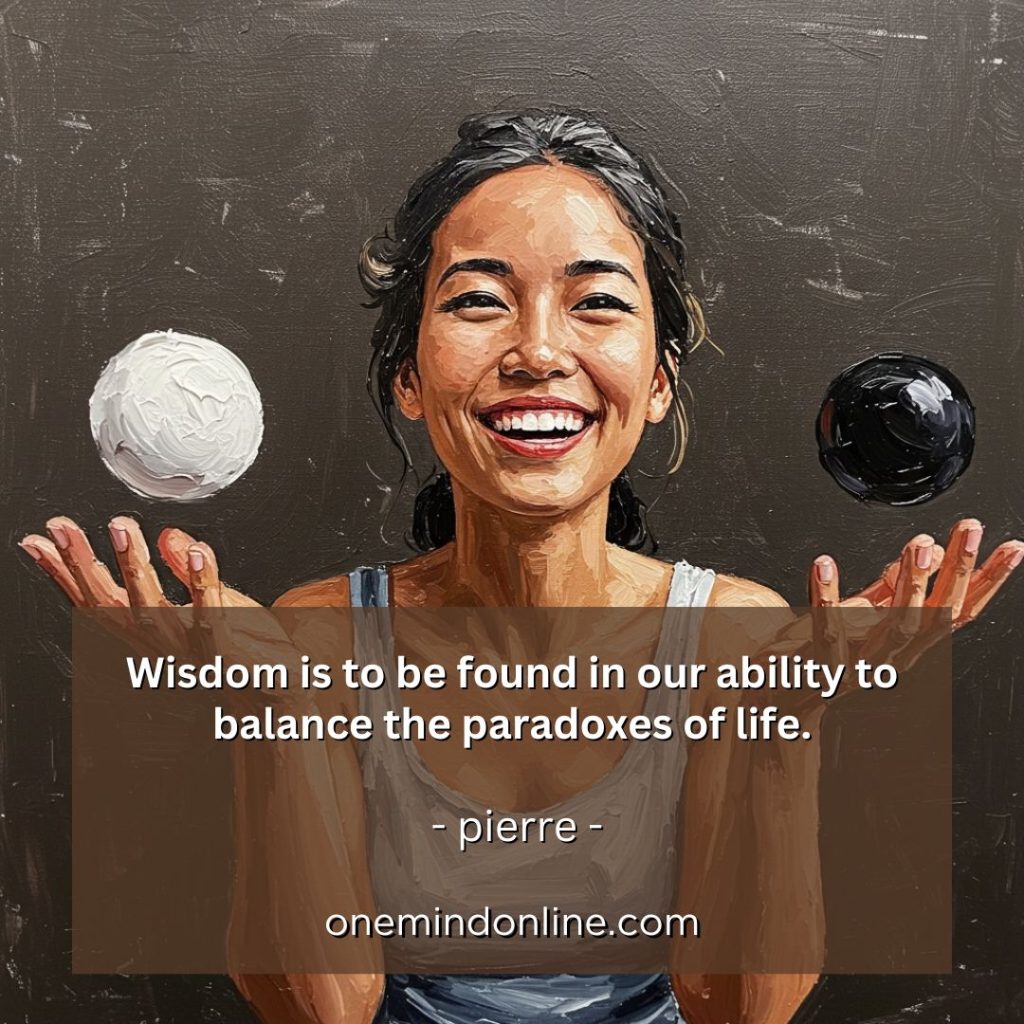
Wisdom is to be found in our ability to balance the paradoxes of life.
We get confronted with the paradoxes of life everywhere we go, and we tend to be ill equipped to deal with this complexity of life, when we’ve been brought up with the kind of black and white thinking that wants to place everything into a box that is either “this” or “that”, “good” or “bad”, “right” or “wrong”.
Let’s consider the theme of courage as an example. When you hear the word courage, what image does it immediately conjure up for you? Do you instantly see a brave figure rushing into danger to drag people to safety? Or is your mind ready to show you the whole spectrum of what courage could look like?
The first thought from Jeff Brown today is such a beautiful depiction of the possible paradox that exists in something like courage:
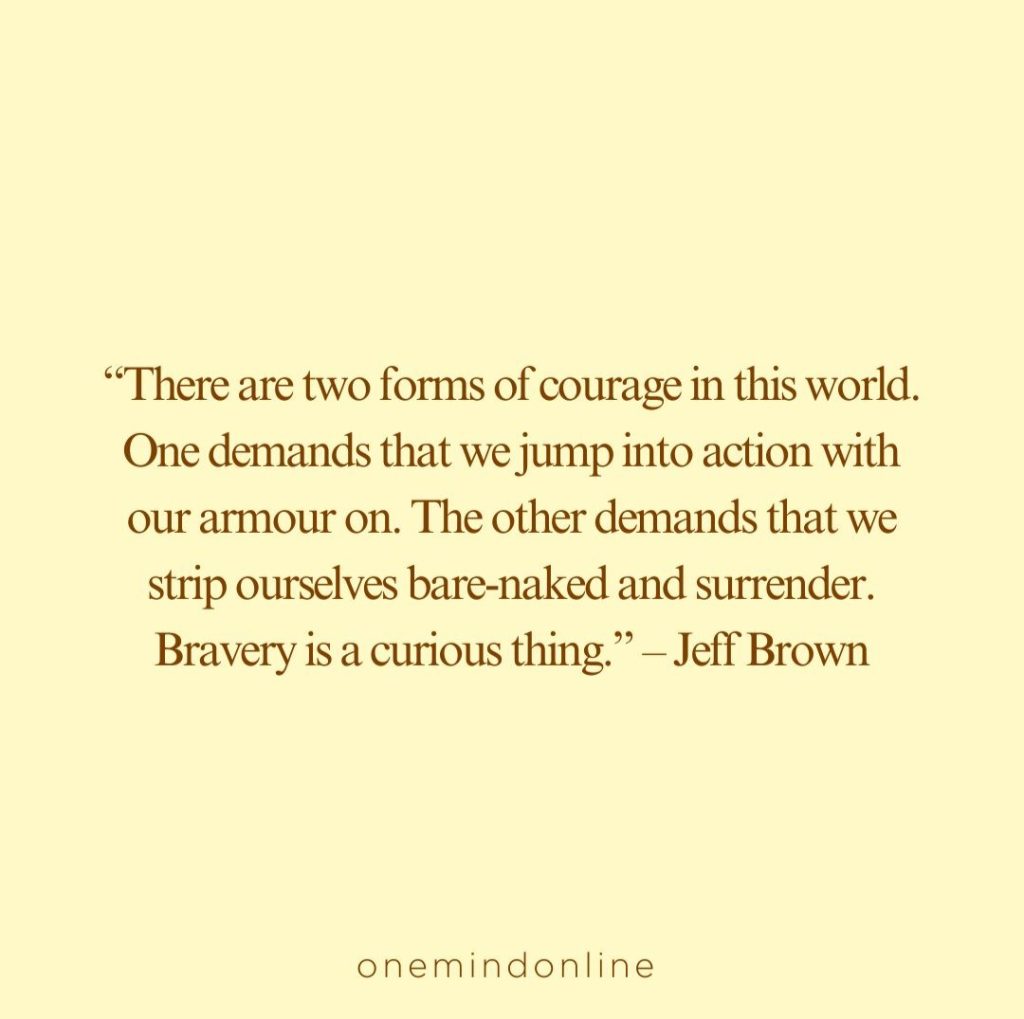
“There are two forms of courage in this world. One demands that we jump into action with our armour on. The other demands that we strip ourselves bare-naked and surrender. Bravery is a curious thing.” – Jeff Brown
They are clearly both acts of courage, and this beautiful paradox reveals the complexity of living authentically. Sometimes courage means armoring up and charging into battle. Other times, it means removing all defenses and embracing vulnerability. The question isn’t which form is “correct” – it’s knowing which one the moment calls for.
This of course reminds me of the serenity prayer: “accept the things we cannot change (surrender), and change the things that we CAN change (action).”
The concept seems simple enough, but the real challenge lies in the prayer’s final element, “the wisdom to know the difference.” This is the hard part – seeing with any kind of clarity what to let go of and what to take action on. When to do battle, and when to make peace?
Jeff Brown reminds us that divine wisdom flows through each of us. This isn’t about arrogance or self-sufficiency. It’s about recognizing that the same divine intelligence that creates galaxies and orchestrates the seasons, also finds its expression through you.
“Stop looking for answers outside yourself. YOU are the sculptor of your own reality – don’t hand your tools to anyone else.” – Jeff Brown
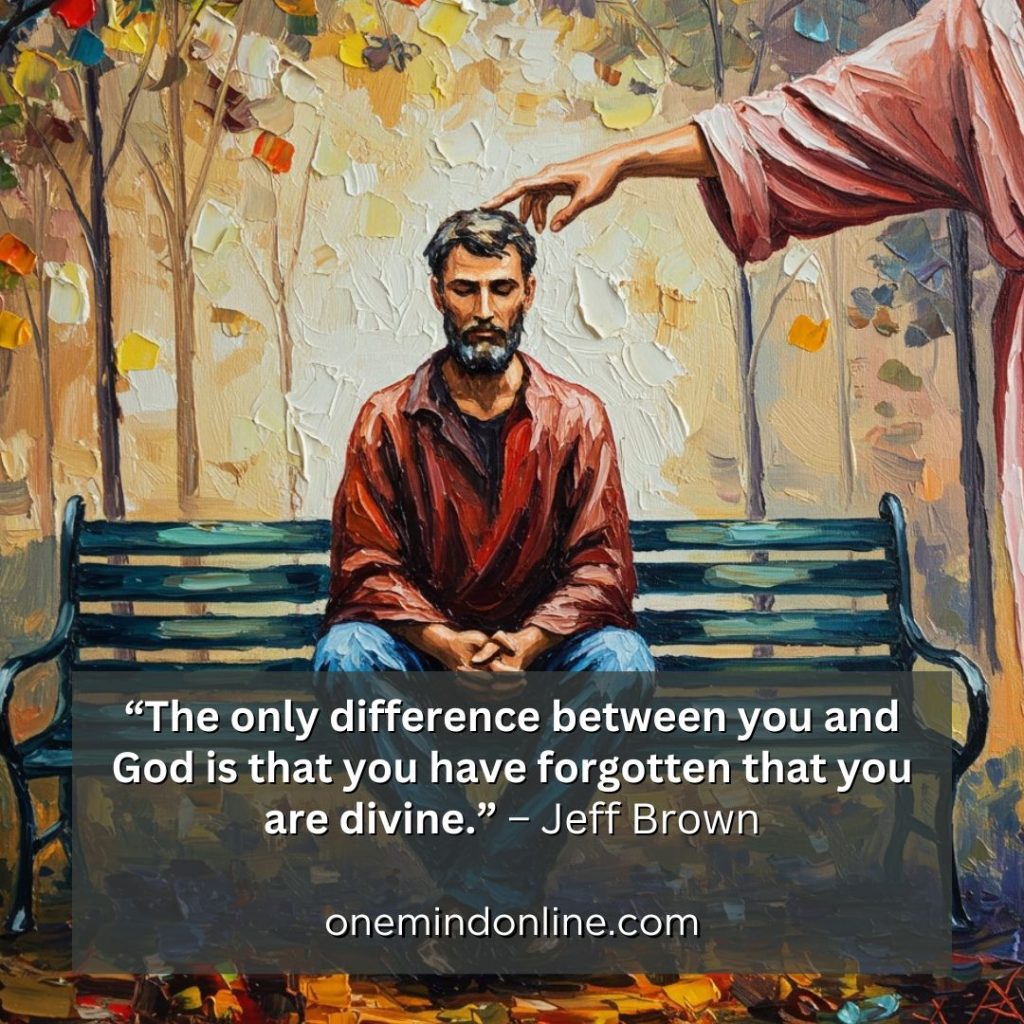
“The only difference between you and God is that you have forgotten that you are divine.” – Jeff Brown
The path forward is not about finding perfect certainty in every situation. It’s about developing the wisdom to dance gracefully between opposing forces – strength and vulnerability, action and surrender, holding on and letting go – trusting that our inner guidance will illuminate the way. In this dance, we discover that we are not separate from the divine – we are expressions of it, temporarily having forgotten our true nature.
Remember, you are not seeking wisdom because you lack it. You are simply remembering what you’ve always known. Today’s practice is an invitation to embrace this inner wisdom. With open hearts and a willingness to listen, we can become attuned to the guidance of our soul.
Here are a few mantras to spark divine guidance:
- I am the divine expression of the same intelligence that orchestrates the universe, and I am remembering my inherent wisdom.
- I embrace life’s paradoxes, trusting my inner guidance to navigate the dance between action and surrender, strength and vulnerability.
- I am the sculptor of my reality, equipped with the wisdom to discern when to act and when to let go.
By cultivating this awareness, we unlock the power to navigate life’s intricate dance of action and surrender. Life is a beautiful tapestry, woven with threads of strength and also vulnerability, taking action and also letting go. Embrace these paradoxes, for within them lies the key to unlocking your own divine potential.
Have a beautiful day peeps!
– pierre –
Today’s LIVE meditation is: The Serenity Prayer.
A moment of reflection
(If you have the time, use this question as a journal prompt, because whenever you put pen to paper you’re wiring the neural pathways that create your new habits. But if you don’t have the time, just take a moment to reflect on your response.)
The Tools of Your Reality: Consider the quote: “YOU are the sculptor of your own reality – don’t hand your tools to anyone else.” Reflect on the various “tools” you use to shape your life (your thoughts, choices, relationships, habits, etc.). Are there any tools you’ve unconsciously handed over to others? Perhaps you’ve given someone else the power to determine your worth, or you’ve let external circumstances dictate your emotional state. Write about one specific tool you’d like to reclaim and how you might begin to use it more consciously in creating the reality you truly desire.
Today’s LIVE meditation
https://youtu.be/A4tdXoeX-AQ 2025
https://youtu.be/VKn7nQeBj1Q 2024
https://youtu.be/gwEZsj-zJN4 2023
https://youtu.be/KaVnwfRbVk0 2022

Q&A for deeper learning
1. What does it mean that “the only difference between you and God is that you have forgotten that you are divine”?
This teaching doesn’t suggest that you are the creator of the universe, but that you are an expression of the universe itself. You are a manifestation of infinite wisdom, creative power, and love – the divine essence of God in human form. The difference is that we’ve temporarily forgotten this truth through conditioning and life experiences. When we remember our divine nature, we access our inherent wisdom and ability to create meaningful change in our lives. It’s about recognizing that we don’t need to seek external validation or answers because we already contain everything we need within us.
2. How do I know when to take action versus when to surrender?
This is the heart of the “wisdom to know the difference” from the serenity prayer. The key is developing your capacity to listen to your inner guidance. Generally, if something is within your control and aligns with your values and authentic self, it may call for action. If it’s beyond your control or you’re forcing outcomes from fear or ego, it may require surrender. Practice stillness and ask yourself: “What does my soul want me to know about this situation?” Trust the first quiet response that comes, rather than the loud voice of anxiety or should-do thinking.
3. What are some practical ways to access my inner wisdom?
Start with creating regular quiet time for reflection, whether through meditation, journaling, or simply sitting in silence. Pay attention to your body’s responses – wisdom often comes as a felt sense rather than thoughts. Notice what energizes you versus what drains you. Ask yourself meaningful questions and then listen without immediately trying to answer. Spend time in nature, as it often helps quiet the mental chatter. Most importantly, practice distinguishing between the voice of fear (usually urgent and harsh) and the voice of intuition (usually calm and clear).
4. How can I embrace paradoxes instead of trying to resolve them?
Begin by noticing when you’re trying to force something into a “either/or” category. Instead of immediately choosing sides, sit with the tension of “both/and.” For example, you can be both strong and vulnerable, both independent and in need of support. Practice saying “I can hold both truths” when facing seemingly contradictory situations. Remember that paradoxes often contain deeper wisdom than simple answers. The goal isn’t to resolve the paradox but to expand your capacity to hold complexity with grace.
5. What if I don’t feel divine or wise? What if I feel ordinary or lost?
Feeling ordinary or lost is actually a very human experience and doesn’t negate your divine nature. Sometimes feeling lost is the beginning of finding your way to deeper truth. Your divine nature isn’t dependent on feeling a certain way – it’s your essential being. Start small: notice moments of compassion you feel for others, times when you know something without knowing how you know it, or instances when you’ve offered comfort or insight to someone. These everyday moments reveal your divine nature more than any grand spiritual experience.
6. How do I stop looking for answers outside myself when I’ve been conditioned to seek external validation?
This is a gradual process of retraining your awareness. Start by pausing before seeking external advice and first asking yourself: “What do I think about this?” or “What feels right to me?” Begin with small decisions and build your confidence in your own judgment. Notice when you’re seeking validation versus when you’re seeking information or perspective. It’s okay to consult others, but do so after you’ve first consulted your own inner wisdom. Practice celebrating your own insights and decisions, even the small ones.
7. What’s the difference between the two forms of courage mentioned in the article?
The first form of courage – “jumping into action with armor on” – involves taking bold, decisive action despite fear or obstacles. This might look like starting a business, having a difficult conversation, or standing up for your beliefs. The second form – “stripping bare and surrendering” – involves the courage to be vulnerable, to let go of control, to admit you don’t have all the answers, or to accept what you cannot change. Both require tremendous bravery. The armored courage protects and advances; the vulnerable courage opens and receives. Wisdom helps us discern which form of courage each situation requires.